Why Didn’t We See So Many Ticks in Tennessee Back in the ’80s?

If you grew up in Middle Tennessee in the 1980s, you probably pulled a tick off now and then after a day in the woods. But you likely didn’t check your kids every evening, and almost nobody had heard of a tick bite making you allergic to red meat. So why are there so many ticks in Tennessee today? It’s the latest chapter in our series on pests that weren’t a big deal when many of us were growing up, after stink bugs, Asian lady beetles, and kudzu bugs.
The short answer: the deer came back
The biggest reason is hiding in plain sight in your backyard. White-tailed deer were nearly gone from Tennessee in the early 20th century. In the 1940s, the state’s herd was about 2,000 deer, found in just a few East Tennessee counties. Through restoration work, more than 9,000 deer were released across the state from 1940 to 1985, and by 2005 the herd had grown to an estimated 900,000 animals living in all 95 counties (Tennessee Wildlife Resources Agency).
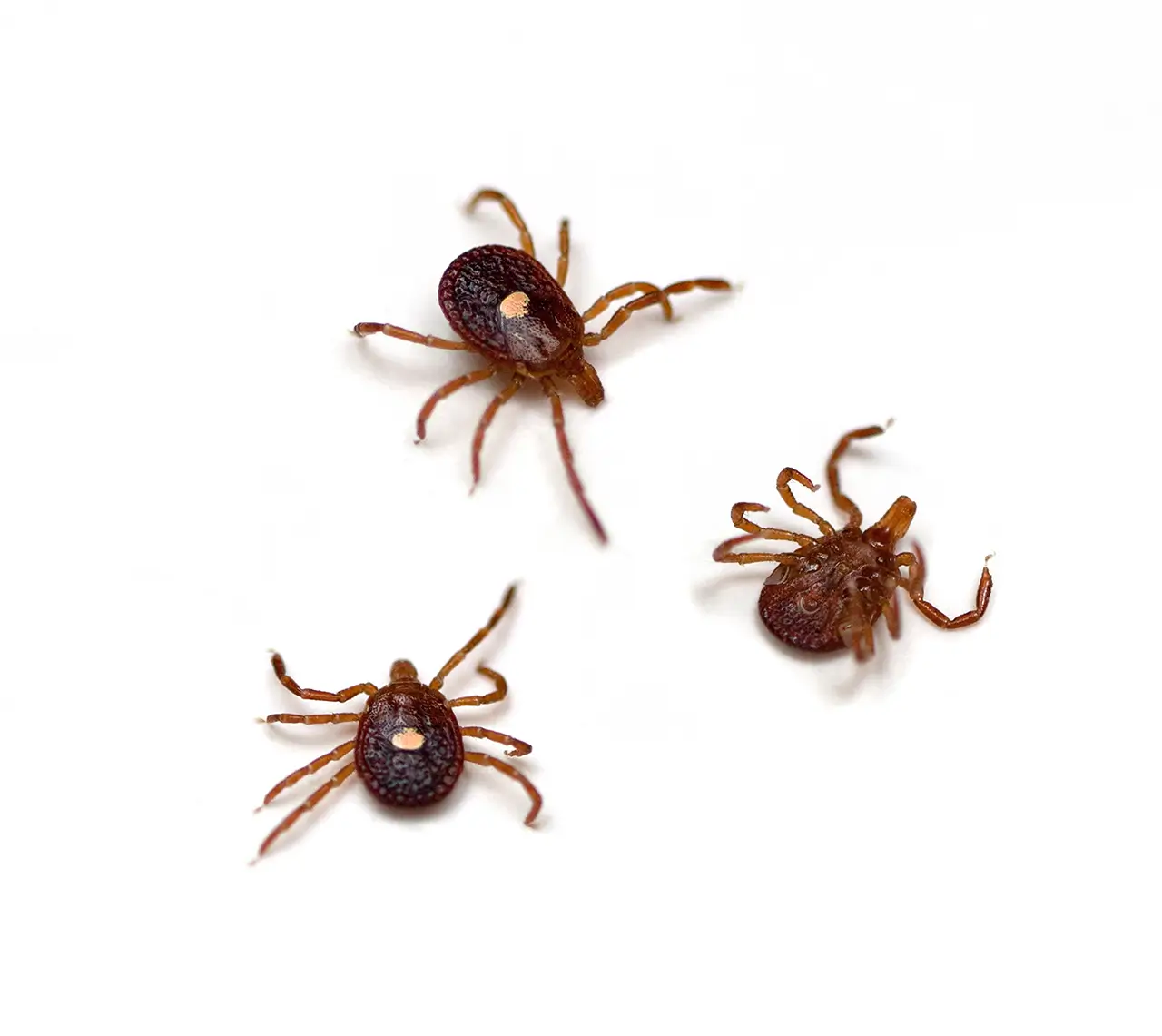
Notice the end date of that restocking effort: 1985. In the ’80s, Tennessee’s deer herd was still rebuilding. That matters, because ticks depend on deer. Lone star ticks, the tick most often found attached to people in the eastern United States (Alpha-gal Information), feed mainly on large mammals, especially white-tailed deer, and their resurgence has been linked to growing populations of deer, coyotes, and wild turkeys (New England Journal of Medicine). More deer means more ticks, and more ticks means more bites.
Neighborhoods moved into tick country
At the same time, Middle Tennessee grew. The CDC’s Division of Vector-Borne Diseases points to increasing deer populations and the expansion of suburbs into wooded areas as drivers of rising tick-borne disease (CDC presentation to Congress). New neighborhoods carved out of farmland and forest put backyards, playgrounds, and walking trails right at the edge of prime tick habitat, the same edges where deer like to feed.
Why there are so many ticks now: the numbers
This isn’t just a feeling. Nationally, reported cases of tick-borne disease more than doubled in 13 years, from more than 22,000 in 2004 to more than 48,000 in 2016, and ticks accounted for 77% of all reported diseases spread by mosquitoes, ticks, and fleas (CDC). Between 2004 and 2016, researchers also discovered seven new tick-borne germs that infect people (CDC).
The ticks themselves are on the move, too. Lone star ticks have been expanding rapidly beyond the South, where they were first described, into northern and midwestern states, and the blacklegged (deer) tick has substantially increased its range following changes in land use and the expansion of deer populations (Journal of Clinical Microbiology). Researchers have noted that the lone star tick’s range expansion is consistent with a changing climate (New England Journal of Medicine).
Tennessee’s tick hot spots, then and now
Tennessee sits right in the middle of lone star tick country, and the disease data shows it. The CDC reports that the annual rate of spotted fever rickettsiosis, the group that includes Rocky Mountain spotted fever, has increased substantially over the past two decades. During 2008 to 2012, 63% of reported cases came from just five states, and Tennessee was one of them. Tennessee is also among the states with the highest reported rates of ehrlichiosis (CDC).
Then there’s alpha-gal syndrome, the tick-related allergy to red meat that barely anyone had heard of 20 years ago. Suspected alpha-gal cases closely overlap the range of the lone star tick, and the CDC estimates as many as 450,000 people in the United States may have it (Washington State Department of Health, citing CDC). More than 110,000 suspected cases were identified between 2010 and 2022, and most reported cases are among people living in the South, East, and central U.S. (Indiana Department of Health).
We’ve covered these in depth: ehrlichiosis, Tennessee’s most reported tick illness, Rocky Mountain spotted fever and ehrlichiosis, and alpha-gal in Tennessee.
How to protect your family
- Check after every outing. Look over yourself, your kids, and your pets after time in the yard, on trails, or at the lake. If you find one, here’s what to do next.
- Know where ticks live in your yard. Tall grass, leaf litter, wooded edges, and shady spots are favorites. See the 6 spots in your yard where ticks are living.
- Keep the edges trimmed. Mow regularly, clear brush and leaf piles, and keep play areas away from the woods’ edge.
- Know your ticks. Our Tennessee tick ID guide shows the difference between lone star, dog, and deer ticks.
How U.S. Pest helps
Our tick control service treats the places ticks wait for a host, like yard edges, shady areas, and the spots where your family and pets spend time outdoors. During your free inspection, your technician will point out the tick hot spots on your property. Call 615-590-1260 or schedule a free inspection.
Serving your area: Nashville · Hendersonville · Franklin · More Middle Tennessee pest news
FAQs
Why are there so many ticks in Tennessee now?
Tennessee’s deer herd grew from about 2,000 deer in the 1940s to an estimated 900,000 by 2005, and deer are a key host for ticks. Suburbs expanding into wooded areas, and tick ranges expanding, have also put more people in contact with ticks.
Were there ticks in Tennessee in the 1980s?
Yes, but far fewer people encountered them. Deer restocking in Tennessee continued until 1985, so the deer herd that ticks depend on was still rebuilding. Tick-borne disease reports have risen sharply since then.
What is the most common tick in Tennessee?
The lone star tick is one of the most common biting ticks in Tennessee. It feeds mainly on white-tailed deer and is associated with ehrlichiosis and alpha-gal syndrome.
Is Tennessee a hot spot for tick-borne disease?
Yes. During 2008 to 2012, Tennessee was one of five states that together accounted for 63% of reported spotted fever rickettsiosis cases, and it’s among the states with the highest reported rates of ehrlichiosis.
How can I reduce ticks in my yard?
Mow regularly, clear brush and leaf litter, keep play areas away from wooded edges, check your family and pets after time outdoors, and consider professional tick treatment for your yard.