The Diagnosis Was Ehrlichiosis — Tennessee’s Most Reported Tick Illness

The text from the doctor came in on a Tuesday afternoon. Ehrlichiosis, confirmed.
I had spent a week and a half telling people we did not know the diagnosis yet. Having a name for it helped more than I expected it to. What surprised me was looking up the Tennessee numbers afterward and realizing that my husband was not an unusual case. He was a typical one.
What is Ehrlichiosis?
Ehrlichiosis is a bacterial illness spread by tick bite. In Tennessee, it is carried by the lone star tick, and it is caused most often by a bacterium called Ehrlichia chaffeensis, with a less common cousin called Ehrlichia ewingii.
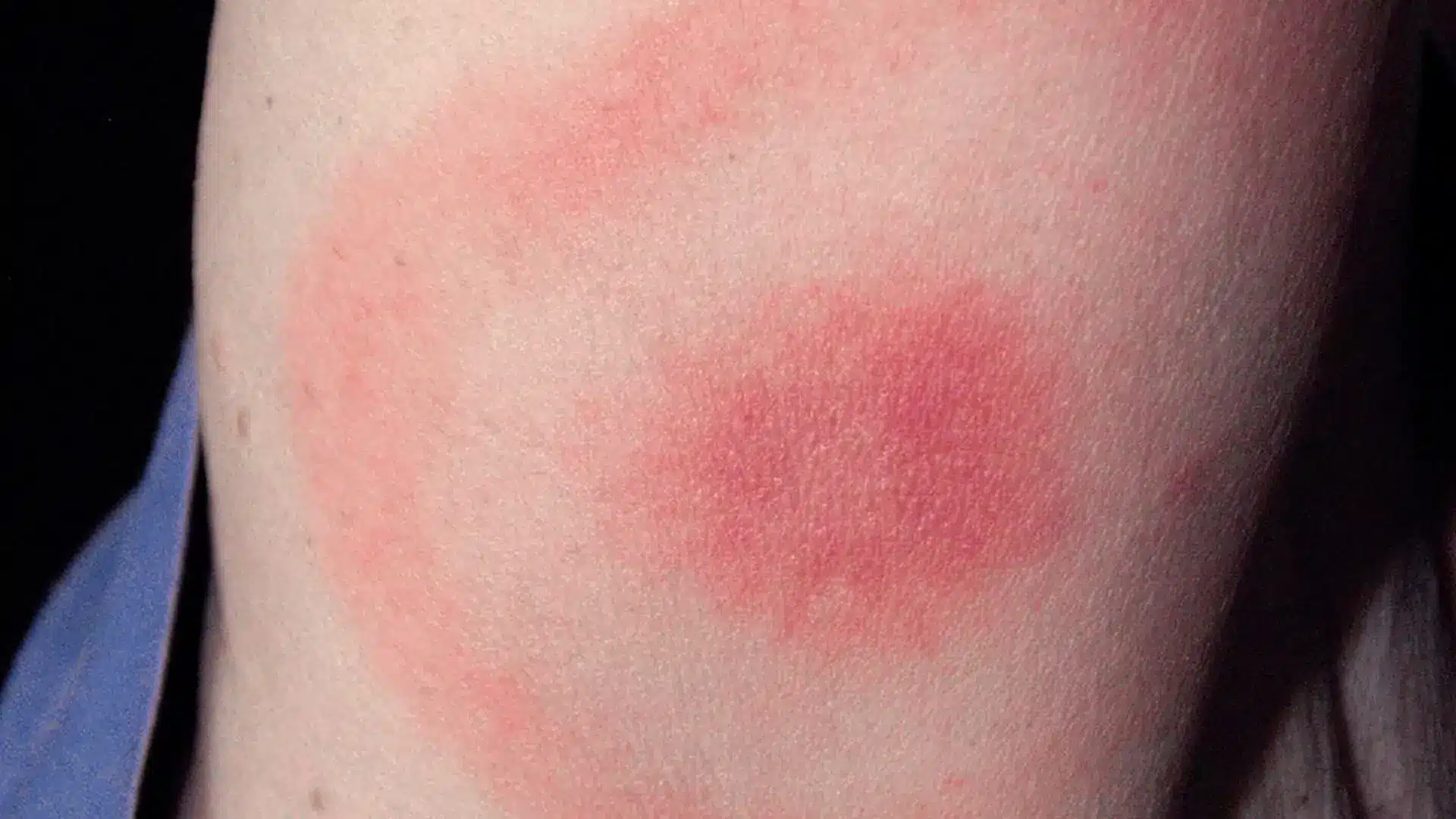
Symptoms usually start between five days and two weeks after the bite. Fever and chills, a severe headache, muscle aches, and often nausea, vomiting or loss of appetite are the most common reported symptoms. A rash shows up for some and is more common in children than in adults. Treated promptly, it generally resolves. If left alone, it can become dangerous. The Tennessee Department of Health lists respiratory failure, uncontrolled bleeding, damage to the brain and nervous system, and organ failure as possible consequences of delayed treatment.
Ehrlichiosis is a reportable condition in Tennessee, which means physicians notify the state when they diagnose it. This is why we have decent statistics on it.
How Common is Ehrlichiosis in Tennessee?
It was the most reported tick-borne disease in the state in 2023, and reports have been climbing since 2015.
The figure that stopped me cold: according to TDH surveillance data, roughly 56 percent of probable and confirmed cases in 2023 were hospitalized. Across recent years the state puts that range at somewhere between 35 and 65 percent. This is not an illness where most people ride it out at home.
Cases in 2023 rose about 22 percent over the previous year. For Nashville and surrounding towns, this statistic matters: Davidson and Williamson counties alone accounted for 27 percent of every ehrlichiosis case reported in Tennessee that year.
The risk window is spring into summer. The CDC reports that cases climb through March and April, peak May through July, and taper off through late summer. Because symptoms take five to fourteen days to appear, April through June is when Tennesseans are most likely to be picking it up.
Which Tick Carries Ehrlichiosis?
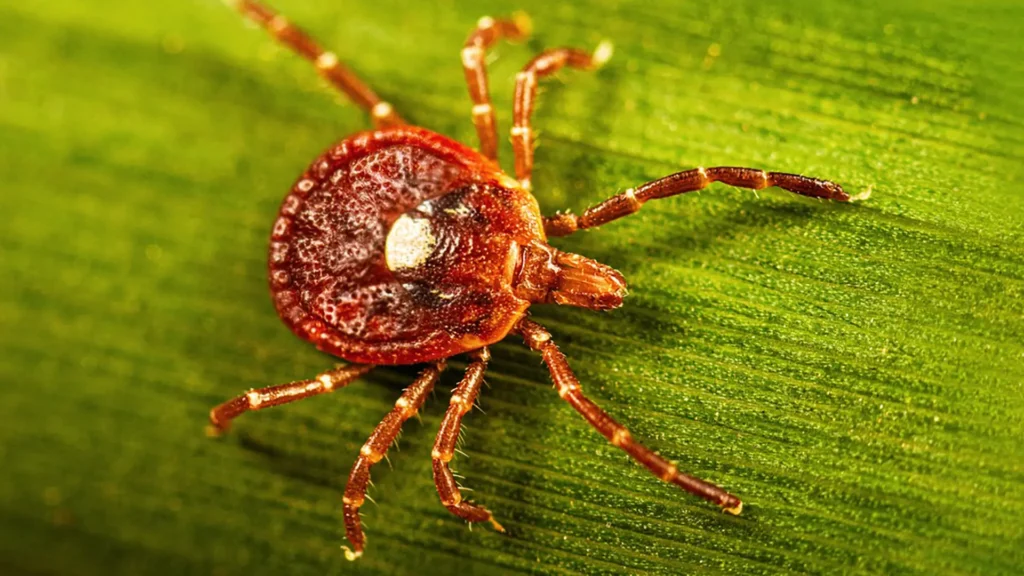
The lone star tick most commonly carries ehrlichiosis. It is also the tick you are most likely to meet in Middle Tennessee.
The adult female has a single white dot on her back, which makes her one of the easier ones to identify. The behavior is what sets this species apart. Lone star ticks are aggressive. They move toward a host rather than waiting to be brushed against. Your dog crossing the back of the property is enough to get their attention, as is a kid cutting through the tree line.
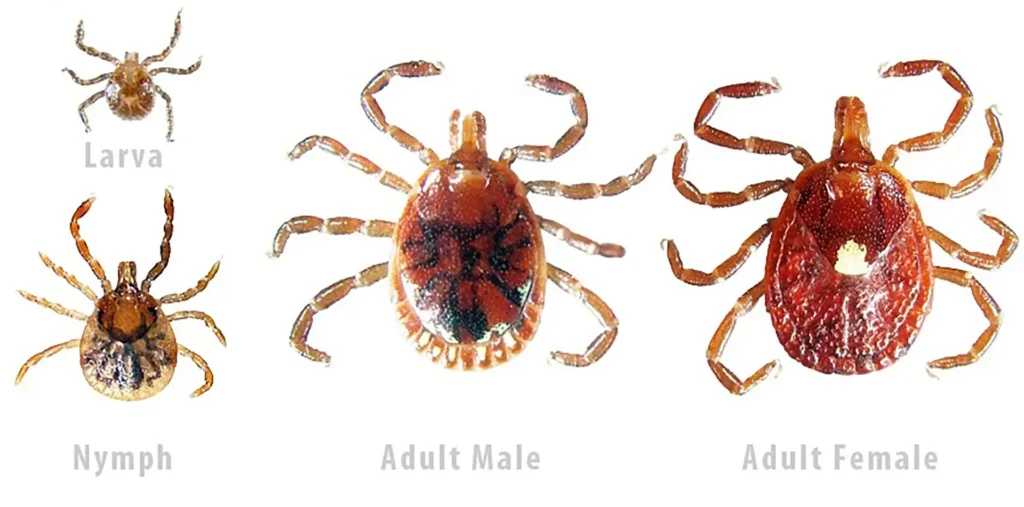
Adults peak March through May. Nymphs, which are about the size of a poppy seed and are responsible for most human illness precisely because nobody sees them, run from April into August. The larvae — what people around here call seed ticks — come in swarms from June into October.
The lone star tick also carries tularemia, Heartland virus, and STARI, and it is the tick behind alpha-gal syndrome.
The blacklegged tick, or deer tick, also occasionally carries ehrlichiosis, though infected ticks are mostly found in the upper Midwest and northeastern United States. The lone star tick is the one to worry about here in Middle Tennessee.
How is Ehrlichiosis Treated?
Tick-borne illness protocol is to administer the antibiotic doxycycline before any test confirms the diagnosis.
That sounds backwards until you understand the timing problem. Confirmation often takes weeks, and the illness does its damage in days. So, physicians treat on clinical suspicion — symptoms plus a plausible tick exposure — and let the labs catch up. The CDC guidance is to treat suspected cases for at least five to seven days and until the fever has been gone for about three days with the patient clearly improving.
This is why telling your doctor about the tick bite matters so much. The suspicion is what triggers the treatment. Without it, you are just another person with a fever.

Everything about treatment is a conversation between you and your physician, not between you and a pest control company. I am telling you what happened to us and what the state and the CDC publish. That is where my expertise stops.
What Other Tick-Borne Illnesses are in Tennessee?
Tennessee has six medically important tick species according to TDH, and our disease profile looks nothing like the one in the headlines out of New England.
Spotted fever rickettsiosis, including Rocky Mountain spotted fever. Carried by the American dog tick. Tennessee is one of five states that together account for more than half of all cases reported nationally. Untreated it can cause hearing loss, paralysis, amputation, or death. Peaks May through September.
Lyme disease. Carried by the blacklegged, or deer tick. TDH recorded 39 cases in 2023, an 18 percent increase over the year before, with 94 percent of cases in Middle and East Tennessee. Small numbers, climbing steadily since 2014.
Anaplasmosis. Also the blacklegged tick. Roughly two thirds of Tennessee cases occur between June and September.
Alpha-gal syndrome. Not an infection at all — an allergy to red meat, and sometimes dairy, triggered by lone star tick saliva. There is no guaranteed cure or treatment, though some people have found the intolerance becomes less severe over time, as long as further tick bites are avoided. Avoiding the bite is the only true prevention that exists for alpha-gal syndrome.
The blacklegged tick deserves one more sentence, because it changes how you should think about the calendar. TDH describes it as able to bite any time the temperature is above freezing, and its adult stage runs roughly October through May. The months most people assume are “safe” are that species’ most active season.
Many tick-borne illnesses are treatable if caught early on. However, they all have their risks, and some are much harder to treat, if it is even possible at all — as in the case of alpha-gal. The key to staying protected is reducing exposure to ticks in the first place. This is where pest control comes in.
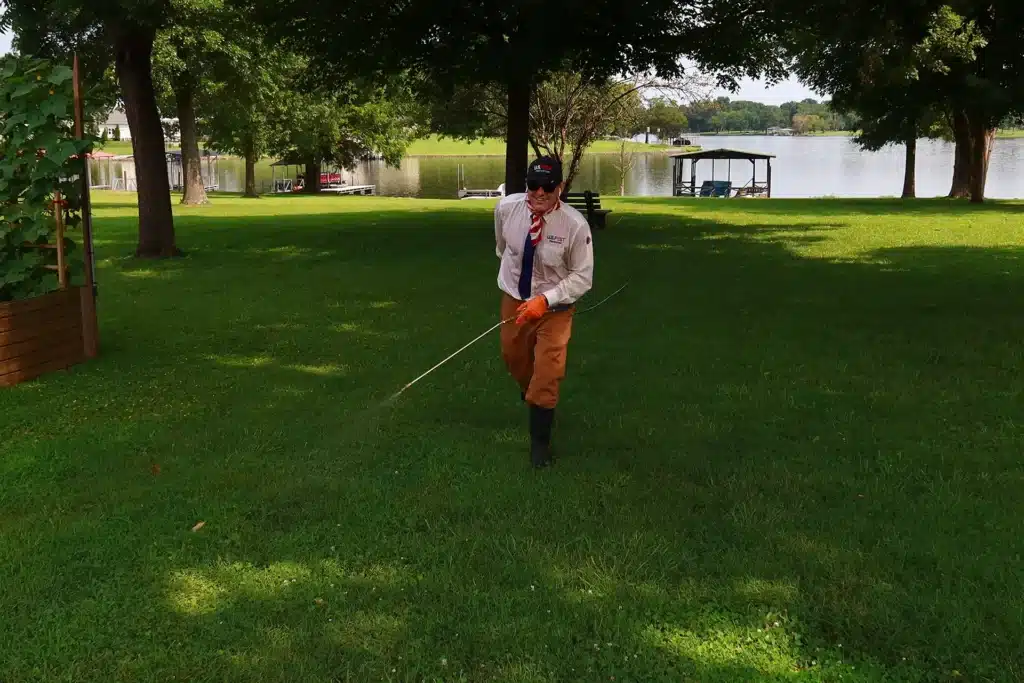
At U.S. Pest, our tick control programs run all year round so that we hit every stage of the tick life cycle. We treat the areas of your yard where ticks thrive, spraying directly with outside rigs to ensure maximum and specific coverage. While we cannot guarantee the elimination of all tick bites or transmitted diseases, we can guarantee less exposure around your home and yard. That is the key. The fewer ticks you are around, the less likely you are to be bitten and infected.
FAQs
How do I remove an attached tick safely?
Use fine-tipped tweezers to grasp the tick as close to your skin’s surface as possible. Pull upward with steady, even pressure. Do not twist, jerk, or squeeze the body.
How do I protect my yard?
Mow grass frequently, clear tall brush, and remove leaf litter. Create a 3-foot-wide barrier with things like wood chips or gravel between your lawn and wooded areas to stop tick migration into recreational zones. For more active zones, have a professional come and treat your yard.
Does every lone star tick bite cause ehrlichiosis?
No. Only infected ticks will make you sick. Many people are bitten by ticks and experience only mild skin irritation or no symptoms at all.
If you are finding ticks on your property, we can help you identify where they are coming from and treat the areas to reduce populations at every life cycle stage. Schedule a free inspection or call us at 615.590.1260 to start protecting your home today.
U.S. Pest Protection is a pest control company. We are not medical providers, and this content is personal and descriptive only — it is not medical advice, diagnosis, or treatment, and it is not a substitute for care from a qualified physician. If you have been bitten by a tick, or you are experiencing symptoms you believe may be related to a tick bite, contact your physician or seek medical care. Do not delay medical care based on anything you read here. Our services reduce tick populations on your property. They are exposure-reducing measures. They do not prevent, treat, or cure any illness.