Field Report: A Hard Call From a Nashville Auto Shop, and the Wasps Mistaken for Bees

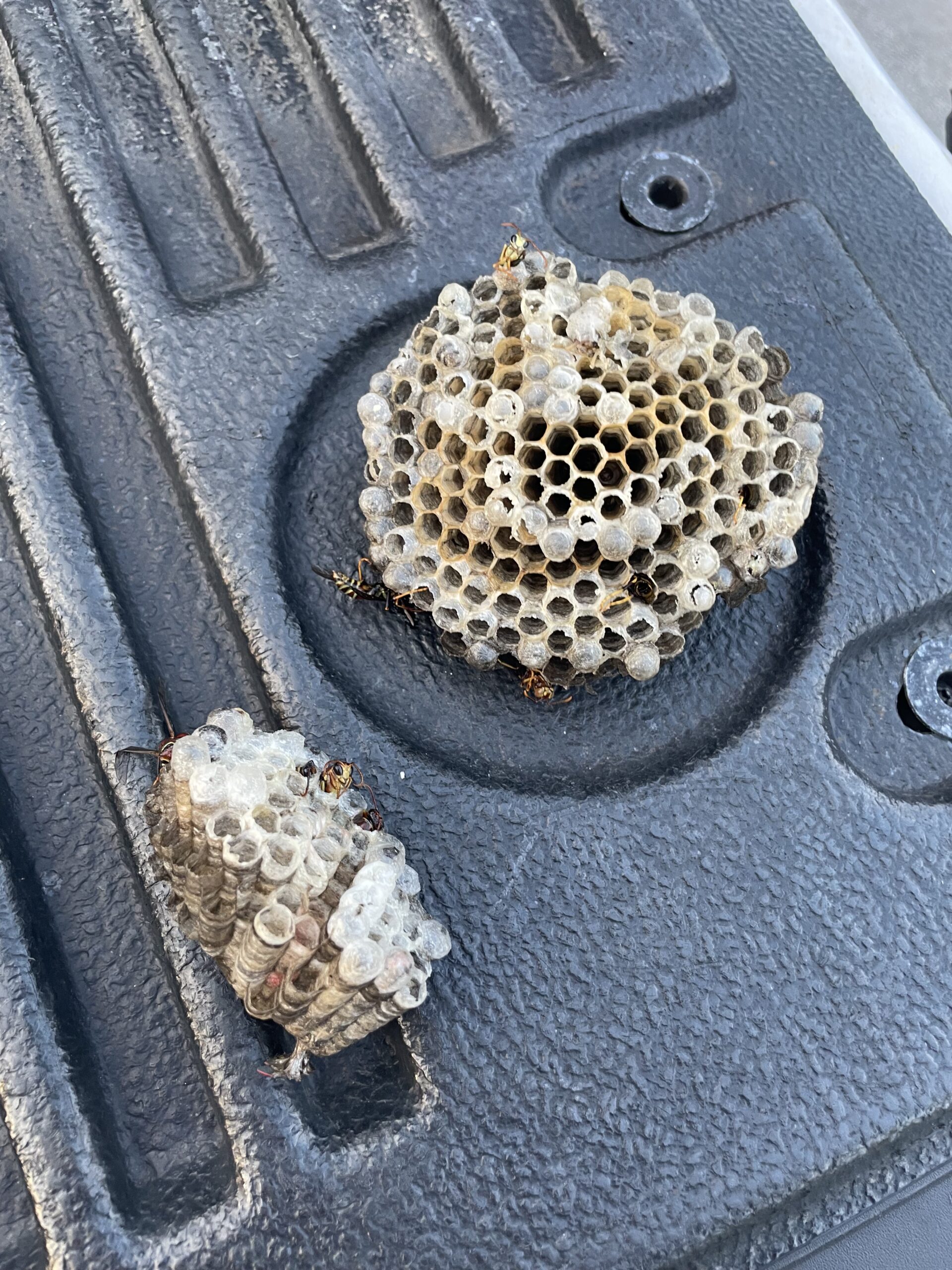
This week we got a call no one wants to make. A mechanic at a Nashville auto repair shop had been swatting at what he thought were bees when he fell and hit his head. He did not survive. His employer asked us to clear the insects before his family came to collect his tools. When we inspected, we found two wasp nests.
We are deeply sorry for his family, his friends, and everyone at the shop who worked alongside him.
Field Report at a glance
| Where | An auto repair shop in Nashville |
| Team | Fluffy, Service Manager, North Region office |
| The call | Bees around the shop after a tragic accident; needed them gone before the family arrived |
| What we found | Two wasp nests under overhangs, one on the front and one on the side above the bushes |
| What we did | Removed both nests and the wasps, checked the building, finished before 7 a.m. |
| The takeaway | Wasps are often mistaken for bees, and fall nests are at their largest |
The call
The shop’s owner, who runs several auto repair shops in Tennessee, called our COO, J.K. Brister, and told him what had happened. The family was coming the next morning for the mechanic’s tools, and the owner didn’t want the insects to still be there.
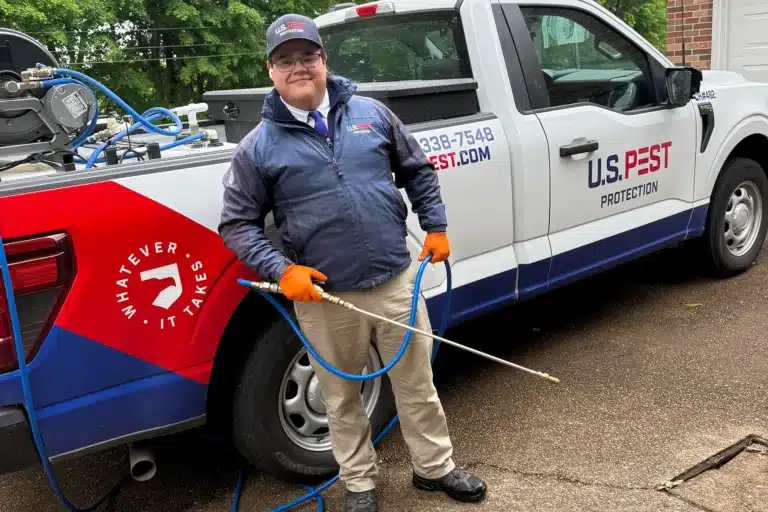
He wasn’t a U.S. Pest customer. That didn’t matter. We offered to go that same day. At the owner’s request, Fluffy, Service Manager of our North Region office, was there first thing the next morning.
What Fluffy found
Everyone had been calling them bees. Fluffy’s inspection showed they were wasps, from two nests that had grown over the summer:
- On the front of the building, under an overhang
- On the side of the building, under an overhang above the bushes
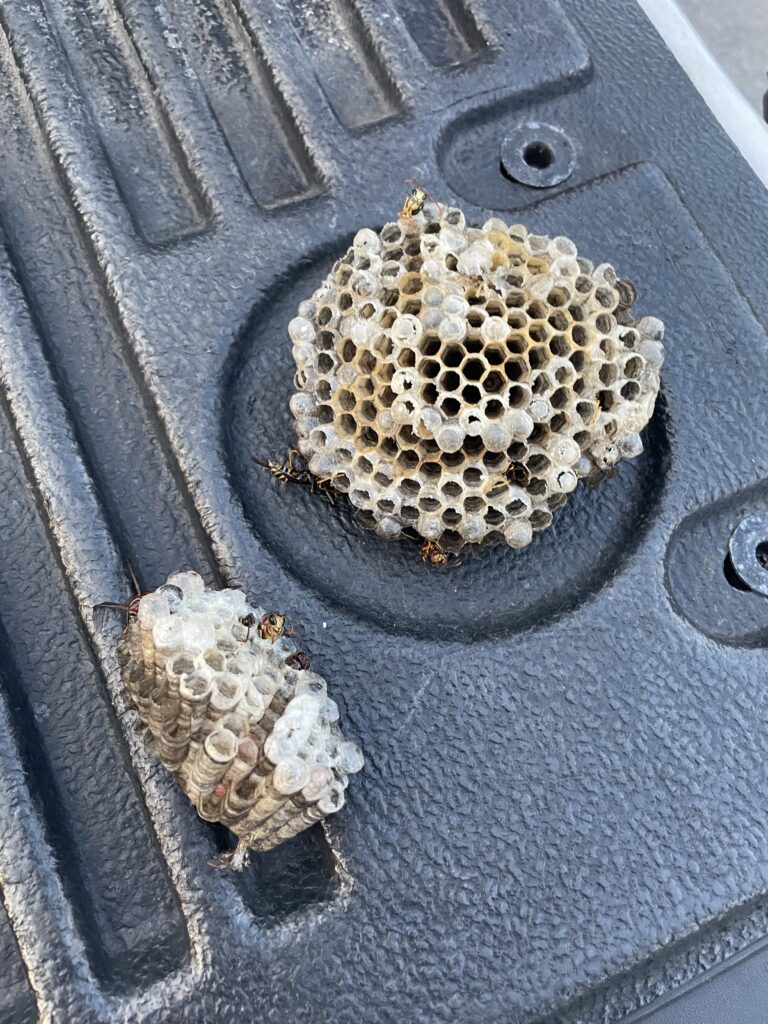
He removed both nests, took care of the wasps that were there, and checked the rest of the building for more. Everything was done before 7 a.m., well before the family arrived.
Why this story matters to us
We share this carefully, and with respect for the family. We’re sharing it because it shows something we see every year: stinging insects can cause real harm, and not only through stings.
- Some people are allergic. For them, a single sting can be a medical emergency.
- Many people are afraid of stinging insects. Fear makes people swat, jump back, or run, sometimes on a ladder, around a vehicle, or on a slick shop floor.
- Wasps are often mistaken for bees. People may not realize how defensive a wasp nest can be, or how close they are to one.
Protecting people is why we do this work. A nest under an overhang can look harmless from across the parking lot. Up close, it can change someone’s day, or worse.
Bees or wasps? How to tell
| Honey bees | Wasps (yellowjackets, hornets, paper wasps) | |
|---|---|---|
| Look | Fuzzy, golden-brown, thicker body | Smooth and shiny, thin “waist,” bright yellow-and-black or brown |
| Nest | Wax honeycomb, usually in a hollow or wall | Gray papery nest, under overhangs and eaves, in walls, or in the ground |
| Behavior | Usually gentle away from the hive | More defensive, especially in late summer and fall |
| Stings | Usually sting once | Can sting again and again |
Honey bees are important pollinators, so we try to save them through our bee removal service. Wasps nesting where people work and walk need a different approach.
Why fall is the most dangerous time for wasp nests
Wasp colonies start small in spring and grow all summer. By late summer and fall, a nest is at its largest, with the most wasps to defend it. University of Tennessee Extension notes that yellowjackets become pests in late summer because of their stinging behavior. A nest no one noticed in June can be a serious problem by October.
If stinging insects are around you
- Stay as calm as you can and move away slowly. Swatting and sudden movements can make wasps more defensive.
- Watch your footing. If you’re on a ladder, under a vehicle, or near equipment, get to stable ground first.
- Keep others away from the nest, especially anyone allergic to stings.
- Don’t seal the opening of a nest inside a wall. Trapped wasps can chew their way indoors.
- Leave large nests to a professional instead of knocking them down yourself.
- Call 911 if someone is stung and has trouble breathing, swelling of the face or throat, or feels faint, or if anyone is hurt in a fall.
When it can’t wait
When a business calls with an emergency, we don’t let formalities get in the way. We take care of the problem first and sort out the details after. Our emergency pest control team serves businesses across Nashville and Middle Tennessee, 24 hours a day, at 615-757-6710. For homes, our wasp control team can be reached at 615-590-1260.
FAQs
How can I tell bees from wasps?
Honey bees are fuzzy and golden-brown. Wasps are smooth and shiny with a thin waist and bright markings. Bees build wax honeycomb, while wasps build gray papery nests.
Why are wasps more aggressive in the fall?
Colonies reach their largest size in late summer and fall, so there are more wasps defending the nest.
What should I do if wasps are around me?
Stay as calm as you can, move away slowly, and get to stable footing. Swatting can make wasps more defensive.
When is a sting an emergency?
Call 911 if someone has trouble breathing, swelling of the face or throat, dizziness, or feels faint after a sting.
Do I have to be a customer to get emergency help?
No. When a business has an emergency, we take care of it first.
Sources: University of Tennessee Extension, Yellowjacket Wasps in Tennessee (late-summer stinging behavior).