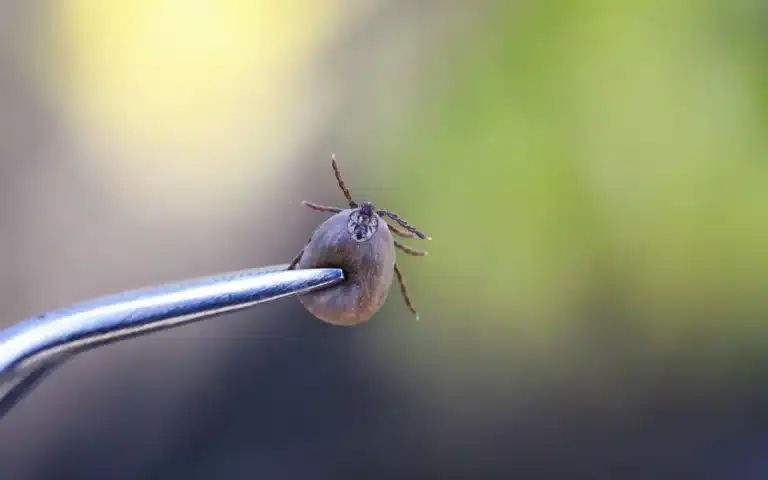
Brown Recluse in Christmas Decorations: How to Unpack Safely

Every year, the boxes come down from the attic, out of the garage, or up from the basement, and every year a few Middle Tennessee families find something besides tinsel inside. Brown recluse spiders are common across Tennessee, and a box of decorations that has sat undisturbed for eleven months is close to the perfect hideout for one.
That doesn’t mean you need to skip the decorating. It means unpacking with a plan. Here’s how to spot a brown recluse in Christmas decorations, how to open boxes safely, and how to pack everything away in January so next year is easier.
Why brown recluses move into holiday boxes
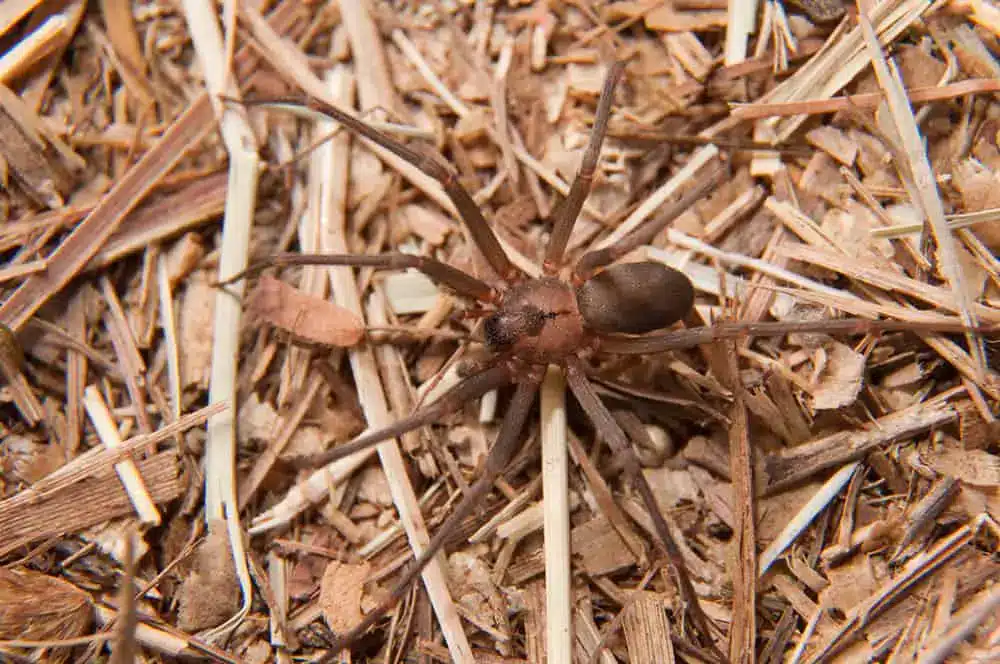
The brown recluse earned its name. It avoids people and light, and it spends the day tucked into dark, dry, undisturbed places, coming out at night to hunt. Attics, garages, closets, and storage rooms check every box, and so do the cardboard boxes inside them. The folds and flaps of cardboard, the tissue paper around ornaments, and the tangled strands of lights all offer the tight, quiet spaces these spiders prefer.

Recluses are also remarkably hardy. They can go months without a meal, so a box that’s been sealed since last January can still hold a living spider. And where you find one brown recluse, there are usually more nearby.
How to recognize a brown recluse
| Feature | What to look for |
|---|---|
| Color | Uniform tan to medium brown, with no stripes, bands, or spots on the legs or abdomen |
| The violin | A darker, violin-shaped mark on the front body section, with the neck of the violin pointing toward the rear |
| Eyes | Six eyes arranged in three pairs, instead of the eight eyes most spiders have (a magnifying glass helps) |
| Size | Body about 3/8 inch long, roughly the size of a quarter with legs extended |
| Web | A loose, irregular, off-white web used as a retreat, not a neat orb web for catching prey |
Plenty of harmless brown spiders get mistaken for recluses, especially wolf spiders and house spiders. If you’re not sure, trap the spider in a jar or on a sticky trap and ask us to identify it.
Unpacking decorations safely, step by step
- Put on gloves. Work gloves are best. Most recluse bites happen when a spider is pressed against skin, like when you reach blindly into a box or slip on a glove that has been stored with the decorations.
- Open boxes outside or in the garage. If something has been living in there, you don’t want to release it in the living room.
- Look before you reach. Use a flashlight to check the corners, flaps, and the bottom of the box for spiders, shed skins, egg sacs, and that off-white, cottony retreat web.
- Unpack one piece at a time. Unwrap ornaments, shake out tree skirts and stockings, and run strands of lights through gloved hands rather than pulling out the whole tangle at once.
- Shake out the artificial tree outdoors. Fluff and shake each section before carrying it inside, paying attention to the center pole and hinges.
- Break down and toss old cardboard. Don’t carry empty boxes back into the house. Flatten them and take them to recycling.
Real trees are a different story. A brown recluse on a fresh-cut Christmas tree would be unusual, since these spiders live in and around buildings. Live trees can carry other harmless hitchhikers, though, so give a fresh tree a good shake before it comes inside.
If a brown recluse bites
Most brown recluse bites heal on their own, but some cause a painful sore that can take weeks to heal. If you think you’ve been bitten, wash the area with soap and water, apply a cool compress, and keep the area elevated if you can. Seek medical care promptly, especially if the area becomes increasingly painful, blisters, darkens, or you develop fever or body aches. If you can safely catch the spider, bring it along to help with identification.
Packing up in January: store decorations so they stay spider-free
How you put things away matters as much as how you take them out. A few changes make next year’s unpacking a lot less nerve-wracking:
- Switch to plastic bins with tight lids. Cardboard has gaps at the corners and flaps. Clear plastic tubs with snap-on lids keep spiders out and let you see inside.
- Seal the gaps. If you keep any cardboard, tape every seam closed.
- Store gloves and shoes in sealed bags, not loose in the storage area.
- Lift bins off the floor onto shelving, and keep them away from walls where spiders travel.
- Place sticky traps along walls and corners in the attic, garage, or storage room. They catch spiders and show you whether you have a problem before you open anything.
- Cut the clutter. Every stack of old boxes, paper, or clothes is another hiding place.
Download our free Brown Recluse Prevention Checklist (PDF) to keep in the storage room or tape inside a bin lid.
When to call a professional
Finding one spider in a box isn’t cause for alarm. Finding several, seeing them in living areas, or catching recluses on sticky traps over and over is a sign of an established population. Brown recluses are hard to control with store-bought sprays because they stay hidden in wall voids, attics, and clutter, out of reach of surface treatments.
That’s why our brown recluse treatment is its own service, separate from general pest control. A Pest Pro inspects your home in person first, finds where the spiders are living, and builds a plan for your house. Some treatments, like attic or crawl space fogging, require everyone to be out of the home for 3 to 4 hours, and we’ll tell you ahead of time if that applies.
FAQs
Do brown recluse spiders hide in Christmas decorations?
Yes. Brown recluses prefer dark, dry, undisturbed places, and boxes of decorations stored for months in an attic, garage, or basement offer exactly that. Open boxes outside and wear gloves while unpacking.
How long can a brown recluse live in a stored box?
Brown recluses can survive for months without food, so a box sealed since last season can still contain a live spider.
What is the best way to store Christmas decorations to keep spiders out?
Use plastic bins with tight-fitting lids instead of cardboard boxes, tape any cardboard seams closed, keep bins on shelves off the floor, and place sticky traps along the walls of your storage area.
How can I tell if a spider is a brown recluse?
Look for a uniform brown color with no leg bands, a dark violin-shaped mark on the front body section, and six eyes arranged in pairs. Many harmless brown spiders look similar, so trap the spider and have a professional identify it if you’re unsure.
Can general pest control get rid of brown recluse spiders?
Brown recluse infestations need their own treatment plan. U.S. Pest inspects your home in person first, then treats where the spiders hide, including areas that regular surface treatments can’t reach.
Decorate with peace of mind
We’re Tennesseans serving Tennesseans, and we’ve helped Middle Tennessee families deal with brown recluses for decades. If you’re finding spiders in your decorations or your home, we’ll identify what you have, explain your options honestly, and stand behind the work with our Whatever It Takes Guarantee. Call us at 615-590-1260 or schedule your free inspection.
Sources: University of Kentucky Entomology, “Brown Recluse Spider” (ENTFACT-631); Centers for Disease Control and Prevention, NIOSH, “Venomous Spiders”; University of Tennessee Extension.