West Nile Virus in Middle TN – What You Should Know

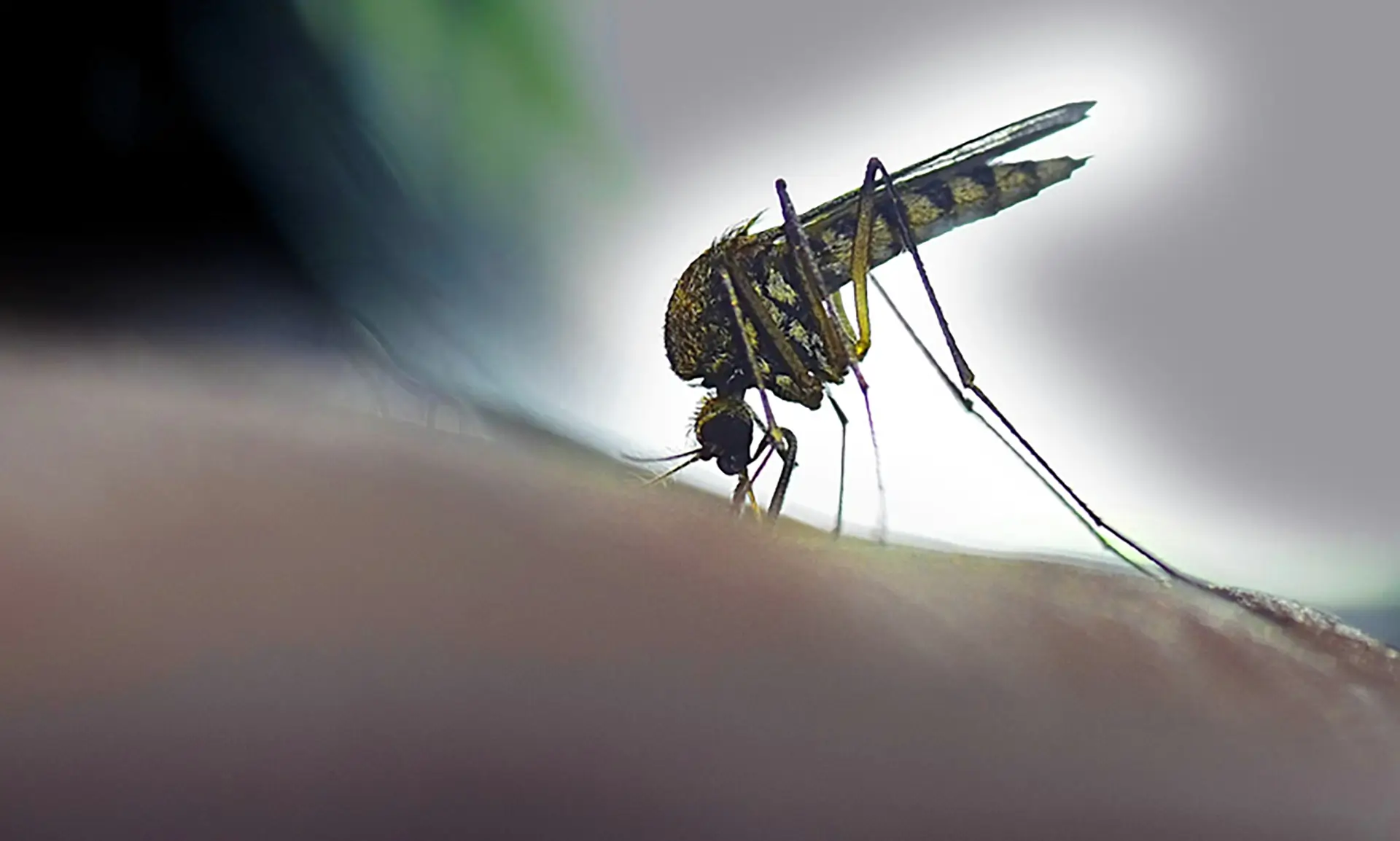
Middle Tennessee’s humid climate brings waves of mosquitoes throughout the summer months. Not only are they annoying, but mosquitoes also pose some health risks like West Nile Virus. Here’s what to know about the illness and what you can do to protect yourself.
The Facts: What is West Nile Virus?
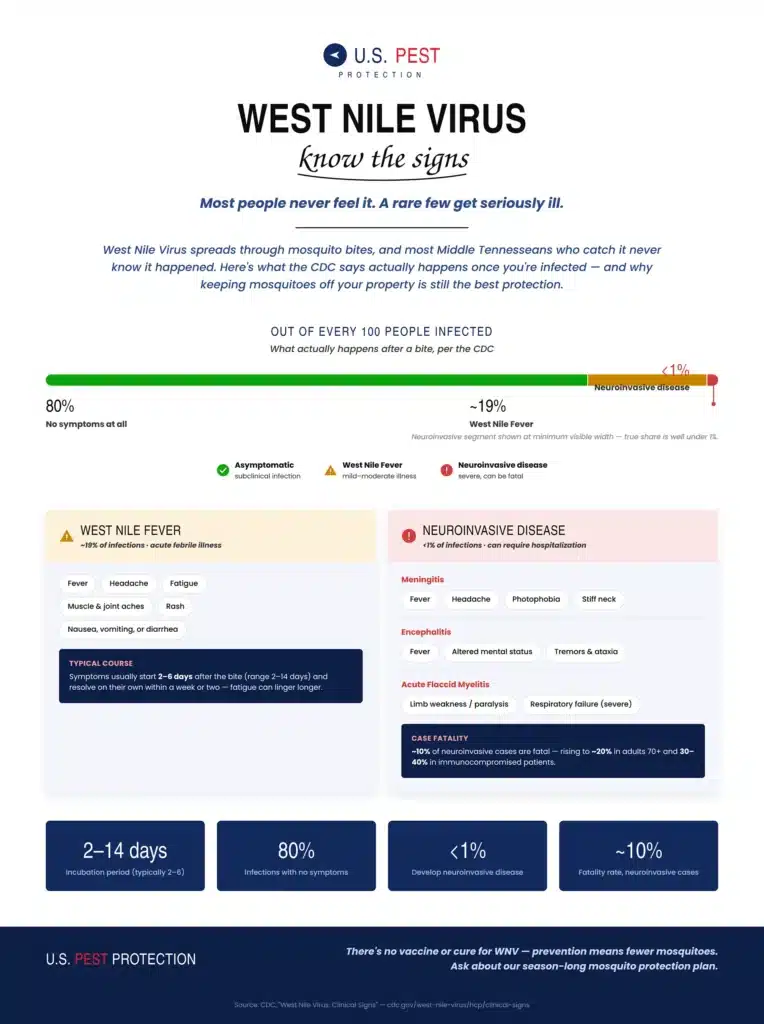
West Nile Virus is a mosquito-borne virus that can cause febrile illness, encephalitis, or meningitis. The incubation period is usually 2 to 6 days. According to the Tennessee Department of Health, about 1 in 5 people infected develop fever, headache, body aches, joint pain, vomiting, diarrhea, or rash, and most recover fully. Less than 1% develop meningitis or encephalitis, and about 1 in 10 of those cases are fatal. People over 60 and those with underlying medical conditions face the greatest risk. No specific treatment or vaccine currently exists.
The Numbers
Nationally, there have been 181 human cases of West Nile Virus as of August 11th, 2026. According to the CDC, the U.S. is experiencing one of its earliest and most intense starts to the virus’ season in over two decades. Middle Tennessee reports also show a spike in activity, with local health departments seeing high numbers of early detections in mosquito pools. Additionally, Shelby County has reported three confirmed human cases as of August 7th.
In 2003, the U.S. saw its largest outbreak of West Nile Virus, with 9,682 reported human cases. For comparison, in August of that year, there were three reported human cases across the state of Tennessee. So, if that tells you anything, it’s time to get serious about mosquito control.
Why August and September are the Real Danger Zone
Tennessee’s historical case data shows West Nile cases begin rising in June, peak in August and September, and decline by October. By this point in the summer, mosquitoes have gone through multiple breeding cycles, meaning there are multiple generations about and populations are at their peak.
Bird populations are also at their peak and they serve as the main host for West Nile Virus. Newly hatched birds are easily bitten and the virus gets passed back and forth with local mosquitoes, building up high viral levels across the environment.
With people spending more time outdoors on summer evenings and nights — peak mosquito feeding time — there is an increase in activity overlap. Bites are more likely, and therefore the chance of transmission is also more likely.
A Closer Look at Symptoms and High-Risk Groups
Most people infected with West Nile Virus are asymptomatic, but it can be fatal. Severe neuroinvasive risk is concentrated in adults 60+ and immunocompromised individuals. In general, West Nile Virus is not something to develop anxiety over as most cases go undetected. However, there is always a risk, so it is important to stay informed and take precautions where you can.
Simple Steps That Actually Make a Difference
Mosquito prevention starts in your own yard. The most effective habits address breeding conditions directly rather than just reacting to bites after the fact.
- Walk your property after every rainstorm and dump any containers holding water — flower pots, buckets, tarps, kids’ toys, and clogged gutters are the most common culprits
- Keep grass mowed short and shrubs trimmed back to reduce the shaded resting spots mosquitoes retreat to during the day
- Add a fan to your outdoor seating area — mosquitoes are weak fliers and even a light breeze disrupts their ability to track and land on you
- Plant basil, rosemary, or catnip near areas where you spend time outside for a mild natural deterrent
When Home Prevention Isn’t Cutting It
Yard habits reduce exposure, but they have limits. Mosquitoes travel from neighboring properties, breed in spots that are easy to miss, and repopulate faster than most DIY treatments can keep up with — especially during Middle Tennessee’s heavy summer months.
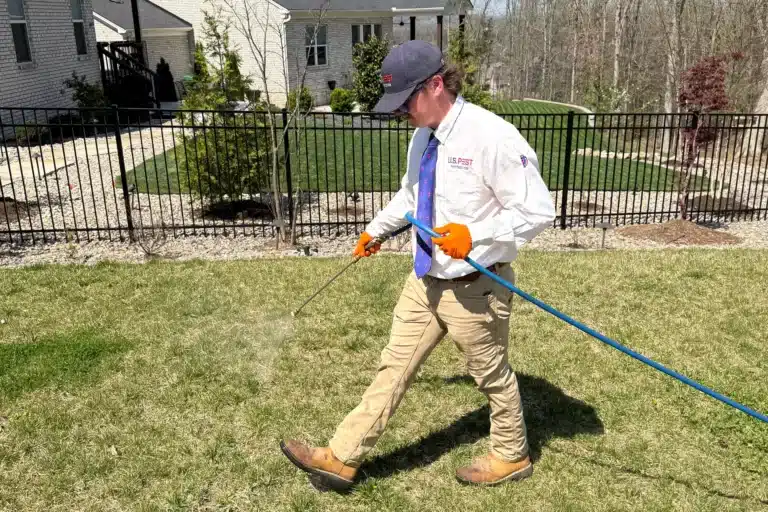
U.S. Pest’s year-round mosquito treatment program works differently from a one-time spray. Our technicians target adult mosquitoes where they rest, treat standing water to stop larvae before they hatch, and return on a schedule timed to break each new breeding cycle before it gets established. That recurring cadence is what makes the difference between knocking down a population temporarily and actually keeping it down.
Properties with ornamental ponds, water features, dense tree cover, or low-lying areas that hold water after storms are especially good candidates for professional treatment. Call U.S. Pest at 615.590.1260 or schedule a free inspection to find out what’s driving mosquito activity on your specific property.
DIY vs. Professional Treatment
| DIY Approach | Professional Treatment (U.S. Pest) | |
|---|---|---|
| Targets | Adult mosquitoes present at time of spraying | Eggs, larvae, and adults in every life stage |
| Duration | Hours to a few days | 14–30 day residual protection, reapplied on cadence |
| Breeding Sites | Only what you can see and reach | Identifies hidden and hard-to-reach standing water |
| Best For | Light activity, small yards, in-between upkeep | Consistent, season-long population reduction and elimination |
Frequently Asked Questions
Is West Nile Virus a serious concern in Nashville right now?
West Nile Virus numbers are on track to be much higher this season than in previous years. It is important to take precautions when outdoors and have your yard professionally treated. However, due to the asymptomatic nature of most cases, it is not yet a serious threat to the general population.
How do I know if a mosquito bite could carry West Nile?
There is no way to tell if a mosquito was carrying West Nile from the bite alone. It will look identical to that of a normal mosquito bite. To determine if you were infected, monitor health symptoms for 2 to 14 days after the bite. Stay up to date with local public health advisories and virus reports to know if West Nile is active in your area.
Does professional mosquito treatment reduce West Nile risk?
Professional mosquito treatment reduces the risk of mosquito bites by cutting down populations around your home. U.S. Pest’s 12-month treatment plan kills adult mosquitoes on contact and stops larvae from growing in standing water. Treating year-round ensures that next season’s population is reduced as well, rather than only targeting current populations. While professional treatment cannot protect you directly from West Nile, it does lessen your chance of bites overall, and therefore bites that could transmit the virus.
What should I do if I think I have symptoms?
For mild symptoms like low fever, headache, or body aches, treat at home with rest and plenty of fluids. If these symptoms do not cease or if you are experiencing severe symptoms like high fever, stiff neck, confusion, or muscle weakness, seek medical attention right away.
Are certain areas of Middle Tennessee more at risk than others?
No specific city or county in Middle Tennessee is more at risk than another. Risk is determined by local environmental conditions. Urban, suburban, or rural pockets with persistent standing water, poorly maintained retention ponds, or dense vegetation will see higher mosquito activity. The more mosquitoes present, the higher likelihood of being infected with West Nile Virus.
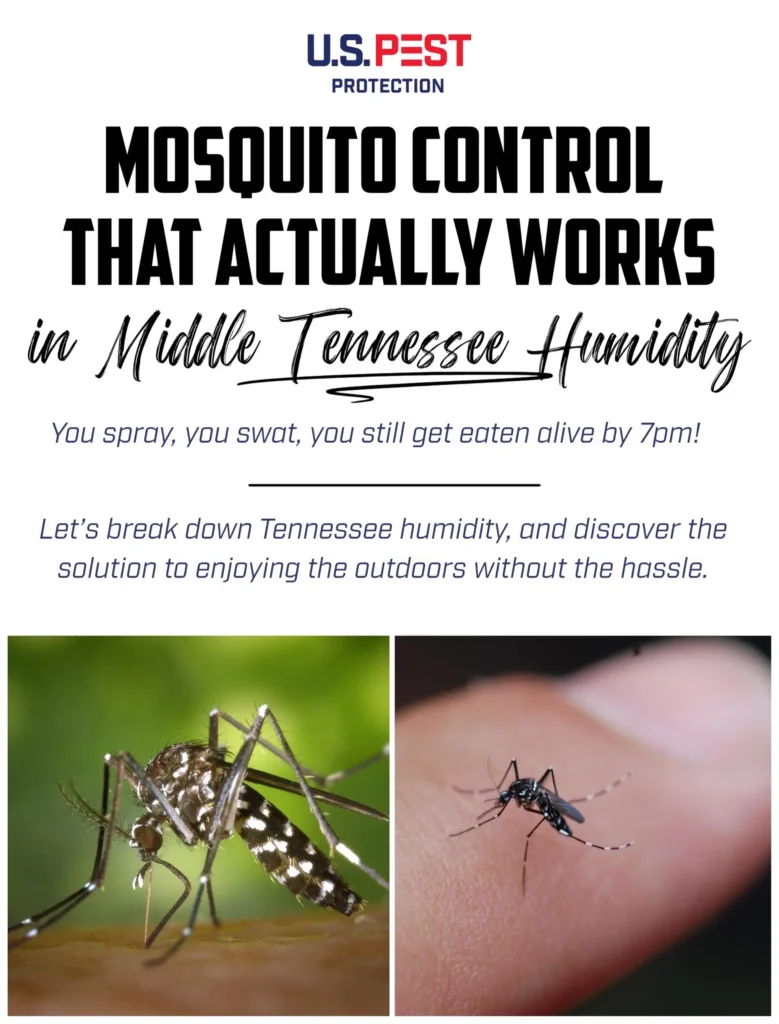
Get Mosquito Control Built for Middle Tennessee
Generic advice doesn’t account for Middle Tennessee’s humidity, our soil, or our rainfall swings — our treatment plans do. With West Nile reports already higher than last year, it’s important to get your home protected as soon as you can. Professional treatment will take down current and future populations to help reduce bites and the spread of West Nile and other mosquito-borne illnesses.
Call U.S. Pest Protection at 615.590.1260 or schedule a free inspection today to learn about treatment plans.
This is not medical advice. U.S. Pest Protection is a pest control company, not a medical provider. The information here is general and descriptive. If you have symptoms after a mosquito bite, contact your physician. Our services reduce mosquitoes on your property — they do not prevent or treat illness.