
Why Didn’t Ladybugs Swarm Tennessee Homes Back in the ’80s?

Ladybugs were the friendly bug of a Middle Tennessee childhood. You’d let one crawl across your hand and make a wish. You didn’t find hundreds of them piled into a window frame every October. If that’s a newer sight for you, there’s a reason: the “ladybugs” covering Tennessee homes in the fall are a different insect, and like the stink bugs we wrote about recently, they weren’t here when many of us were growing up.
The short answer: a newcomer moved in
Tennessee has always had native lady beetles, and they mostly keep to gardens and fields. The ones that swarm houses are multicolored Asian lady beetles. They’re native to Asia and have been introduced around the world (Penn State Extension).
The U.S. Department of Agriculture released them many times between 1916 and 1985 to fight aphids and scale insects on crops, but the beetles were never found again afterward, so researchers assumed they hadn’t survived (Virginia Cooperative Extension). Then, in 1988, the first established population turned up in Louisiana, near the busy port of New Orleans (USDA Agricultural Research Service).
Nobody knows for sure whether those beetles came from the earlier releases or hitchhiked in on cargo ships (Penn State Extension). Either way, they spread quickly across the country. They had reached Pennsylvania by the fall of 1993 (Penn State Extension). So in the 1980s, the ladybugs on your porch were the native kind, and the house-swarming habit hadn’t arrived yet.
How to tell Asian lady beetles from native ladybugs
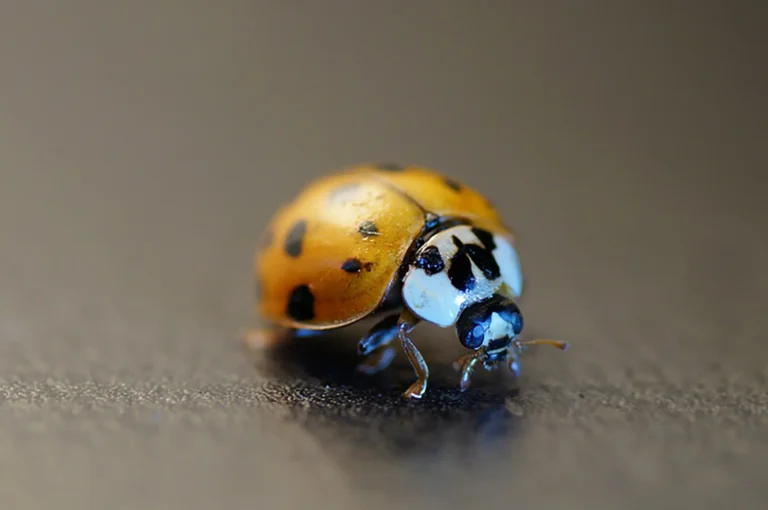
Asian lady beetles are a little bigger than most native ladybugs, about a quarter inch long, and they can have anywhere from zero to 19 spots. Many have a black M-shaped mark on the white area behind the head, though not all do (University of Illinois Extension). Their color runs from pale orange to deep red. Some people call them “Halloween lady beetles” because of their pumpkin color and the big crowds that show up around Halloween (Cornell University). Our lady beetle identification guide has photos to help.
Why you’re seeing them right now
In the fall, Asian lady beetles look for protected spaces to spend the winter (Michigan State University Extension). A warm, sunny afternoon after a cool stretch sets them off, which is why they seem to appear out of nowhere on the first nice day after a cold snap (University of Minnesota Extension).
They gather on the sunny south and west sides of buildings (Clemson Extension), and they’re especially drawn to lighter colors like white, gray, and yellow (USDA Agricultural Research Service). Light siding on the sunny side of the house is prime real estate.
What draws them inside
Once a few beetles find a good spot, they release a chemical that draws in more of their kind (Clemson Extension). From the outside walls, they squeeze into homes through cracks and gaps (UConn Extension), usually around windows, doors, siding, and attic vents.
Most spend the winter tucked into walls and attics. On sunny days, especially late in winter, the sun can warm the siding enough to wake them up, which is why they sometimes wander into your living room in January (Michigan State University Extension). They show up again in February and March as they try to get back outside (Clemson Extension).
Why they stink, stain, and sometimes bite
When an Asian lady beetle feels threatened, it releases a yellowish fluid from its legs. Entomologists call it “reflex bleeding.” The fluid has a foul odor and can stain walls and fabrics (Michigan State University Extension), and it can even attract more beetles (University of Minnesota Extension).
They can also bite, which surprises a lot of people. It occasionally draws blood on tender skin, and some people develop allergies to the beetles or to their fluid (Clemson Extension). The bite isn’t dangerous, just irritating (University of Minnesota Extension). They don’t damage your home’s structure.
Good bug, bad habits
Outdoors, Asian lady beetles do real good. They eat aphids and other soft-bodied pests in orchards, forests, and gardens (USDA Agricultural Research Service). The downside is that they outcompete native lady beetles for food and even eat native lady beetle eggs and larvae, and in many places their arrival has lined up with a decline in native species (University of Illinois Extension). It’s a big part of why the ladybugs you see today aren’t the ones you grew up with.
What to do if lady beetles are getting in
- Seal up before fall. Prevention is the best approach (Clemson Extension). Caulk cracks around windows, doors, and siding, repair torn screens, and check attic and soffit vents, especially on the sunny south and west sides of the house.
- Vacuum, don’t squash. Crushing them releases the smelly, staining fluid. Vacuum them up and empty the bag or canister outside.
- Move fast. The more beetles that gather in one spot, the more they attract.
- Treat early. Once they’re inside your walls, they’re hard to reach. Exterior treatment works best before they start moving in.
How U.S. Pest helps
Lady beetles are covered on all of our home pest control plans, along with stink bugs and other fall invaders. Each visit includes an exterior treatment around the places they gather and get in, like eaves, windows, doors, and siding, and your technician can point out the gaps worth sealing during your free inspection.
Compare our monthly, every other month, and quarterly plans. Every plan is backed by our Whatever It Takes Guarantee. Call 615-590-1260 or schedule a free inspection.
Serving your area: Nashville · Hendersonville · Franklin · More Middle Tennessee pest news
FAQs
Why didn’t ladybugs swarm Tennessee homes in the 1980s?
The ladybugs that swarm homes today are multicolored Asian lady beetles. Their first established population in North America was found in Louisiana in 1988, and they spread across the country in the years after. Native ladybugs have always lived in Tennessee, but they don’t invade houses.
How can I tell an Asian lady beetle from a native ladybug?
Asian lady beetles are about a quarter inch long, range from orange to red, and have anywhere from zero to 19 spots. Many have a black M-shaped mark behind the head. If they’re gathering by the dozens on your house in the fall, they’re almost certainly Asian lady beetles.
Why are there so many lady beetles on my house in the fall?
They’re looking for sheltered places to spend the winter. A warm, sunny day after a cool stretch triggers them to gather on sunny, light-colored walls, and the first arrivals release a chemical that draws in more.
Do Asian lady beetles bite?
Yes, occasionally. The bite can sting and sometimes draws blood on tender skin, but it isn’t dangerous. Some people are allergic to the beetles or the yellow fluid they release.
Why do lady beetles leave yellow stains?
When they feel threatened, they release a yellowish fluid from their legs called reflex bleeding. It smells bad and can stain walls and fabrics, so vacuum them up instead of crushing them.
How do I keep lady beetles out of my house?
Seal cracks and gaps around windows, doors, siding, and vents before fall, vacuum up any that get inside, and have the outside of your home treated before they start moving in. All U.S. Pest home plans cover lady beetles.
Why do lady beetles swarm the tallest, lightest house in the neighborhood?
In their native Asia, Asian lady beetles spend the winter in the cracks of tall, sunny cliffs. Here, the closest match is a tall, light-colored house, especially one with dark shutters or windows that look like cracks to the beetles. Light siding on the sunny south and west sides reflects the most light and warmth, and once a few beetles land, they release a chemical that draws in more.