
Tick Control in Nashville & Middle Tennessee
U.S. Pest Protection treats Middle Tennessee yards for ticks every 30 days, year-round. From March through November, the same visit also treats for mosquitoes and fleas, and from December through February, we keep treating for ticks and fleas. We rotate products through the year to match Middle Tennessee’s tick seasons and target the places ticks actually live, like wood lines, leaf litter, tall grass, and shaded beds. Family-owned since 1985. Call 615-590-1260 or schedule a free yard inspection.
Our tick control treats your yard every 30 days, year-round, with mosquito and flea control included March through November. Here’s what sets it apart:

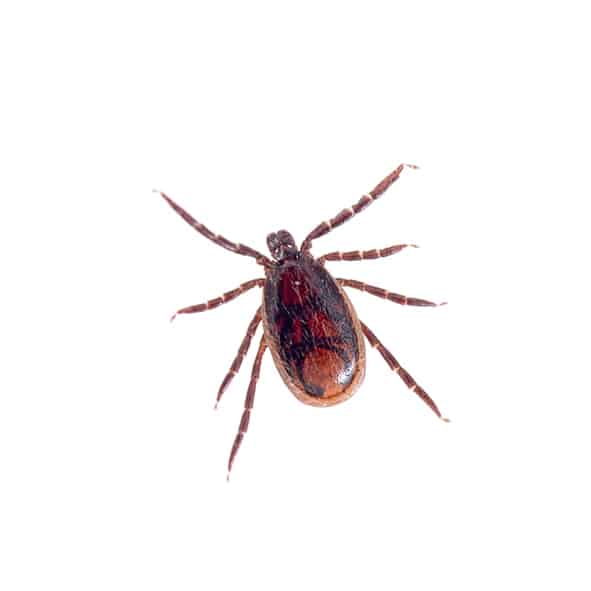
Tick Control, Made Simple

Schedule Your Free Inspection:
Our experts walk your yard and find where ticks live, hide, and wait for a host.
Get Your Customized Solution:
Receive a year-round plan with treatments every 30 days.
Enjoy Peace of Mind:
Rest easy with protection backed by our Whatever It Takes Guarantee.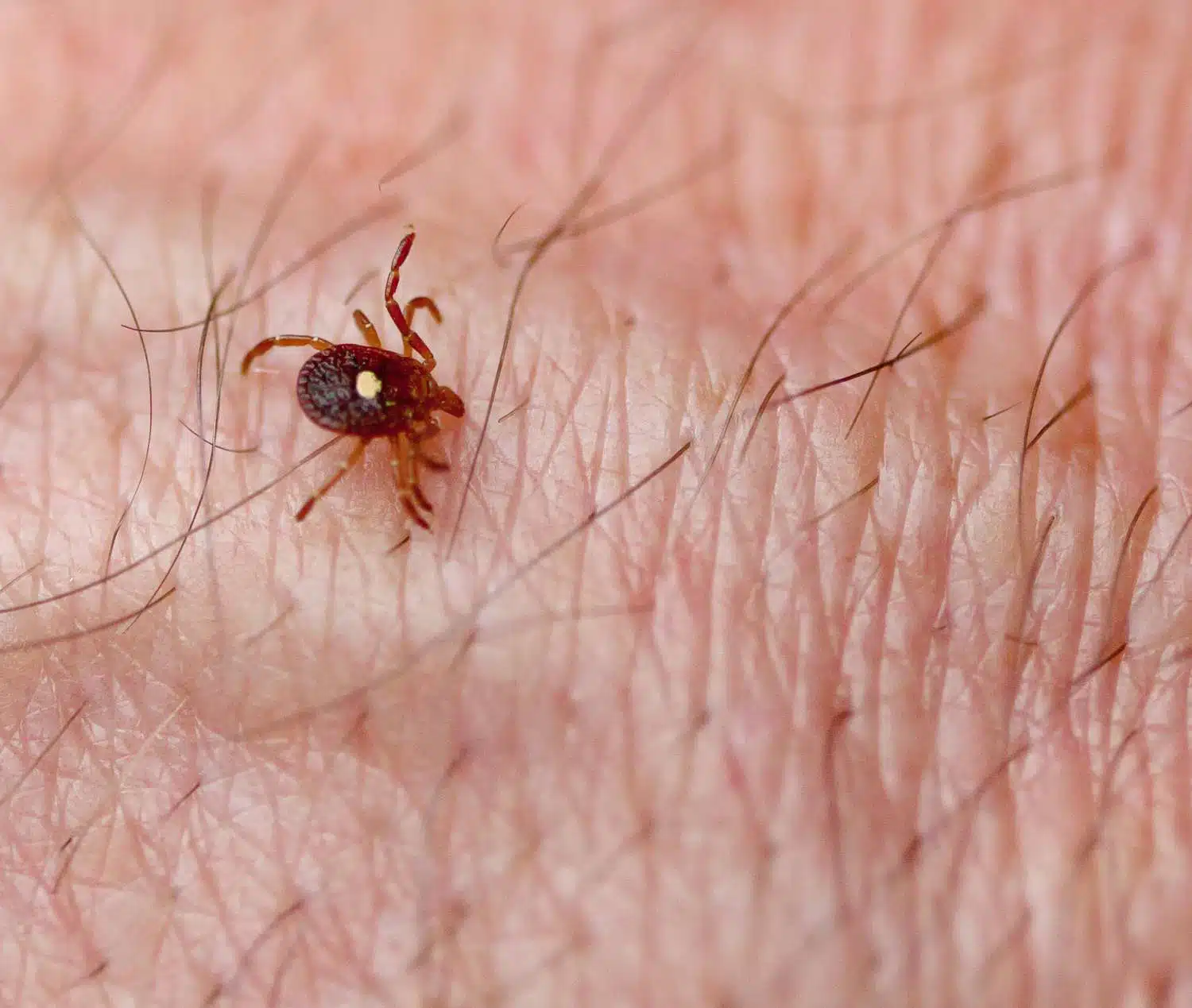
Why Ticks Are a Serious Problem in Middle Tennessee
Ticks in Tennessee carry real illnesses. According to the Tennessee Department of Health, ehrlichiosis was the most reported tick-borne disease in the state in 2023, and about 56% of those patients were hospitalized. Davidson and Williamson counties alone accounted for 27% of the state’s cases.
Our year-round tick treatment plan
We rotate products through the year to keep control strong, prevent resistance, and match what ticks are doing in each season. Every visit is 30 days apart, applied by licensed technicians according to label directions:
March through November: a three-part treatment. Our Eagle Trifecta combines Talstar P for a long-lasting barrier, Mavrik Perimeter for a second layer that’s especially strong on ticks and mosquitoes, and ExciteR to knock down the ticks, fleas, and mosquitoes already in your yard.
December and January: a granular winter treatment. Talstar G granules go into leaf litter, fence lines, wooded edges, and brush piles, where adult deer ticks spend the winter.
February: an insect growth regulator. This breaks the tick and flea life cycle before spring, which is the most effective time of year to stop a population from building.
Why tick control is year-round in Tennessee
Tennessee has six medically important tick species, and they don’t share a calendar. As one winds down, another is peaking, so every month of the year at least one species is out and feeding. The blacklegged (deer) tick, which carries Lyme disease, is most active from October through May and can bite on any day above freezing. That’s why we treat every 30 days, all year, instead of stopping in the fall and starting over in spring.
Tick-borne illnesses in Tennessee
Not every tick carries disease, but Tennessee sees several tick-borne illnesses every year:
- Ehrlichiosis, spread by the lone star tick. It was Tennessee’s most reported tick-borne disease in 2023, cases rose 22% over 2022, and about 56% of patients were hospitalized.
- Spotted fever rickettsiosis, including Rocky Mountain spotted fever, spread mainly by the American dog tick. Tennessee is one of five states that together account for more than half of all U.S. cases, with 4,352 cases reported from 2013 to 2023. Learn more.
- Alpha-gal syndrome, a delayed allergy to red meat triggered by lone star tick bites. Learn more about alpha-gal.
- Lyme disease, spread by the blacklegged (deer) tick. It’s less common here than in the Northeast but rising: Tennessee reported 39 cases in 2023, up 18%, and 94% of cases over the past decade were in Middle and East Tennessee.
- Anaplasmosis, also spread by the blacklegged tick. About two-thirds of Tennessee cases occur from June through September.
Case counts come from the Tennessee Department of Health, and reported numbers are the floor, not the ceiling, since tick-borne illness is often missed. Some tick-borne illnesses can spread within hours of a bite, so if you develop fever, rash, or headache after a tick bite, call your doctor the same day and mention the bite.
Tennessee’s six tick species
| Tick | When it’s active in Middle Tennessee | What it can carry |
| Lone star tick (adult females have a single white dot) | Adults on warm winter days, peak March–May; nymphs April–August; larvae June–October | Ehrlichiosis, tularemia, Heartland virus, STARI, and alpha-gal syndrome |
| American dog tick | Spring through summer, highest risk April–July | Rocky Mountain spotted fever and tularemia |
| Blacklegged (deer) tick | Adults October–May on any day above freezing; nymphs May–July | Lyme disease, anaplasmosis, babesiosis, and Powassan virus |
| Gulf Coast tick | Adults June–September | Spotted fever (Rickettsia parkeri) |
| Brown dog tick | Year-round; can breed indoors | Rocky Mountain spotted fever; mainly bites dogs |
| Asian longhorned tick | Spring through fall; found in East Tennessee | No known human disease in the U.S., but causes severe livestock infestations |
See our full Tennessee tick ID guide.
What’s included in tick control
- A yard inspection to find where ticks live and where your family and pets spend time
- Treatment every 30 days, year-round, with products rotated by season
- Targeted treatment of wood lines, fence lines, leaf litter, tall grass, and shaded beds
- Mosquito treatment included March through November
- A winter granular treatment and a February growth regulator to stop ticks and fleas before spring
- Yard recommendations that make your property less inviting to ticks
- Free return visits if ticks come back between treatments
- Products applied by label directions, by licensed technicians
Middle Tennessee tick calendar, month by month
| Month | What’s active, and what we apply |
| January | Deer tick adults at peak; lone star adults on warm days. Granular treatment in leaf litter, fence lines, and wooded edges. |
| February | Deer tick adults still active above freezing; lone star adults waking up. Insect growth regulator to break the life cycle before spring. |
| March | Lone star adults entering peak; American dog ticks emerging. The three-part Eagle Trifecta treatment begins. |
| April | Lone star adults and nymphs; American dog ticks active. Ehrlichiosis risk window opens. Full treatment, including wood lines and tall-grass edges. |
| May | The heaviest tick overlap of the year. Full treatment; this is the most important visit of the year. |
| June | Lone star and deer tick nymph peak; Gulf Coast ticks begin. Full treatment. Nymphs are poppy-seed sized and cause most human illness. |
| July | Lone star larvae (“seed ticks”) begin; several tick-borne illnesses active at once. Full treatment on a strict 30-day schedule. |
| August | Lone star larvae swarm in leaf litter; highest alpha-gal risk of the year. Full treatment, low and thorough in shaded ground cover. |
| September | Lone star larvae still heavy; deer tick adults return late in the month. Full treatment. |
| October | Deer tick adults ramping up. Full treatment; stopping here would give deer ticks a seven-month head start. |
| November | Deer tick adults at peak, carried in by deer along woods and pastures. Final three-part treatment of the year. |
| December | Deer tick adults active any day above freezing; brown dog ticks indoors. Granular winter treatment begins. |
When Ticks are Active – a quick visual guide

Why ticks matter to our family
In August 2026, our COO, J.K. Brister, was bitten by a tick after walking through untreated farmland. Within five days, he’d been to the emergency room twice, with a fever that wouldn’t break, a severe headache, and a spreading rash, before he was diagnosed with ehrlichiosis.
We’ve protected Middle Tennessee homes from ticks since 1985, and it still happened to one of us. That’s why we treat tick control as a health service, not just a yard service. Read J.K.’s story and what happened next.
More tick resources from U.S. Pest
- You found a tick. Now what?
- The 6 spots in your yard where ticks are living right now
- Lone star vs. dog tick vs. deer tick: a Tennessee tick ID guide
- Alpha-gal in Tennessee
- Rocky Mountain spotted fever and ehrlichiosis in Tennessee
- Why tick control still matters as summer winds down
How our tick control works
- Free yard inspection. We walk your property and show you where ticks are likely living.
- Written plan and price. You get a year-round plan with treatments every 30 days.
- Treatment every 30 days. We rotate products by season and treat for mosquitoes, too, from March through November.
- Free return visits. If ticks come back between treatments, call us and we’ll come back at no extra cost.
Tick Control FAQs
How often do you treat for ticks?
Every 30 days, year-round. Ticks in Middle Tennessee can be active on warm winter days, so regular treatment keeps your yard protected all year.
Do you treat for mosquitoes and fleas too?
Yes. From March through November, each visit treats for ticks, mosquitoes, and fleas. From December through February, we treat for ticks and fleas.
Where do ticks live in my yard?
Ticks prefer shady, humid spots: wood lines, fence lines, leaf litter, tall grass, shaded beds, and the areas under decks and around play sets. Open, sunny lawn is much less inviting to them. See the 6 spots where ticks live
Why treat for ticks in the winter?
The deer tick, which carries Lyme disease, is most active from October through May and bites any day above freezing. In winter, we treat the leaf litter and wooded edges where it overwinters, which is the most effective time of year to knock the population down.
What should I do if I find a tick on me?
Remove it with fine-tipped tweezers, grasping it close to the skin and pulling straight out. Clean the area and watch for fever, rash, or headache over the next few weeks. Some tick-borne illnesses can spread within hours, so don’t assume a tick wasn’t attached long enough to matter. If symptoms appear, call your doctor and mention the bite. Here’s what to do next.
My dog is on tick prevention. Do I still need yard treatment?
Your dog’s prevention protects your dog, but not your kids or your yard. Lone star ticks actively move toward people and pets rather than waiting to be brushed against. Yard treatment and veterinary prevention work best together.
Can I be outside after a treatment?
Your technician will tell you how long to keep people and pets off treated areas. Most yard treatments need only a short wait until surfaces dry.
I never see ticks. Do I really need tick control?
Probably, if your yard borders woods, tall grass, or pasture. The stage that causes the most illness is the nymph, about the size of a poppy seed, so almost nobody sees the tick that makes them sick. Not finding ticks doesn’t mean they aren’t there.
What diseases do ticks carry in Tennessee?
Ehrlichiosis and spotted fever rickettsiosis, including Rocky Mountain spotted fever, are the most common. Lone star tick bites can also cause alpha-gal syndrome, a delayed red meat allergy. Lyme disease and anaplasmosis, carried by the deer tick, are less common but rising, especially in Middle and East Tennessee.
How do I get started?
Call 615-590-1260 or schedule a free yard inspection. We’ll walk your property, show you where ticks are likely living, and give you a year-round plan and price.
Tips to help keep ticks away
- Keep your grass mowed and clear away leaf litter and brush.
- Put a 3-foot strip of wood chips or gravel between your lawn and wooded areas.
- Keep play sets, patios, and decks away from wood lines.
- Check yourself, your kids, and your pets for ticks after time outside.
- Shower within two hours of coming indoors after time in tick habitat.
Tick control across Middle Tennessee
We protect homes in Nashville, Franklin, Brentwood, Murfreesboro, Smyrna, Hendersonville, Gallatin, Mt. Juliet, Lebanon, Clarksville, and surrounding areas.
Get a free yard inspection and year-round tick protection that also covers mosquitoes and fleas. Schedule your free inspection or call 615-590-1260.
More Ways We Protect Your Home
Not sure what you’re dealing with?
Identify it in our Pest ID Guide.
