
Why Are There So Many Ladybugs on My Home During October?

Ladybugs seem to have chosen your home as their favorite hangout spot. Maybe you’re annoyed, or maybe you’re feeling lucky. Either way, if you take a closer look, those “ladybugs” could be a different pest entirely.
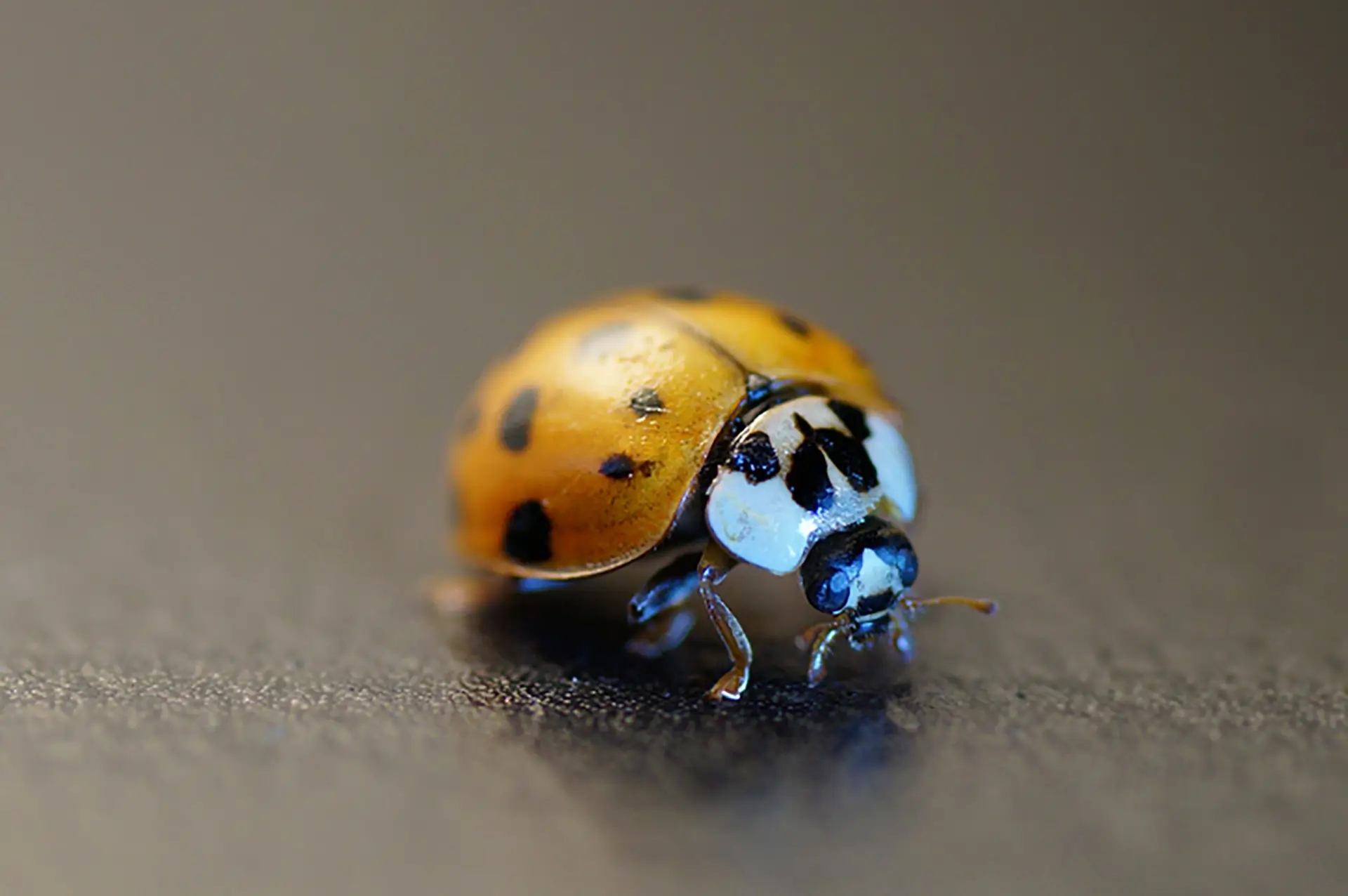
The swarms of “ladybugs” on Middle Tennessee homes in October are most likely multicolored Asian lady beetles. According to University of Tennessee Extension, they usually start gathering on Tennessee homes around the third week of October, clustering on warm, sunny walls and looking for cracks and gaps where they can spend the winter. They don’t damage homes, but they can pinch, leave an unpleasant odor, and stain surfaces.
Asian Lady Beetle vs. Native Ladybug: How to Tell the Difference
So how do you tell these copycats from real ladybugs? The table below covers the key differences in appearance and behavior.
| Feature | Asian lady beetle (Harmonia axyridis) | Native ladybug |
|---|---|---|
| Head marking | White area behind the head with a black “M” or “W” shape — the best identification clue | Mostly black behind the head with small white dots or lines, no “M” |
| Color | Highly variable: pale yellow, tan, orange, or red | Usually a consistent bright red |
| Spots | Anywhere from 0 to 19, often faint | Fewer, crisp spots that are consistent within a species |
| Size and shape | Slightly larger (about 7 mm), more oval and domed | Smaller (about 5–6 mm), rounder |
| Native range | Eastern Asia; introduced to North America and now widespread | North America |
| Where they live | Trees, orchards, forest edges, and crop fields | Gardens, meadows, grasslands, and low plants |
| Where they overwinter | Large groups in buildings, wall voids, and attics, or on light-colored cliffs and rock faces | Outdoors under leaf litter, bark, or rocks; some species cluster in mountain areas |

What’s the easiest way to tell Asian lady beetles and ladybugs apart?
Look for the “M” or “W” marking behind the head. Asian lady beetles have a white area behind the head with a black “M” or “W” shape, and native ladybugs don’t. Asian lady beetles also vary widely in color, from pale yellow to red, and can have anywhere from 0 to 19 spots, which are often faint. Native ladybugs tend to have crisper spots and more consistent coloring within each species. Still not sure what you’re seeing? Check our Pest ID Guide or send our team a photo.
Why Do Asian Lady Beetles Swarm Houses in the Fall?
Asian lady beetles swarm houses in the fall because they’re looking for a protected place to spend the winter. In their native range in Asia, they shelter in cracks in cliffs and rock faces. Here, light-colored homes with sunny south- and west-facing walls are the closest match, especially near woods or fields. Native ladybugs, by contrast, spend the winter outdoors under leaf litter, bark, or logs.

They often return to the same homes year after year, so if you don’t seal entry points, you’re likely to see them again next fall.
Are Asian Lady Beetles Dangerous?
Asian lady beetles aren’t dangerous to most people, but they are a nuisance. They don’t sting, though they can pinch or nip skin. When disturbed, they release a yellowish, foul-smelling fluid that can stain walls, carpet, and fabric. Some people also develop allergies from large indoor groups of these beetles.
They can be a bigger problem for pets. Dogs and cats sometimes eat the beetles, which can stick to the roof of a dog’s mouth and cause painful sores. Swallowing them can also upset your pet’s stomach. If your pet is drooling, foaming at the mouth, or pawing at its face during lady beetle season, check its mouth and call your veterinarian. If you have pets, learn more about our approach to family and pet protection.
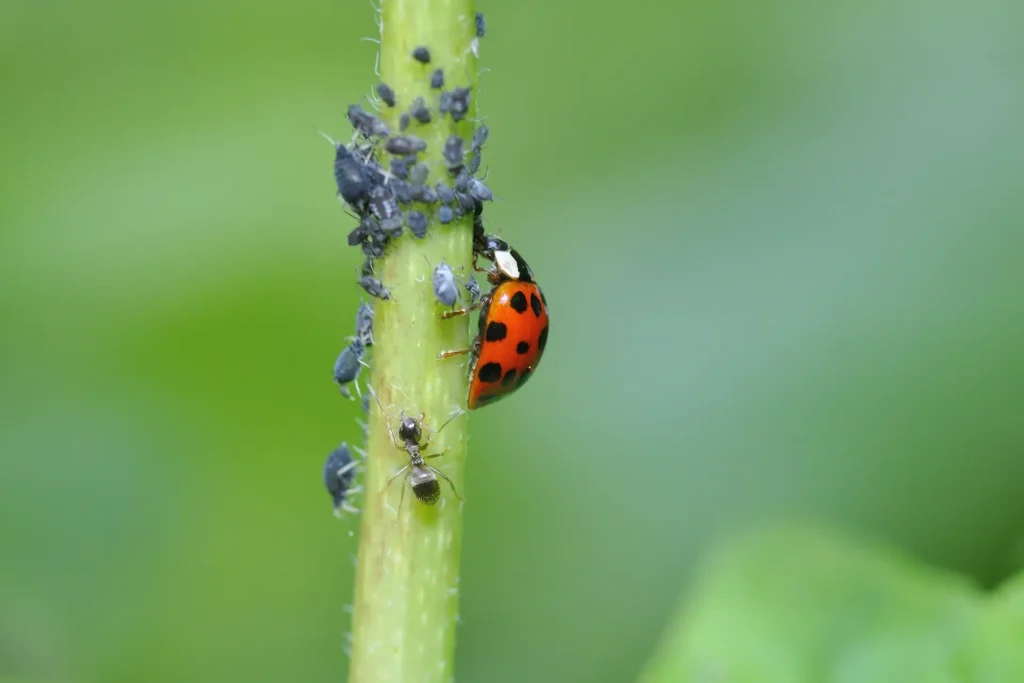
Asian lady beetles don’t cause structural damage. Outdoors, they’re actually helpful — they eat aphids, scale insects, and other plant pests. But once they find a way inside, large numbers can gather in attics, wall voids, and around windows. If you’re seeing a lot of activity around your home, it’s a good idea to call a licensed professional. The Tennessee Department of Agriculture offers consumer tips for hiring a pest control company, including how to verify the company is chartered with the state.
How to Get Rid of Asian Lady Beetles Inside Your House
The most important rule is simple: don’t crush them. Like stink bugs, Asian lady beetles release a foul odor and a staining fluid when crushed. Instead, vacuum them up and empty the vacuum bag or canister outside, away from your home, or capture them in a cup and release them outdoors.
Avoid spraying insecticide on clusters indoors. It leaves piles of dead beetles and unpleasant odors behind, and bug bombs and light traps aren’t effective. The Tennessee Department of Health’s Healthy Homes program also warns that improper pesticide treatments can leave residues in your home that pose health risks.
How to Keep Asian Lady Beetles from Coming Back
The best approach is to seal entry points before they arrive in October. Caulk cracks around windows, doors, siding, soffits, and where utility lines enter your home, and repair any damaged window and door screens. For extra protection, consider a professional exterior treatment in early fall to add a protective barrier on the sunny sides of your home where the beetles gather.

How U.S. Pest Protection Can Help
U.S. Pest Protection is a family- and woman-owned pest control company based in Hendersonville, Tennessee. Since 1985, we’ve protected more than 50,000 homes and businesses across Nashville and Middle Tennessee. Our technicians average seven years with the company, so the person at your door knows Middle Tennessee pests — including the lady beetles that show up on local homes every October.
We’re ranked among the top 100 pest control companies in the country by PCT Magazine, BBB A+ rated, voted Best Pest Control Company by Nashville Scene readers, and members of the National Pest Management Association and the Tennessee Pest Management Association.
What We Offer
Along with fall invaders like Asian lady beetles, our Pest Pros handle general pest control, termites, mice and rats, cockroaches, ants, spiders, mosquitoes, ticks, and other common Middle Tennessee pests, as well as fleas, bed bugs, wasps, carpenter bees, and crawl space moisture problems. We also offer commercial pest control for offices, restaurants, warehouses, and other businesses.
Every home starts with a free pest inspection with no strings attached. It includes:
- Comprehensive multi-point inspection: We check your home from roof to crawl space for pest activity, moisture, and entry points.
- Complimentary cobweb sweep: We clear doorways, eaves, decks, and windows of spider webs, nests, and eggs.
- Whatever It Takes Guarantee: If pests come back between visits, we’ll re-treat for free. If we still can’t solve the problem, we’ll give you a full refund or pay another provider to solve it.

How We Treat
After your inspection, you’ll receive a written plan and price built for your property. In the fall, our focus is sealing entry points and stopping pests like lady beetles, stink bugs, and mice before they move indoors. We use targeted, professional products applied according to label directions, and your technician will tell you what to expect before any treatment, including how long to keep kids and pets away from treated areas.
You can choose monthly, every-other-month, or quarterly service. Most homes do well with quarterly or every-other-month service, while homes with heavy pest pressure — like wooded lots — often benefit from monthly service. We don’t require a long-term contract.
Where We Serve
We serve homes and businesses across Middle Tennessee, including Nashville, Hendersonville, Gallatin, Goodlettsville, Franklin, Brentwood, Spring Hill, Murfreesboro, Smyrna, Mt. Juliet, Lebanon, Hermitage, Clarksville, Dickson, Springfield, and dozens more communities.
Frequently Asked Questions
Call or Schedule Online Today
If you’re seeing lady beetles gathering on your home this fall, don’t wait until they’re inside. Call us at 615.590.1260 or schedule your free inspection at USPEST.COM. We’ll assess your home, identify entry points, and put together a plan before the season gets away from you.


