
Middle Tennessee Homeowners: Watch for These Spiders This Fall
If you haven’t spotted a spider on the bathroom ceiling or in a basement corner yet, you’re one of the lucky ones. It’s prime season for these creepy crawlies, as they are now fully grown and out searching for mates. Most of the time, spiders are harmless and keep to themselves. The “Big Three” you’ll want to watch out for are Wolf Spiders, Brown Recluse, and Black Widows.
Wolf Spiders
Wolf spiders are large, hairy spiders that hunt on the ground instead of building webs. Their size and speed startles people, as they can grow up to 4 inches in leg span and can cover more than 16 times their body length every second. This is the equivalent of a human running over 65 mph and is the main reason why wolf spiders don’t build webs. Why wait for your prey to get caught in webbing when you’re fast enough to chase it down?
Wolf spiders are often mistaken for Brown Recluse due to their similar coloring. Upon closer look, however, the two have distinct differences. Wolf Spiders are larger, hairier, and have stripes down their back rather than the violin marking of a Brown Recluse. They also have eight eyes, positioned in a way that makes it look like they have a mustache.
Wolf Spiders mostly live outside, but they do wander into homes through unsealed doors or crevices. They are lone wolves, hence the name, and avoid people for the most part. They will only bite if they feel threatened, so if you see one, be careful when trapping or handling. A Wolf Spider’s bite will be painful like a bee sting and may cause some redness and swelling, but it is not considered medically significant.
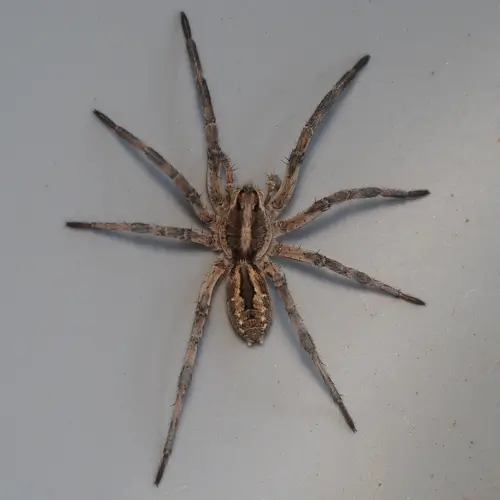
While they aren’t dangerous to humans, Wolf Spiders can infest homes quickly and no one wants to be jump-scared by a big, hairy spider when they enter their bathroom or basement, especially families with children. If you are seeing Wolf Spiders around your home, it’s a good idea to call in a professional to take care of the issue.
Brown Recluse
Brown Recluse, as stated above, are commonly lumped in with Wolf Spiders due to their coloring. However, Brown Recluse are much smaller and smooth instead of hairy. They have slimmer legs, a violin marking down their back, and come in a variety of colors including tan, brown, dark brown, and grey. Brown Recluse are one of a few species to have six eyes instead of the normal eight. Similar to the Wolf Spider, Brown Recluse avoid people and only bite when they feel threatened or trapped. But their bites pack a much more dangerous punch.
Sometimes people don’t even feel the initial bite and only realize later when they see the irritated area or start feeling ill. A bite may cause pain, itchiness, blistering, and in some cases fever, chills, vomiting, and joint pain. The venom enzymes can destroy local blood cells and soft tissue, and if left untreated, a wound like this can take weeks or months to fully heal, leaving crater-like scarring.
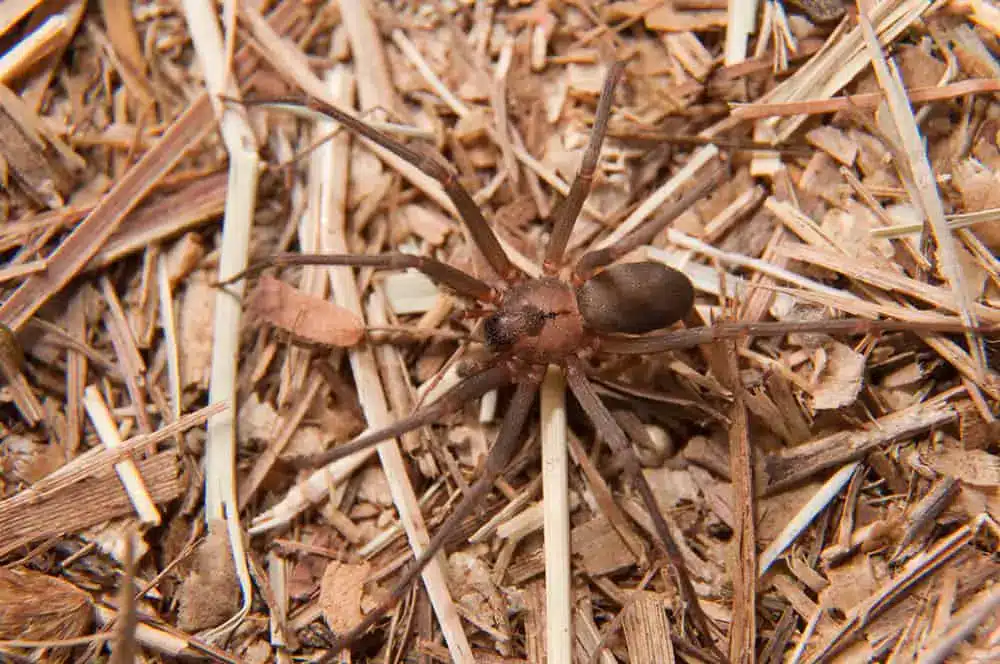
If you or a family member suspects a Brown Recluse bite, it’s important to seek medical attention immediately. Make sure to call U.S. Pest as well so we can perform an inspection and ensure any Brown Recluse infestations are taken care of.
Black Widows
Black Widows are one of the most recognizable spider species, with large abdomens marked by a bright red hourglass shape and long, slender legs. Females are larger than males and are known to eat their male counterparts after mating, earning them the “widow” namesake. Like the other spiders mentioned above, Black Widows are shy and like to hang out in dark, undisturbed places like woodpiles, water meter boxes, sheds, crawl spaces, and outdoor furniture. Be wary when reaching into piles of boxes, garage or basement corners, and shoes or gloves that have been left outside or haven’t been worn recently.
Black Widows are perhaps the most feared when it comes to Tennessee spiders. Females have a very dangerous bite, as they produce a very powerful neurotoxin called latrotoxins. This toxin makes a victim’s immune system fight itself. Black Widows typically give a warning bite, inflicting only a small amount of venom rather than full-strength, but it’s still not something you want to be on the receiving end of.
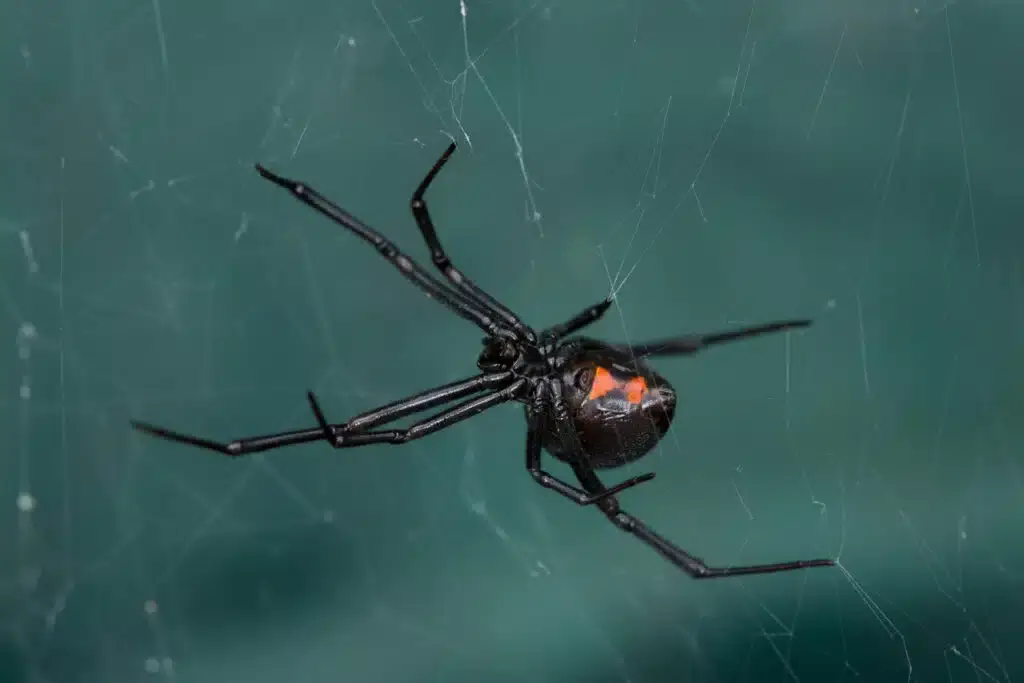
A bite can cause muscle cramps and stiffness, especially in the abdomen, back, or chest, plus sweating, nausea, and headache. You should seek medical attention for any suspected Black Widow bite, but especially for young children and the elderly, who are most susceptible to serious symptoms.
How to Handle Spiders
All spiders have at least one thing in common — they eat other bugs. Where the bugs go, they go. In the fall and winter, this means spiders are more likely to end up in your home as their prey seeks warmth and shelter.
So, if you want to see fewer spiders, the first step is proofing your house from other pests. Make sure doors and windows are sealed, outdoor lights are turned off when not in use, leaf litter is cleared from the yard, and all food and trash is being cleaned up properly inside and outside your home. These are all things that attract things like roaches, ants, beetles, mosquitoes, and moths, so removing them will help alleviate pest pressure.
However, no DIY treatment is foolproof, so it’s important to have regular pest control as well to keep things under control and make sure any infestations are properly taken care of.
Is Your Area Heavily Affected?
The service areas seeing the most spiders right now are Nashville, Murfreesboro, Mt. Juliet, and Hendersonville. Nashville has lots of older housing foundations and dense urban areas, making it a hotspot for brown recluse activity. Hendersonville and Mt. Juliet experience high numbers of common house spiders, fishing spiders, and wolf spiders, with heavy insect prey from their lakeside locations attracting the spiders.
The U.S. Pest Difference
Here at U.S. Pest, we treat for pests all year round to ensure your home is consistently protected. We spider mop at every stop to get rid of those stubborn webs or nests you can’t reach, and we offer free inspections, so if you are noticing a lot of spider activity around your home — call us! We’ll come take a look and get you on track to being pest-free. Don’t wait to protect your home from spiders and other fall invaders. Call us today at 615.590.1260 or schedule on uspest.com.


