
The August Spider Invasion: What Homeowners Should Know Before Fall

Wolf spiders, black widows, brown recluse — oh my! These are a few of the common spiders you might start seeing around your home during August. At this point in the summer, spider hatchlings have reached full physical maturity. This means males will be leaving their hiding spots more frequently to look for mates. More frequent journeys means you are more likely to see them along floors and walls.
Peak physical maturity also makes spiders easier to spot in general, as they are much larger now than when they first hatched in the spring. Spiders will also be looking for more food as the heat speeds up their metabolisms. With other insect populations also reaching peak activity, it’s the perfect hunting environment.
As temperatures begin to cool off earlier into the evenings, spiders will also start to gravitate indoors for hiding spots with more stable warmth and moisture.
While spiders are great natural pest control for insects like flies, mosquitoes, and roaches, it’s still best to make sure they are outside your home rather than in. They are creepy looking, their webs can be annoying, and some species are dangerous for humans and pets. Read below to learn how you can identify different spiders.
Common Spiders You’ll See in Middle Tennessee This August
Brown Recluse Spiders
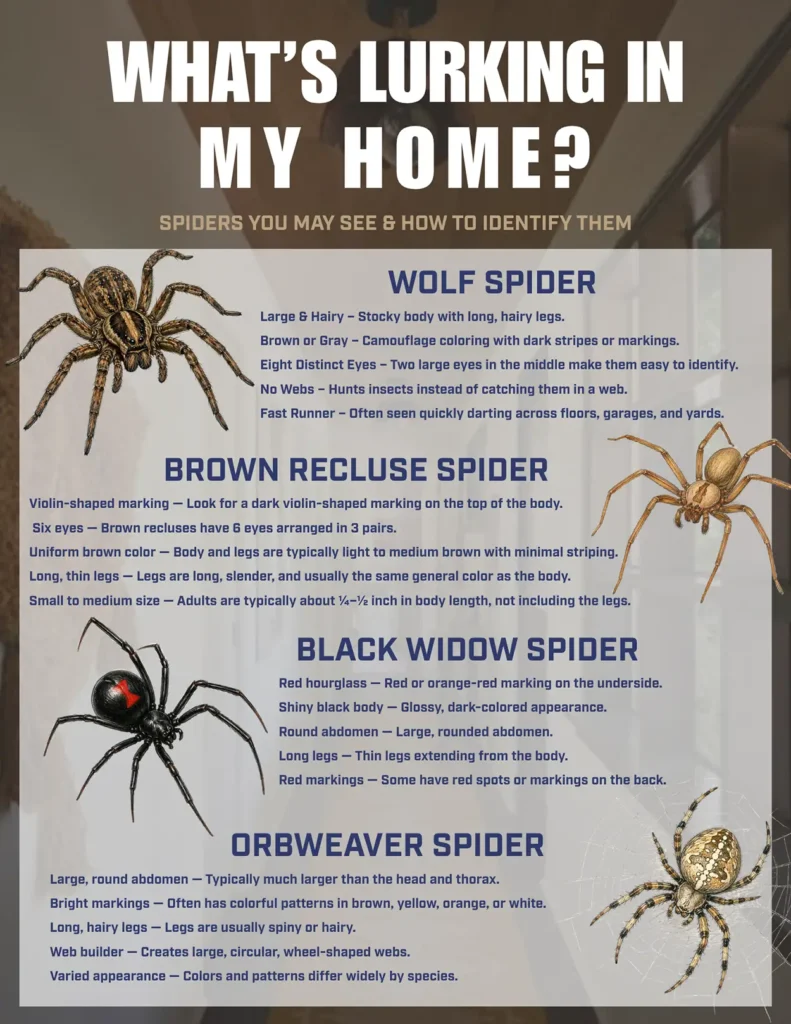
Brown recluse are shy, nocturnal hunters that avoid human contact, preferring dark, dry, and undisturbed areas like closets, attics, and cardboard boxes. They are not aggressive and generally bite only when trapped or threatened, such as when putting on clothing or cleaning out storage.
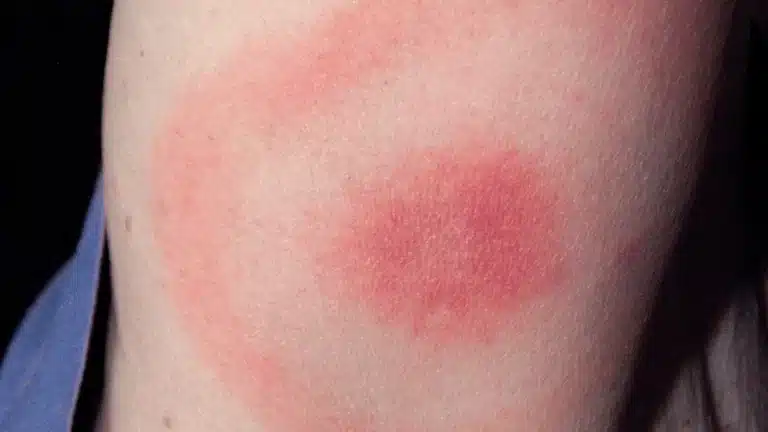
Bites can appear with redness and a pale ring around the site. A fluid-filled blister may form, turning dark purple, blue, or black as skin tissue dies, turning into a crater-like scar over the next couple of weeks as the area heals. Brown recluse bites are venomous and can cause symptoms such as fever, chills, headache, nausea, muscle aches, and fatigue, but only in rare cases do they cause severe medical concerns.
Seeing a brown recluse out and about typically indicates a high population and potential infestation, as they prefer to stay hidden.
Orb-Weavers
Orb-weavers are the most common group of spiders that build spiral, wheel-shaped webs in gardens, fields, and forests. They are generally docile — bites to humans are similar to mosquito bites. Typically active at night, you will see them during the day more in summertime as they respond to the activity of their prey, including mosquitoes, flies, gnats, and bees.
There are many different types of orb-weavers, but the most common ones in Middle Tennessee are the Black and Yellow Garden Spider, the Spotted Orb-Weaver, and the Orchard Orb-Weaver. These spiders like to hang out near outdoor lights, eaves, garden plants, and wooded areas. Many species rebuild or take down their geometric webs daily, though they typically rebuild near the previous spot.
Wolf Spider
Wolf spiders are typically brown or black with stripes and eight eyes. They can grow very large, with some having leg spans up to 4.7 inches. Wolf spiders are ground-dwelling hunters known for their excellent night vision and speed — they chase and pounce on their prey rather than relying on catching it in webs. Their venom is not dangerous to humans and will only cause mild, temporary discomfort similar to a mosquito bite.
They prey on other insect pests like ants, flies, roaches, crickets, and other spiders. Wolf spiders are unique in that females carry their egg sacs on their abdomen and later the spiderlings on their back.
Outdoors, you can find wolf spiders in gardens, woodpiles and debris, grasslands, wooded areas, and wetlands or marshes. If they are indoors, it is usually accidental — you may see them in basements, crawl spaces, garages, sheds, and undisturbed dark corners, closets, and under furniture.
Black Widow Spider
Tennessee is home to both the southern black widow and the northern black widow. The southern black widow is glossy black with a red hourglass marking, while the northern black widow is black with a broken hourglass marking or red spots.
Bites from large females can be dangerous to humans, containing a neurotoxic venom that causes intense muscle cramps, pain, and nausea. Black widows like to hang out underneath wood piles, rock piles, behind bricks, inside sheds, on playground equipment, and in garages. Inside your home, you may find them in basements, crawl spaces, old shoes, cardboard boxes, and rarely used storage spaces. Like brown recluse, black widows are generally shy and non-aggressive, only biting in self-defense.
How to Reduce Spider Activity Around Your Home
Spiders always seem to find a way in, but there are a few things you can do to reduce the number you’re seeing around your home and yard. Seal cracks around doors and windows, clear out dark and cluttered spaces, and vacuum or brush away webs regularly.
Spiders feed on other insects, so stopping other bug activity in your home will also keep spiders away by limiting their food sources. Keeping your home clean, not leaving food out, clearing standing water, and turning off outdoor lights can help keep other bugs at bay — and spiders with them.
When to Call the Professionals
While spiders are beneficial in many ways, they are still considered pests and we don’t want them inside our homes. If you are seeing signs of increased spider activity, call U.S. Pest Protection today. We will spider mop, perform an inspection, treat for any ongoing or potential infestations, and do Whatever It Takes to keep your home a place where you and your family feel safe. Call 615.590.1260 or schedule on our website.