The Middle Tennessee Silent Destroyer: The Complete Story of the Termite

The Insect That Shouldn’t Work
There’s an old story that physics says the bumblebee shouldn’t be able to fly. Its body is round and heavy. Its wings look far too small. Run the numbers the way you would for an airplane, and the bee should stay on the ground.
But the bee flies anyway, every summer day, from clover to clover. The “impossible” part was never the bee. It was the math. Early calculations treated a bee’s wing like a stiff airplane wing. A real bee wing sweeps and twists hundreds of times a second, spinning off tiny whirlwinds of air that carry it aloft. Once scientists understood the design, the mystery disappeared.

The termite is that kind of creature too.
Picture an insect smaller than a grain of rice. It has soft, pale skin that dries out in open air. Most of its kind will never see a single ray of light, because they have no working eyes. It can’t fly. It can’t sting. On its own, it would die within days.
Now picture millions of them, working together without a leader giving orders, without a blueprint, without sight. They build tunnels that run hundreds of feet through soil. In other parts of the world they raise towers taller than a man, with built-in air conditioning. And they do one thing with a single-minded focus that almost nothing else in nature can match: they find wood, and they eat it.
On paper, the termite looks helpless. In practice, it’s one of the most successful animals on Earth. This is its story, from the queen at the heart of the colony to the moment a colony finds its way into your home. When it comes to termites in Middle Tennessee, that termite is almost always the eastern subterranean termite, and that’s the one this guide follows.
Ancient Engineers: Where Termites Come From
Termites are not “white ants.” They aren’t ants at all. Their closest relatives are cockroaches. Scientists now classify termites as a highly social branch of the cockroach family tree, and the family resemblance shows up in their gut microbes and body plan.
Termites have been doing their work for more than 100 million years. Fossil termites have been found trapped in amber from the age of dinosaurs. They were recycling fallen trees long before there were people to build houses.
That long history matters. Every behavior you’ll read about below, from the queen’s chemistry to the workers’ tunnels, has been tested and refined over a stretch of time almost too long to imagine. Termites aren’t primitive. They’re finished.
One Colony, One Body
A single termite is barely an animal. A termite colony is something closer to one large organism, spread out underground in thousands of small bodies. Each termite is born into a role, called a caste, and that role shapes its body, its behavior, and its whole life.
| Caste | What it looks like | What it does |
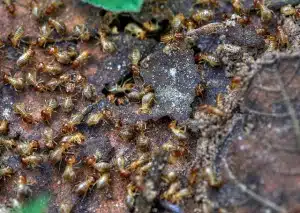
| Workers | Pale, soft-bodied, under 1/8 inch, blind and wingless | Dig tunnels, gather and digest wood, feed everyone else, care for eggs, repair the nest |
| Soldiers | Wingless, with a large, hardened, yellowish-brown head and dark jaws | Guard the tunnels and fight off invaders, mainly ants |
| Winged reproductives (swarmers) | Dark brown to black, about 3/8 inch, with two pairs of equal-length wings | Leave the colony once a year to pair off and start new colonies |
| King and queen | The original founding pair, much longer lived than the rest | Produce every member of the colony |
| Supplementary reproductives | Pale, wingless or short-winged breeders | Add eggs as the colony grows, and can take over if the queen dies |
Workers are the colony. They make up the vast majority of its members, and they never stop. They chew wood, carry food, build and patch tunnels, and tend the young. Because they’re the only caste that can feed itself well, they also feed the soldiers, the king, and the queen, passing food mouth to mouth. Scientists call this sharing trophallaxis. It moves food through the colony, and it also moves the gut microbes and chemical signals that hold the colony together.
Soldiers can’t feed themselves at all. Their jaws are so large they’re built only for fighting. When an ant breaks into a tunnel, soldiers plug the gap with their armored heads and hold the line while workers seal the breach behind them.
Swarmers are the only termites most people ever see. They have eyes, dark bodies, and wings, because they’re built for the one day in their lives they spend above ground.
Here’s the remarkable part. A young termite isn’t locked into one path from birth. In the eastern subterranean termite, a newly hatched termite usually becomes a worker, but it can still develop into a soldier or a reproductive later, depending on what the colony needs. The colony tunes its own workforce, the way a body grows new cells where it needs them.
The Queen: The Heart of the Colony
Every termite colony begins with two insects and a gamble.

On a warm spring day, often right after a rain, thousands of winged swarmers pour out of a mature colony at once. Most are eaten within minutes by birds, lizards, spiders, and ants. The few that survive drop to the ground and snap off their own wings. A female raises her abdomen and releases a scent. A male finds her and follows close behind, the two moving in a tandem line as they search for a damp crack in soil or wood.
When they find one, they seal themselves in. From that moment on, they’re the king and queen of a new colony, and most will never see daylight again.
The queen’s first batch of eggs is small, often just a handful. The royal pair raises those first young themselves. Once there are enough workers to take over, the king and queen hand off every chore except one. From then on, their job is reproduction.
She grows into the role. As the colony expands, the queen’s abdomen stretches and swells to hold her developing eggs, giving her a striped look as the plates of her body separate. In some tropical termites, the queen swells to many times the size of her workers and can lay tens of thousands of eggs a day. Eastern subterranean termite queens are more modest. A primary queen adds roughly 5,000 to 10,000 eggs a year, and the colony recruits supplementary reproductives to multiply that output as it grows.
She rules by chemistry, not command. The queen doesn’t give orders. Instead, she and the king produce chemical signals that spread through the colony as workers groom her and share food. Those signals tell the colony that its reproductives are alive and working, and they keep most young termites on the worker track. If the queen dies or weakens, the signal fades. Within weeks, some young termites develop into new reproductives and take her place. That’s one reason a termite colony is so hard to wipe out.
She has a partner for life. Unlike honeybees and ants, where males die soon after mating, the termite king stays. He lives beside the queen in the royal chamber for years, mating with her again and again.
She outlives everyone. Workers typically live a year or two. The king and queen have the longest lives in the colony. Founding pairs of subterranean termites can live for many years, and queens of some tropical species are believed to live for decades. A colony itself can survive far longer than any one queen, replacing its royalty as needed and carrying on for generations in the same patch of ground.
Think about what that means. The colony under a tree line or a neighbor’s woodpile could have been there, quietly growing, longer than the house beside it.
A World Without Light
You may have heard that termites are blind, deaf, and can’t smell. Only one of those is true, and the truth is far more interesting.
Blind, yes. Workers and soldiers, the termites that do nearly all the work, have no functioning eyes. They live their whole lives in sealed tunnels where sight would be useless anyway. Only the swarmers, built for their one flight in the open, have working eyes.
Deaf, not really. Termites have no ears, but they feel sound through the ground with astonishing precision. Special sensory organs in their legs pick up the faintest vibrations traveling through soil and wood, and their antennae add another layer of sensing. Researchers have found that termites can tell which direction a vibration came from by sensing the tiny delay between when it reaches the legs on one side of the body and the other, a gap as short as 0.2 milliseconds.
They also use vibration to talk. When a soldier senses danger, it slams its head against the tunnel wall, over and over. Nearby termites feel the drumming, pick it up, and relay it down the tunnel like a chain of alarm bells. Workers retreat deeper into the nest. Soldiers rush toward the threat. In one study, researchers listened to the head-banging inside trees in New Orleans and used its rhythm to identify which trees held the destructive Formosan termite with 97 percent accuracy.
Some studies suggest termites may even use the vibrations of their own chewing to judge the size and quality of a piece of wood, and to detect rival colonies nearby. A colony, in other words, may be listening to the wood as it eats.
Termites aren’t the only insects that have learned to talk without light. Inside a dark beehive, a honeybee that has found a good patch of flowers comes home and performs what scientists call the waggle dance. She runs a short straight line while shaking her body, loops back, and repeats it again and again. The angle of that run tells her sisters which direction to fly relative to the sun, and how long she waggles tells them how far to go. In the darkness of the hive, the other bees can’t see much of the dance. They follow it largely by touch, crowding close and feeling her movements and the vibrations she makes. Two very different insects, from distant branches of the insect family tree, arrived at the same solution: when you can’t see, you feel.
Can’t smell? The opposite. Smell, or more precisely chemical sensing through the antennae, may be the termite’s most important sense. Termites live in a world built of scent:
- Trail pheromones. A worker that finds food lays a chemical trail back to the colony, and others follow it. Strong food sources build strong trails.
- Colony identity. Every colony carries its own chemical signature. A termite can tell a nestmate from an intruder by touch and scent.
- Royal signals. The king and queen’s chemical messages shape who becomes a worker, a soldier, or a future reproductive.
- Mating signals. Swarming pairs find each other by scent after they shed their wings.
- Defense. Eastern subterranean termite soldiers have a small gland on the forehead that releases defensive chemicals.
So here’s the real picture. The termite gave up sight and kept everything else. It runs an entire society, millions strong, in total darkness, using touch, vibration, and chemistry. That’s not a weakness. It’s a design perfectly matched to a life spent underground and inside wood.
Built for One Job: Finding and Eating Wood
Wood is one of the hardest foods on Earth to live on. It’s mostly cellulose wrapped in lignin, a tough combination that almost no animal can live on. People can’t digest it. Even cows, which handle grass with help from gut microbes, can’t make a meal of a fence post. Termites can, and their whole existence is organized around it.
A partnership in the gut. The secret isn’t really the termite. It’s what lives inside it. A worker’s hindgut is packed with microscopic organisms, including single-celled protozoa and bacteria, that break cellulose down into sugars the termite can use. Without them, a termite would starve on a stomach full of wood. Young termites aren’t born with these microbes. They get them from older nestmates through that mouth-to-mouth and tail-to-mouth food sharing. Workers even lose their gut partners each time they molt and have to be restocked by the colony. No termite can survive on its own for long, because none of them can digest wood without the others.
Searching without seeing. Termites don’t spot a fallen branch from a distance and march toward it. Workers spread out underground in a branching web of exploratory tunnels, probing the soil in every direction. They seem to be drawn toward moisture and toward the chemical traces of wood and wood-decaying fungi, which soften wood and make it easier to eat. When one worker strikes food, it lays a scent trail home, and the colony floods that tunnel with workers. A single eastern subterranean colony can forage across an area the size of a football field, sometimes feeding at several pieces of wood at once.
Water is life. A worker’s thin skin loses moisture quickly. Exposed to dry air and sunlight, it dries out and dies. That’s why subterranean termites stay sealed in soil and wood, and why moist wood is their favorite. It’s also why they build one of their most recognizable structures.
Mud tubes. When termites need to cross something they can’t tunnel through, like a concrete foundation wall, they build a covered highway. These shelter tubes are made of soil, chewed wood, saliva, and droppings, roughly the width of a pencil. Inside, the air stays dark and damp, and the termites travel safely between the soil and their food.
Eating from the inside out. Termites usually eat along the grain, favoring the softer layers of wood and leaving the harder growth rings behind. They also leave a thin outer shell intact to protect their tunnels from the open air. The result is wood that can look perfectly solid on the surface while it’s been hollowed into layered galleries packed with soil inside.
Slow, steady, and endless. One termite eats almost nothing. A colony of about 60,000 eats roughly 5 grams of wood a day, about the weight of five paper clips. That sounds harmless until you remember three things: colonies can number in the millions, they never stop eating, and they can feed in the same place for years before anyone notices.
And termites aren’t picky about the form cellulose takes. Lumber, cardboard boxes, the paper backing on drywall, stored books, and paper files all count as food.
In the Forest: Nature’s Recycling Crew
Walk through any Tennessee woods and you’ll see what termites are for. Fallen limbs, old stumps, and logs slowly softening into the leaf litter are all on their way back to the soil, and termites are some of the hardest workers moving them there.
In nature, termites are heroes. Without decomposers like termites and the fungi they work alongside, dead wood would pile up across the forest floor, locking away nutrients that living plants need. Termites break that wood down and return its nutrients to the earth. Their tunnels loosen and aerate the soil, help rainwater soak in, and mix organic matter deeper into the ground. In many parts of the world, termites are as important to healthy soil as earthworms.
In the tropics, their work reaches spectacular scale. African and Australian termites build towering mounds of soil and saliva, some taller than a person, with networks of chimneys and passages that circulate air and help keep the nest’s temperature and humidity steady. Engineers have studied these mounds for ideas about cooling buildings without air conditioning. A blind insect smaller than a grain of rice, working with millions of its sisters and brothers, built a climate-controlled skyscraper.
Our local termites don’t build mounds. Eastern subterranean termites keep their engineering out of sight, in tunnels and galleries running through the soil and into the wood they feed on. But the purpose is the same: find dead wood, break it down, and keep the colony alive and growing.
The catch is in two words: dead wood.
In Your Home: A House Looks Like a Fallen Log
A termite has no idea what a house is. It doesn’t know the difference between a rotting oak limb and the floor joist under your kitchen. To a colony probing through the soil, your home is simply the largest, driest, longest-lasting piece of dead wood it has ever found, sitting right on top of its territory.
That’s the whole problem in one sentence. The same tireless design that makes termites so valuable in a forest makes them so destructive in a neighborhood.

How they get in. Subterranean termites almost always come up from the soil. Workers exploring underground find the edge of a foundation and follow it. They slip through gaps as thin as a credit card: cracks in a slab, the joint where a slab meets a foundation wall, openings around plumbing, and expansion joints. Where wood touches soil directly, at a deck post, a porch step, or a door frame, they don’t need a gap at all. Where they hit concrete or block, they build mud tubes up the face of the wall to reach the wood above.
What draws them close. Termites favor moisture, and homes offer plenty of it:
- Gutters and downspouts that dump water against the foundation
- Leaky pipes, AC condensate lines, and damp crawl spaces
- Mulch, soil, or landscape beds piled up against siding
- Firewood, lumber, and cardboard stored against the house or in a crawl space
- Wood siding or trim that sits at or below soil level
Where they go once inside. Termites follow the wood and the moisture. They work through sill plates, floor joists, subfloors, wall studs, and door and window frames. They’ll eat the paper face off drywall and travel inside walls where no one can see. Bathrooms and kitchens, with their plumbing and humidity, are common targets.
Why it goes unnoticed. This is what makes termites different from almost every other pest. They don’t come out to be seen. They don’t need to. Workers stay sealed inside the wood and their mud tubes, and they leave the outer surface of the wood intact. A homeowner can walk across a floor every day for years while the joists beneath it are slowly hollowed out. Often, the first sign is a spring swarm, a door that suddenly sticks, or paint that bubbles in a strange way.
Termites cause billions of dollars in damage to U.S. homes every year, and in most cases that damage isn’t covered by standard homeowners insurance, because it’s treated as a preventable maintenance issue rather than sudden damage. That’s worth checking in your own policy. Our guide to homeowners insurance and termite damage explains what to look for.
Termites in Middle Tennessee
In Middle Tennessee, the termite you’re dealing with is almost always the eastern subterranean termite. It’s the most common termite in North America, it’s native here, and it’s in the soil across our region, in wooded lots, suburban yards, and city neighborhoods alike.
Our climate suits it well. Humid summers, mild winters, plenty of rain, and clay soils that hold moisture give subterranean colonies what they need nearly year-round. Termites slow down in cold weather by moving deeper into the soil, but in a heated home with a warm crawl space or slab, they can stay active through the winter.
Swarm season. Most people discover termites in the spring. Eastern subterranean termites typically swarm from about February through early May, with the peak often in March and April. Swarms usually happen during the day, frequently on a warm day after a rain. A colony generally has to be a few years old and well established before it produces swarmers, so a swarm is a sign of a mature colony nearby. Read more about termite swarmers and what they mean.
If a swarm happens outdoors, near a stump or a woodpile, it tells you there are colonies in the area, which is true of most properties in our region. If a swarm happens inside your home, it tells you something more important: the colony is very likely feeding in or under the structure. Swarmers that emerge indoors are trying to reach the light and usually die within hours, collecting on windowsills and in light fixtures.
Other termites. The Formosan termite, an aggressive invasive species that builds far larger colonies, has caused serious damage along the Gulf Coast. It has turned up only rarely in Tennessee, in isolated finds in the western part of the state. Drywood termites aren’t established here, though they occasionally arrive in infested furniture or wooden items brought from other regions. For most Middle Tennessee homeowners, the eastern subterranean termite is the one that matters.
How to Tell If You Have Termites
Subterranean termites work hard to stay hidden, but termites in Middle Tennessee homes do leave clues. These are the signs worth knowing:
- Swarmers or discarded wings. Small, dark winged insects indoors in spring, or piles of tiny, equal-sized wings on windowsills, floors, or near doors.
- Mud tubes. Pencil-width tunnels of dried soil running up foundation walls, piers, crawl space supports, or the inside of a garage wall. Break a small piece open: live, pale termites inside mean an active colony.
- Damaged or hollow wood. Wood that sounds hollow when tapped, feels soft, or breaks open to reveal layered galleries packed with soil.
- Bubbling or uneven paint. Paint or wallpaper that blisters or ripples, sometimes mistaken for water damage.
- Sticking doors and windows. Damage and the moisture termites bring can warp frames.
- Sagging floors or ceilings. A late sign that structural wood has been weakened.
- Tiny pinholes in drywall. Small holes, sometimes plugged with soil, where termites have worked through the paper surface.
Termite or flying ant? Both swarm in spring, and they’re easy to confuse. Look closely:
| Feature | Termite swarmer | Flying ant |
| Waist | Thick, straight body with no pinched waist | Narrow, pinched waist |
| Antennae | Straight and beaded | Bent at an elbow |
| Wings | Two pairs of equal length, extending well past the body | Front wings longer than the hind wings |
| Wings after swarming | Shed easily, often left in piles | Usually stay attached |
| Color | Dark brown to black | Varies by species; often black, brown, or reddish |
If you find swarmers indoors, collect a few in a sealed bag or a piece of clear tape. It makes identification much easier for a professional. And don’t panic: swarmers themselves don’t eat wood or bite. They’re a message from the colony, not the damage itself.
Making Your Home Less Inviting
Termites in Middle Tennessee are part of the landscape, so you can’t make a property termite-free. The colonies are already in the soil, doing what they’ve done for millions of years. What you can do is make your home a harder target and make activity easier to spot early. Most of it comes down to two things subterranean termites need: moisture and wood.
Control moisture
- Keep gutters clean and extend downspouts so water drains well away from the foundation.
- Grade soil so it slopes away from the house.
- Fix leaking faucets, pipes, and AC condensate lines promptly.
- Ventilate crawl spaces and consider a vapor barrier or crawl space encapsulation if yours stays damp.
Remove the bridges
- Avoid wood-to-soil contact. Deck posts, lattice, steps, and trim shouldn’t sit directly on the ground.
- Keep mulch thin and pulled back several inches from the foundation, so you can see the slab or block edge.
- Stack firewood and lumber off the ground and away from the house.
- Don’t store cardboard or paper against foundation walls or on a crawl space floor.
- Remove old stumps, buried scrap wood, and form boards left from construction.
Keep an eye out
- Walk your foundation a few times a year, especially in spring, looking for mud tubes.
- Pay attention to swarmers or wings indoors from February through May.
- Keep a clear inspection gap between soil or mulch and siding so tubes can’t hide.
These steps reduce risk, but they don’t replace protection. Termites have been finding wood through cracks thinner than a credit card for a very long time, and a colony needs only one way in.
How Termites Are Controlled
Because a subterranean termite colony lives underground and can number in the millions, spraying the insects you see does almost nothing. The termites in a mud tube or a damaged board are a tiny fraction of the colony. Effective control works with termite biology, using the same tunneling, food sharing, and grooming that make the colony so strong.
Liquid soil treatments. A termiticide is applied to the soil around and beneath a structure, creating a treated zone that termites must pass through to reach the house. Many modern products are non-repellent, meaning termites can’t detect them. Workers tunnel through the treated soil, pick up the active ingredient, and carry it back, spreading it to nestmates through contact and food sharing.
Why we don’t use bait systems. Some companies rely on bait stations placed in the ground, waiting for foraging workers to find them. We don’t. Termites are remarkably smart, and everything about them is built to find and eat wood, not a bait station. Rather than wait for a colony to discover a station on its own schedule, we put a continuous treated zone in the soil between the colony and your home.
Wood treatments. Borate products can be applied directly to wood, especially in crawl spaces, attics, and during construction, making the wood itself unappealing and toxic to termites.
Pre-construction treatment. For new homes, treating the soil before the slab is poured or using treated framing builds protection in from the start. Learn more about our pre-construction termite treatment for builders.
The right approach depends on the home’s construction, the soil, where activity is found, and how the homeowner wants to be protected over time.
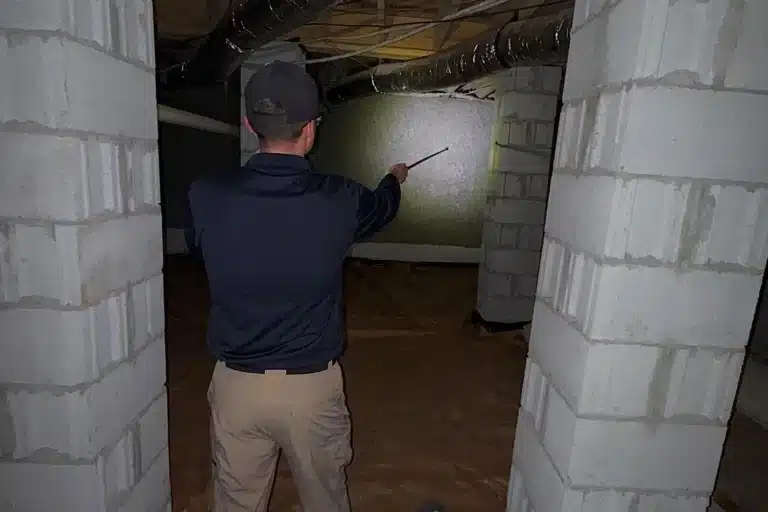
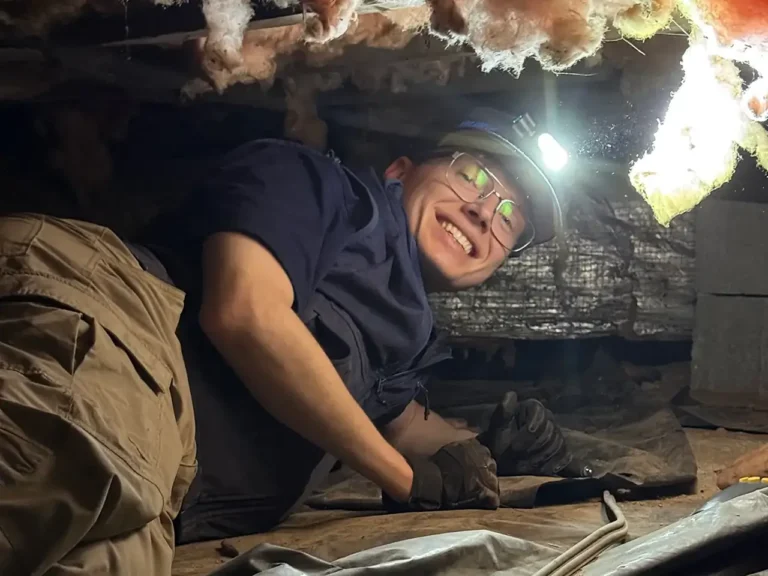
Why a professional inspection matters. Termite work isn’t a weekend project. Treatments require knowing where termites can enter a specific structure, including spots behind walls, under slabs, and inside crawl spaces, and applying products correctly and safely. In Tennessee, termite work is regulated and performed under a wood destroying organism (WDO) license. A trained inspector knows how to read the subtle signs, from a single mud tube behind a water heater to layered damage inside a sill plate, and can tell you honestly whether you have active termites, old damage, or nothing to worry about.
Ongoing protection matters too. A colony that’s been knocked back in one spot keeps foraging, and new colonies form every spring. Regular inspections and a renewable termite protection plan are how homeowners stay ahead of a pest that never takes a day off.
How U.S. Pest Protects Your Home
Our approach to termites in Middle Tennessee is built around what termites are and how they live. Here’s what that looks like for your home:
- A liquid barrier bonded to the soil. We treat the soil around and beneath your home, creating a continuous treated zone termites have to pass through to reach the wood above.
- Inspections every year. Your home is inspected annually, and anytime you suspect activity, so a colony that changes course gets caught early.
- Protection that stays with the house. Termite agreements transfer to the next owner at no charge, and the repair warranty carries over, which can be a real selling point when you list your home.
- Help with buying and selling. We provide termite letters for real estate closings, and our homebuyer termite inspection checklist walks buyers through what to look for.
- Protection for new homes. For builders, our pre-construction treatment includes soil treatment and Bora-Care borate treatment of the framing.
- State-certified specialists. Every U.S. Pest employee is state certified, and our termite work is performed under our wood destroying organism (WDO) license.
Learn more about our termite control, or see why prevention is always cheaper than repairs.
The Silent Destroyer, Up Close

The bumblebee was never really impossible. It just took a closer look to understand how it was built.
The termite is the same. An insect with no eyes, soft skin, and no way to digest its own food on its own shouldn’t be one of the most successful animals on the planet. But look closer and the design comes into focus: a queen who can reign for years, a society organized by scent and vibration, a partnership with microbes that unlocks the toughest food in nature, and millions of workers who never stop searching.
In the forest, that design is a gift. It turns fallen trees into rich soil and keeps the woods healthy.
Under your home, the same design keeps working, quietly and patiently, in the dark. The termites aren’t doing anything wrong. They’re doing exactly what they were built to do. The only question is whether someone is watching.
If you’ve seen swarmers indoors, spotted a mud tube on your foundation, or just don’t know when your home was last inspected for termites, U.S. Pest Protection’s state-certified termite specialists can take a look and tell you plainly what’s going on. Call 615-590-1260 or schedule a free termite inspection today.
Termite FAQs
Are termites really blind?
Most are. Workers and soldiers have no functioning eyes and live their entire lives in darkness. Winged swarmers do have eyes, because they need them for their one flight above ground.
Can termites hear?
They have no ears, but they detect vibrations through sensitive organs in their legs. Soldiers bang their heads against tunnel walls to send vibration alarms through the colony.
How long does a termite queen live?
Queens and kings are the longest-lived members of the colony, living for many years. Queens of some tropical species are thought to live for decades. A colony can also replace its queen, so it may outlive any single reproductive.
How many eggs does a termite queen lay?
It depends on the species. An eastern subterranean termite queen adds roughly 5,000 to 10,000 eggs a year, with supplementary reproductives adding more. Some tropical termite queens lay tens of thousands of eggs a day.
How big is a termite colony?
A mature eastern subterranean termite colony can range from about 20,000 workers to several million.
Why do termites eat wood?
Wood is made largely of cellulose. Microbes living in a termite’s gut break cellulose down into nutrients the termite can use. Termites also eat paper, cardboard, and the paper face of drywall for the same reason.
When do termites in Middle Tennessee swarm?
Eastern subterranean termites usually swarm from about February through early May, often during the day after a warm rain.
Do swarmers mean my house is infested?
Swarmers outdoors mean colonies are nearby, which is common. Swarmers indoors usually mean a colony is feeding in or under your home, and it’s worth having an inspection.
Do termites bite people?
No. Termites aren’t a threat to people or pets. Their threat is to the wood in your home.
Can I treat termites myself?
DIY products can kill the termites you see, but they rarely reach the colony. Effective treatment depends on knowing where termites enter the specific structure and applying products correctly, which is why termite work is done by trained, state-certified professionals under a wood destroying organism (WDO) license.
Does U.S. Pest use termite bait stations?
No. Termites are built to find and eat wood, not bait stations, so we treat the soil with a liquid barrier that creates a continuous treated zone between the colony and your home, and we inspect every year.
Does my termite agreement transfer if I sell my home?
Yes. U.S. Pest termite agreements transfer to the new owner at no charge, and the repair warranty carries over.
Does homeowners insurance cover termite damage?
Usually not. Most standard policies treat termite damage as preventable maintenance rather than sudden damage. Check your own policy, and see our guide to homeowners insurance and termite damage for details.
Sources: Pest Management Professional, Eastern Subterranean Termite; Virginia Cooperative Extension, Subterranean Termite Biology and Behavior; Smithsonian Magazine; CALS Encyclopedia of Arkansas; Science News Explores; Indiana Public Media, Termite Headbangers; University of Florida IFAS Extension, Formosan Subterranean Termite; National Pest Management Association.