Termite Swarmers: The Warning Sign that Most Homeowners Ignore

If you’re a homeowner, there’s a reason you came across this blog. Middle Tennessee’s swarming season starts in the spring and runs through the early summer. During this time, thousands of homeowners often miss one of the biggest warning signs of a termite infestation: Swarmers.
Here’s the thing. Most people think the flying insects around their windows and porch lights are ants. But they’re actually termites. Unfortunately, this mistake can cost homeowners hundreds to thousands of dollars in damages.
At U.S. Pest Protection, we strongly urge all homeowners in Middle Tennessee to educate themselves on termites, so they know what to look for. This will give them a better idea for what to do when signs of an infestation are slowly showing up.
What Are Termite Swarmers?
This is a question that gets asked more than we want it to. Termite swarmers are reproductive termites that leave their current colony to form new ones. It’s truly this simple: they find a partner, establish a new colony, and build it from the ground up.
Swarming usually occurs on warm, humid days after heavy rainfall, making April and May the best months for it. During this season, you’ll notice flying termites around windows or doors, small piles of discarded wings, and swarms appearing more often on the inside and outside your home.
Although, here’s what we really need you to understand. Swarmers are not the main problem. Let us repeat that. The swarmers are not your biggest concern. They are the warning sign that a much larger colony is close by. So, if you start seeing termite swarmers around your home, there’s a good chance a colony is actively feeding on your property. And that should be your first sign to call the professionals.
Why Most Homeowners Ignore the Swarmers
It may be tempting to skip through this after seeing the word “ignore” but you’re going to want to keep reading. One of the biggest reasons termite infestations become a major threat is because most people ignore the signs at the beginning.
Homeowners commonly mistake swarmers for the following reasons:
- They think they’re actually seeing flying ants.
- Only a few bugs are harmless.
- Assuming the problem will go away with time.
- They don’t realize termites actually stay hidden for several years.
Termites often work best undercover. This means that they prefer working in places people often overlook, such as behind walls, under the floor, or inside wooden structures. And the worst part is, by the time homeowners start noticing visible signs, the infestation has usually been there for quite some time.
Do You Know the Difference Between a Flying Ant and a Termite?
This is where almost everyone without pest control knowledge gets confused. Flying ants and termites look incredibly similar, but they are not the same thing. In fact, let’s look at a few key characteristics between the two.
As you can see in the graphic above, termite swarmers have the following differences:
- A straight antennae.
- Thick, uniform waist.
- Two pairs of wings that are equal in size.
- Light-colored or translucent wings.
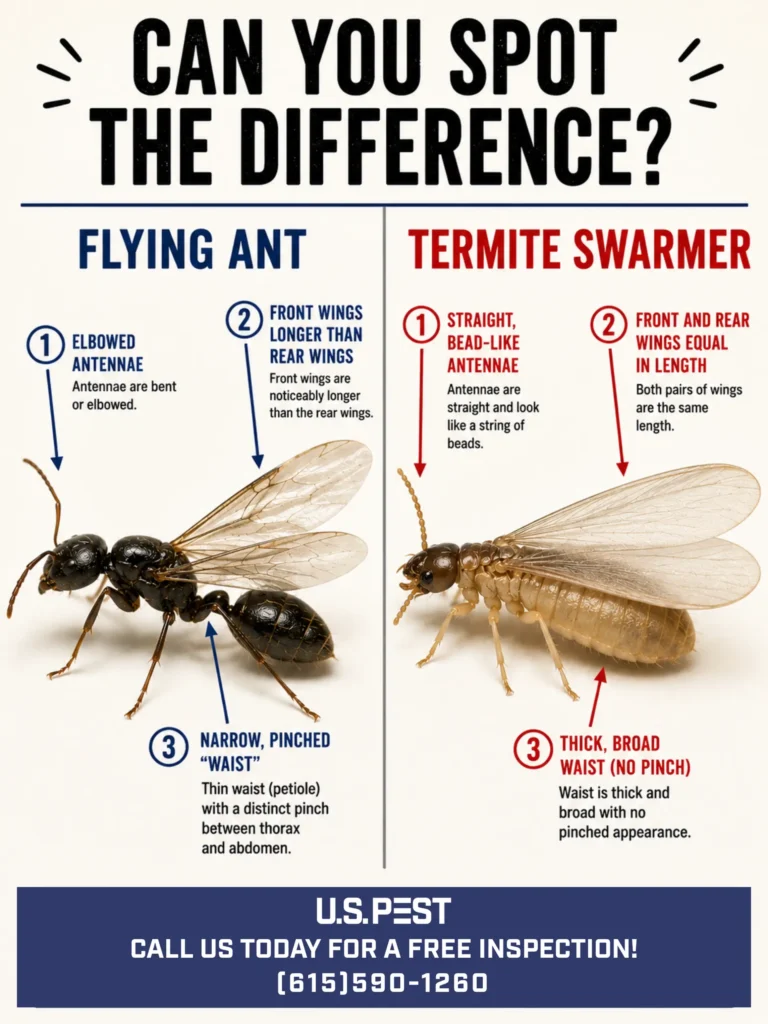
Now, let’s look at the flying ant side. Flying ants are significantly different with their bent antennae, narrow, pinched waist, and larger front wings. If you’re still unsure how to identify a termite and flying ant, call a professional for help. Because catching termites early makes all the difference and will save you hundreds to thousands of dollars in the end.
Termites are a Major Concern in Middle Tennessee. Here’s Why.
If you’re a current resident in Middle Tennessee, you know all about its warm and humid climate. Subterranean termites, especially, love this type of weather. A mix of warm temperatures, moisture, and wooded environments all contribute to an increase in termite activity.
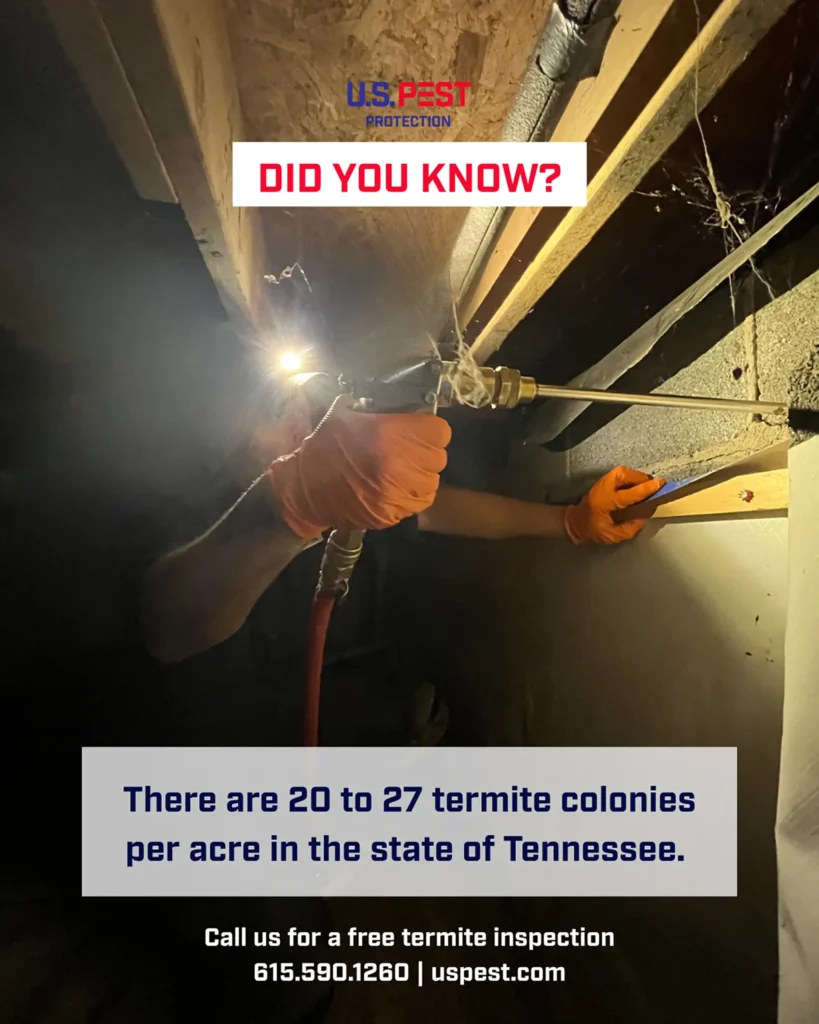
Subterranean termites focus on building their colonies underground and travel through mud tubes along the home. Once they get inside the home, they start feeding on wooden framing, floors, support beams, drywall, and any other structural material. Since they eat wood from the inside out, damages are left unseen until it’s significant. And that’s where the bad news comes into place. Termites are prone to cause billions of dollars in property damage every year across the U.S.
So, we highly encourage you to get ahead of your termite inspections now. Because insurance companies are going to turn you away when you file a claim for this unfortunate issue.
Common Warning Signs You Should ALWAYS Pay Attention To
Now that we know termite swarmers are the main cause of termite activity, they aren’t the only thing homeowners should worry about. People should also keep a close eye on the following warning signs too.
Mud Tubes
As we already know, subterranean termites build small mud tubes along foundations, walls, or crawl spaces to travel through.
Hollow-Sounding Wood
Here’s one trick to try if you think you might have a problem with termites. If wood sounds hollow when you tap it, termites may already be feeding inside of it.
Bubbling Paint
Moisture is huge when it comes to termites. When moisture builds up, it can cause paint to bubble or peel over time.
Sticking Doors or Windows
The damage done to your home might make your doors and windows harder to open, or they won’t shut like they should.
Soft or Damaged Wood
If you’re seeing crumbly or weakened wood along the foundation of your home, this could mean termites are active.
Don’t ever take these signs for granted. Act quickly before the infestation destroys more of your beautiful home.
How Our Team at U.S. Pest Can Help Eliminate the Source
Our team at U.S. Pest understands how stressful termites can be for homeowners. That’s why we strongly encourage our free inspections, so we can help you find the best solution.
During our termite inspections, we look for the following signs:
- Active termite activity.
- Risky conditions that bring termites into your crawl space or in places you wouldn’t normally check.
- Moisture issues.
- Structural damage.
- Open entry points around the home.
At the end of the day, stopping termites before any known damage occurs is always the better option. Whether you’ve already seen swarmers or simply want more peace of mind this year, scheduling an inspection can help you stay ahead of costly repairs in the future. We are fully committed to helping you and your family avoid termites all-year-round. Schedule your free inspection today!