Are Black Widow Spiders Common in Middle Tennessee?

Yes. Black widows live in every county in Tennessee, and both the southern and northern black widow are found here, with the southern black widow being the more common of the two. They’re widespread across Middle Tennessee, from Nashville and Hendersonville to Franklin, Murfreesboro, and Clarksville. Because they hide in dark, undisturbed places, though, most people see them far less often than cellar spiders or orb weavers.
Here’s how to identify a black widow, where they hide around Tennessee homes, what to do if you’re bitten, and how to keep them out.
How Do I Identify a Black Widow?
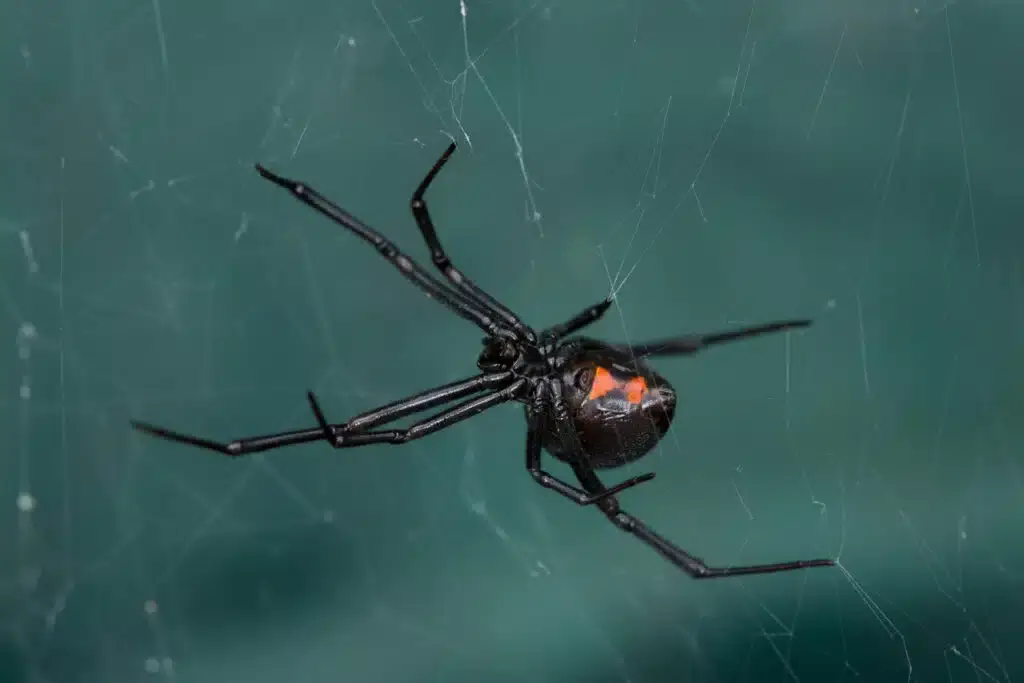
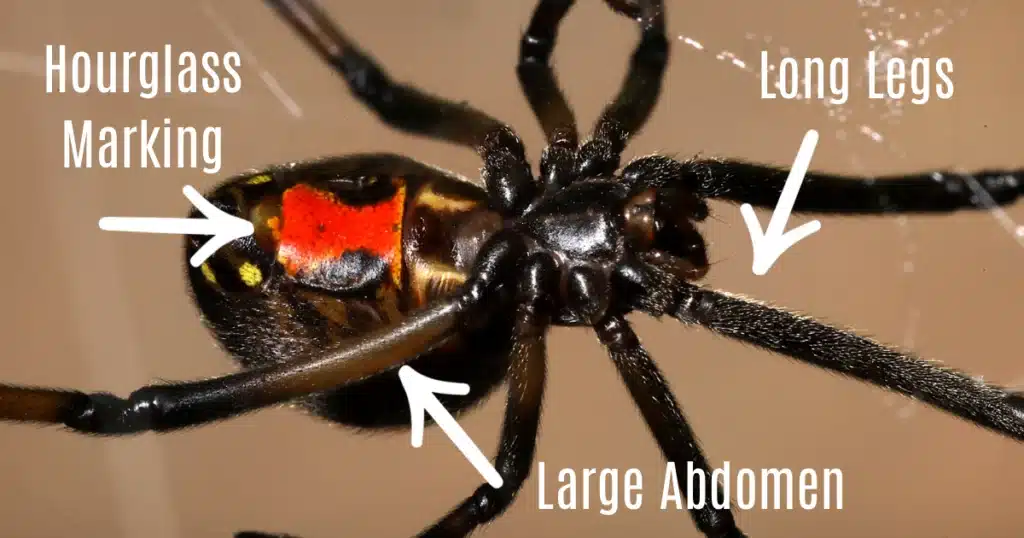
Adult female black widows have a shiny, hairless-looking black body, a large round abdomen, and long, slender legs. The classic field mark is a red hourglass on the underside of the abdomen. A female’s body is about half an inch long, and she can reach about 1.5 inches with her legs extended.
The two species in Tennessee look slightly different. The southern black widow usually has a complete hourglass. On the northern black widow, the hourglass is often split into two separate marks, and there’s typically a row of red spots along the top of the abdomen.
Males and young spiders look very different from adult females. Males are much smaller, with a slender abdomen and red and white markings on the top and sides. Juveniles have orange, brown, white, and gray patterns. As females mature, they darken to solid black, while males keep their lighter coloring. For more photos, see our black widow identification guide.
| Type | Size | Color | Key Markings | Bite Risk |
|---|---|---|---|---|
| Adult female, southern | Body about 1/2 inch; up to about 1.5 inches with legs | Shiny black | Complete red hourglass on the underside of the abdomen | Medically significant |
| Adult female, northern | Similar to southern | Shiny black | Hourglass often split into two separate marks; row of red spots along the top of the abdomen | Medically significant |
| Adult male | Much smaller than the female, with a slender abdomen | Lighter; brown, gray, or dark with pale markings | Red and white spots or stripes on the top and sides; hourglass may be faint | No recorded bites to humans |
| Juvenile | Small | Orange, brown, white, and gray patterns | Patterns fade as females darken to black with age | Low; risk rises as females mature |
Spiders That Are Mistaken for Black Widows
False widow spiders (Steatoda species) are the most common lookalike. They have a similar round, glossy abdomen but are usually brown to purplish and lack the red hourglass. They’re far less dangerous. The other medically significant spider in Tennessee is the brown recluse, which looks nothing like a widow. Learn more in our guide to the most dangerous spiders in Tennessee.
Where Do Black Widows Hide Around Tennessee Homes?
Black widows prefer dark, sheltered, undisturbed spots. In nature, that means under rocks, logs, and debris. Around your home, look for them in:
- Garages and storage sheds
- Crawl spaces and basement corners
- Firewood stacks and lumber piles
- Stacked boxes and storage bins
- Water meter boxes and utility boxes
- Under outdoor furniture, grills, and flower pots
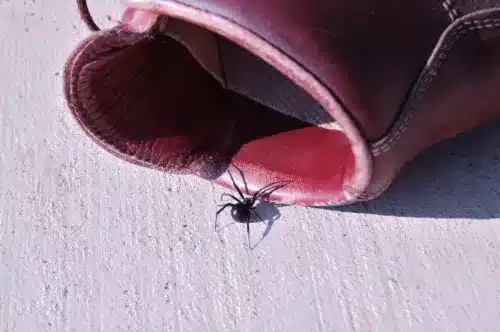
- Inside gloves, boots, and shoes left in the garage
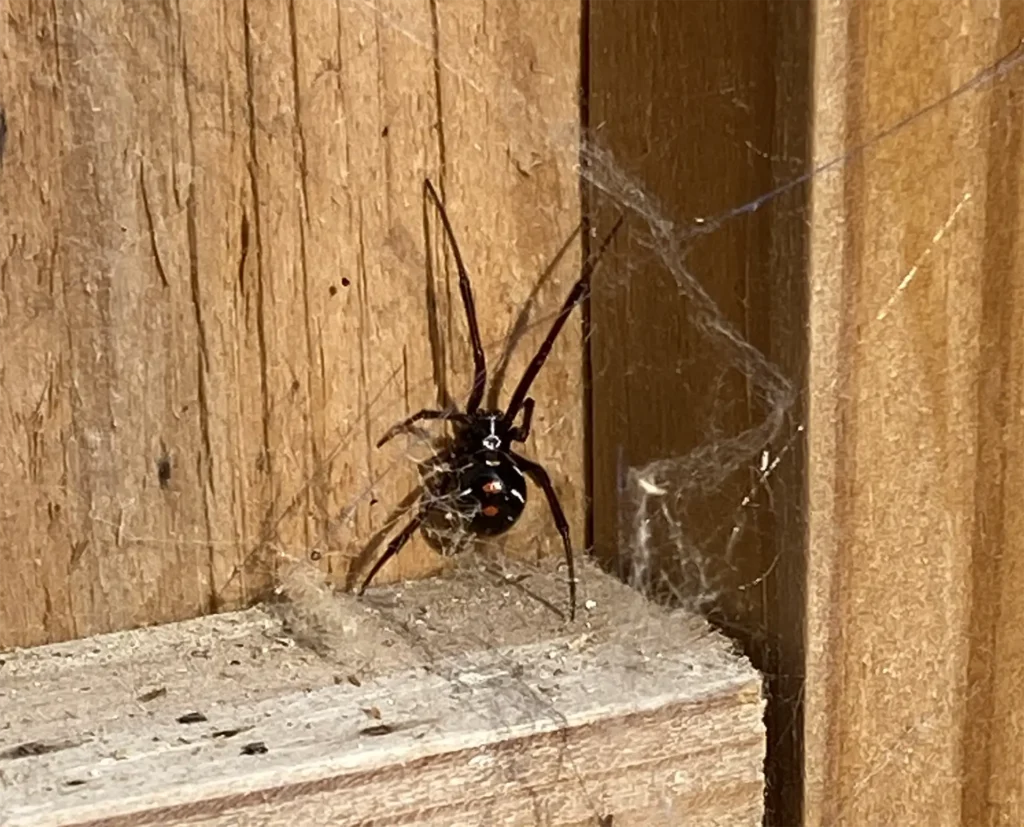
Their webs are irregular, tangled, and made of unusually strong silk, usually built close to the ground. A female often hangs upside down in the web, which shows off the hourglass. Black widows rarely move into living areas; they tend to stay in garages, crawl spaces, and other low-traffic parts of the house.
Fall is when many Middle Tennessee homeowners run into them. As the weather cools, insects look for shelter around homes, and spiders follow their food. Fall is also when people stack firewood, pull out stored decorations, and clean out garages, which means more hands reaching into widow hiding spots. Wear gloves and look before you reach. For other spiders to watch for, see our list of three spiders to watch for in Middle Tennessee this fall.
“The most common place I find black widows in Middle Tennessee is in undisturbed areas such as garages, under playsets, crawl spaces, or wood piles around the home.” — Brad, General Manager, U.S. Pest Protection
Are Black Widow Bites Dangerous?
Black widow bites are uncommon, but they are considered medically significant. Only adult females pose a real risk; UT Extension notes there are no recorded bites from males.
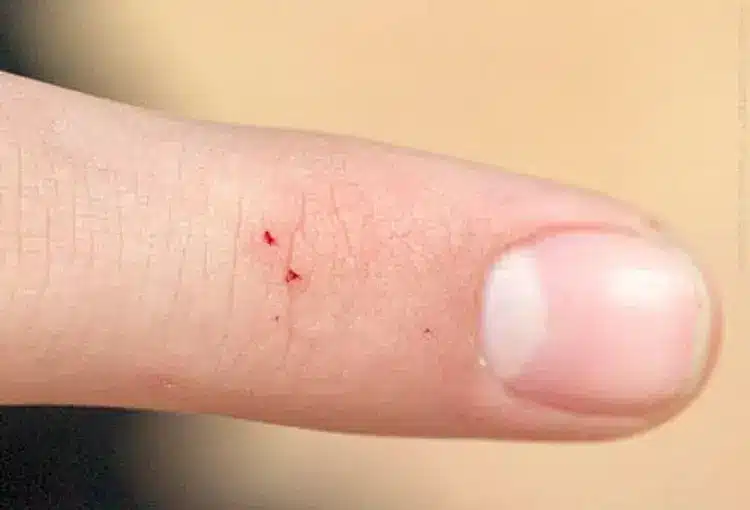
A bite may feel like a sharp pinprick, and the area can become red and swollen, sometimes with two faint fang marks. Within about an hour, many people develop painful muscle cramps and stiffness that can spread to the abdomen, back, or chest. Other symptoms can include nausea, vomiting, heavy sweating, headache, a fast heart rate, and high blood pressure. Deaths are extremely rare, but anyone who is bitten should get medical advice right away.
What to Do If You Think You’ve Been Bitten
- Wash the bite with soap and water.
- Apply a cool compress or ice wrapped in a cloth to reduce pain and swelling.
- Call the Poison Help line at 1-800-222-1222. It’s free, open 24/7, and connects Tennessee callers to the Tennessee Poison Center.
- Call 911 or go to the ER for severe pain, spreading muscle cramps, chest pain or trouble breathing, or if the person bitten is a young child, an older adult, pregnant, or has heart disease or high blood pressure.
- If you can do so safely, take a photo of the spider or capture it in a sealed container to help with identification.
This article is for general information and isn’t medical advice. Always follow the guidance of Poison Control or your healthcare provider.
With medical care, severe symptoms usually ease within a day or two, and most people feel back to normal within about a week. During recovery, rest, follow your doctor’s guidance on pain relief, keep the bite clean, and watch for signs of infection such as increasing redness, warmth, or pus.
How Do I Get Rid of Black Widows?
Remove Their Hiding Spots
Clear clutter from your garage, basement, and yard. Store firewood at least 20 feet from the house and off the ground, and bring in only what you’ll burn right away. Swap cardboard boxes for plastic bins with tight-fitting lids, and keep shrubs and ground cover trimmed back from the foundation.
Seal Entry Points
Install door sweeps on exterior and garage doors, replace worn weatherstripping, and caulk gaps around the foundation, windows, and utility lines. Make sure crawl space vents have intact screens.
Remove Spiders, Webs, and Egg Sacs Safely
Wearing gloves, vacuum spiders, webs, and egg sacs, then seal the vacuum bag and throw it away outside. Egg sacs are small, round, and tan or cream-colored, and each one can hold hundreds of eggs, so removing them matters. Sticky traps placed along walls in garages and crawl spaces can help you monitor whether widows are still active.
Cut Down on Their Food Supply
Black widows go where insects are. Switching outdoor lights to yellow or warm-toned LED bulbs attracts fewer flying insects to your doors and windows.
Frequently Asked Questions
Professional Spider Control in Middle Tennessee
If you’re finding black widows regularly around your home, or if you’d rather not handle the removal yourself, U.S. Pest Protection can help. We serve Nashville, Murfreesboro, Mt. Juliet, Hendersonville, and surrounding Middle Tennessee communities. Call us at 615.590.1260 or contact us online to schedule an inspection.
- National Capital Poison Center. Black Widow Spiders.
- University of Tennessee Agricultural Extension Service. PB1193: The Black Widow Spider.
- Tennessee Poison Center, Vanderbilt University Medical Center. Bites & Stings.