
Alpha-Gal in Tennessee: The Tick Bite That Can Make You Allergic to Red Meat
Someone eats a hamburger at 6 pm and feels fine. At 10 the next morning, they wake up covered in hives, with stomach cramps, and in serious cases, trouble breathing. Because the reaction came four hours after the meal rather than four minutes, almost nobody, including many physicians, connects it to the food.
That is alpha-gal syndrome, and it starts with a tick bite. Tennessee sits squarely in the region where it happens most.
What is Alpha-Gal?
Alpha-gal is short for galactose-alpha-1,3-galactose, a sugar molecule found in the tissue of most mammals — cattle, pigs, sheep, deer, rabbits. It is not found in people, or in fish or poultry.
When a lone star tick bites, its saliva can introduce alpha-gal into the bloodstream. In some people, the immune system responds by building antibodies against it. From that point forward, eating mammal meat means eating something the body has been trained to attack.
The delay is the defining feature of the allergy. Because alpha-gal is a sugar bound up in fat, it takes hours to digest and reach the bloodstream. The reaction typically lands three to six hours after the meal, often overnight. This separates it from other familiar food allergies and is why it goes undiagnosed for so long.
Why Tennessee
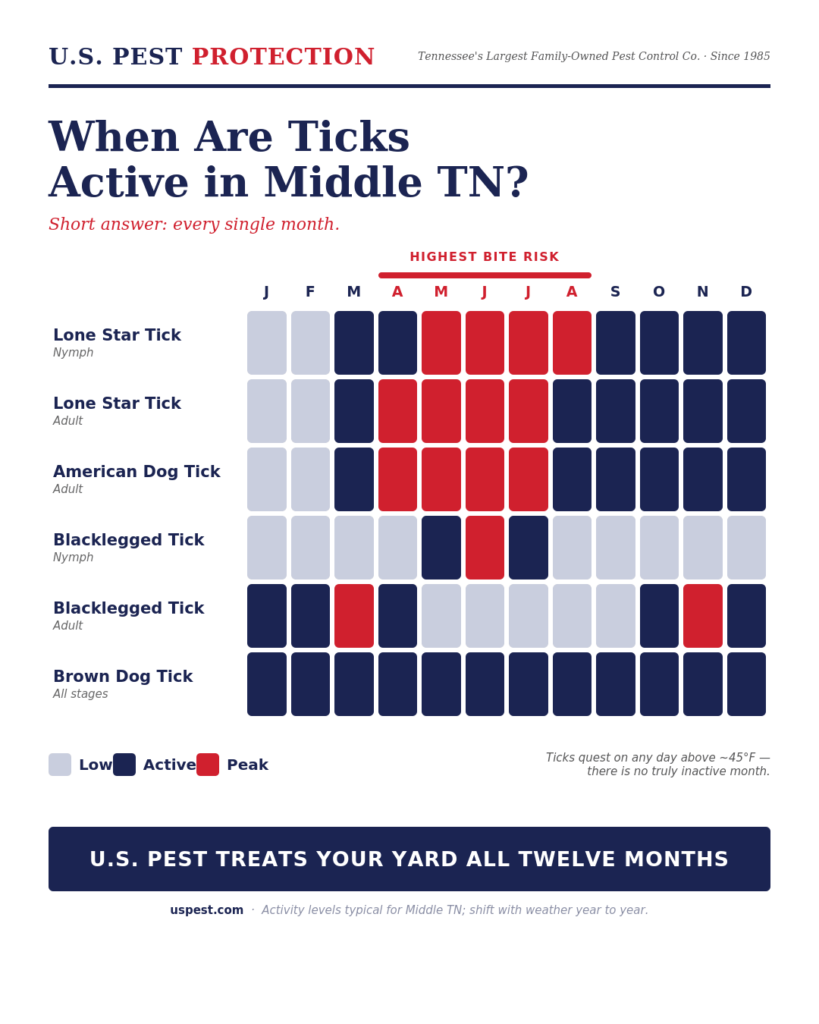
The lone star tick is the most common biting tick across Middle Tennessee. Researchers believe alpha-gal syndrome is substantially underdiagnosed nationally, in large part because the delayed reaction disguises the cause.
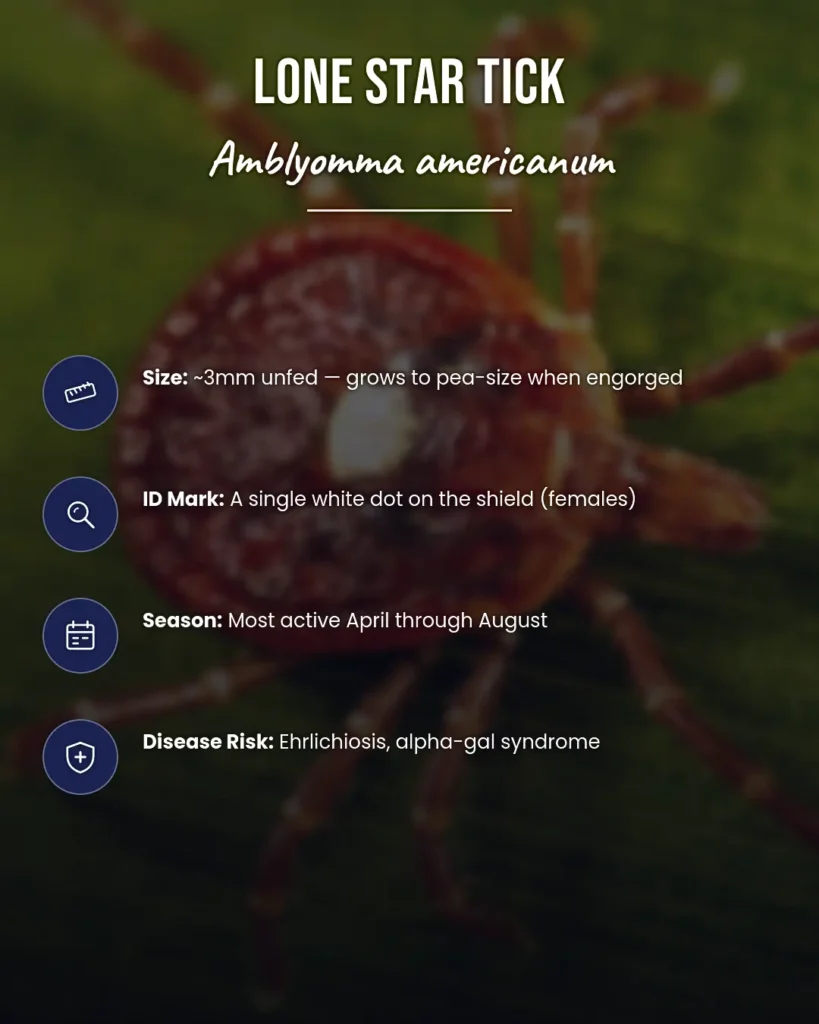
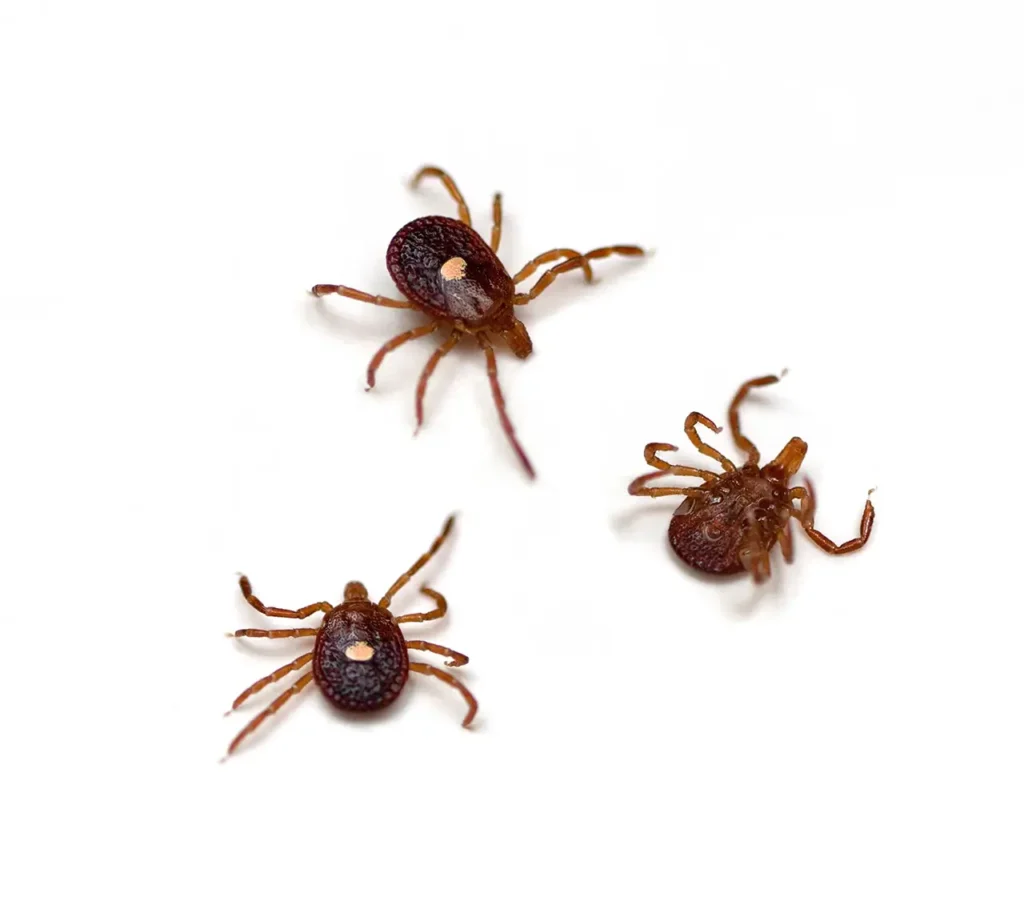
The identifying mark on an adult female lone star tick is a single white or cream-colored dot in the center of her back. That dot is the reason for the name — it has nothing to do with Texas. The lone star tick is aggressive by tick standards, actively moving toward a host rather than passively waiting. All three life stages will bite people.
What the Symptoms Look Like
Reactions range from mild to severe and typically appear three to six hours after eating.
- Hives, itching, or swelling of the lips, face, or eyelids
- Stomach pain, nausea, vomiting, diarrhea, or indigestion
- Shortness of breath, wheezing, or a drop in blood pressure
- In severe cases, anaphylaxis
Sensitivity varies widely. Some people react only to beef and pork. Others also react to dairy, gelatin, or products containing mammal-derived ingredients. This can include certain medications and medical products as well. Some find their sensitivity fades over the years if they avoid further tick bites, while additional bites can drive it back up.
Alpha-gal is diagnosed with a blood test for alpha-gal IgE antibodies, interpreted alongside a patient’s history. It should be a conversation with a physician or allergist, not self-diagnosed from a web page.
Where a Pest Control Company Fits Into This
We treat properties. We do not diagnose or treat people, and this page is not medical advice. But the connection is direct and worth stating plainly.
Alpha-gal sensitization comes from lone star tick bites. Further bites can worsen or prolong it. For a household where someone has already been diagnosed, reducing lone star tick pressure on the property is not a comfort measure — it is a meaningful part of managing the condition.
Lone star ticks are habitat-driven: wood line edges, leaf litter, tall grass, and the corridors deer travel. Deer are the primary host for adult lone star ticks, so properties with deer pressure carry the most risk. This is especially important to note for areas of Middle Tennessee like Franklin, Giles, and Sumner Counties, which have higher deer populations. Treating zones where ticks quest, cutting habitats that sustain them, and addressing rodent harborage all reduce the number of bites that can happen.
Practical Prevention
- Treat clothing and gear with permethrin and use EPA-registered repellent on skin.
- Check thoroughly after any time outdoors, including the scalp, waistline, behind the knees, and the groin. Lone star nymphs are the size of a poppy seed.
- Shower within two hours of coming inside — it washes off unattached ticks and makes a check easier.
- Tumble dry clothes on high heat for ten minutes to kill ticks that came in on fabric.
- Keep pets on veterinarian-recommended tick prevention. Dogs carry ticks into the house.
- Reduce the habitat on your own property so the exposure starts lower.
The Honest Framing
No treatment eliminates every tick from an outdoor property, and any company that tells you otherwise is overselling. What a well-designed program does is substantially reduce the population in the zones where people encounter ticks so that bites are less likely.
Our tick programs run 12 months a year, so every life stage is addressed during the window it is present, rather than treating adults in July and letting the next generation come up untouched. We apply with outside rigs rather than foggers, putting material down into the places ticks rest versus releasing a cloud and hoping it settles in the right place.
Schedule a free inspection or call us at 615.590.1260 to start reducing lone star tick exposure on your property.
FAQs
Does every lone star tick bite cause alpha-gal?
No. Most bites do not. Why some people become sensitized, and others do not, is still being studied.
Is alpha-gal permanent?
Not necessarily. Many people see antibody levels decline over time if they avoid further tick bites. Additional bites can raise them again.
Can I still eat chicken and fish?
Yes. Alpha-gal is not present in poultry or fish. For other mammal products, such as milk and cheese, individual tolerance varies — this is a question for your allergist.
Do other ticks cause it?
In the United States, the lone star tick is the primary driver.
Where do lone star ticks live on my property?
Shaded edges, leaf litter, tall grass, and deer travel corridors. See our yard zones post for a full breakdown of the six hotspots on most Middle Tennessee properties.
About This Information
U.S. Pest Protection is a pest control company. We are not medical providers, and this content is personal and descriptive only — it is not medical advice, diagnosis, or treatment, and it is not a substitute for care from a qualified physician. Alpha-gal is diagnosed with a blood test for alpha-gal IgE antibodies, interpreted alongside a patient’s history. It should be a conversation with a physician or allergist, not self-diagnosed from a web page.
If you have been bitten by a tick, or you are experiencing symptoms you believe may be related to a tick bite, contact your physician or seek medical care. Do not delay medical care based on anything you read here.
Our services reduce tick populations on your property. They are exposure-reducing measures. They do not prevent, treat, or cure any illness.