Lone Star vs. Dog Tick vs. Deer Tick: A Tennessee Tick ID Guide

Somebody pulls a tick off an ankle, takes a picture of it, and asks the internet what it is. The answers come back confident — and contradictory.
While identifying a tick is not essential for treatment if you are bitten, it is helpful to understand the different types so you know what risks you may be facing — they do not all carry the same illnesses, are not active in the same months, and do not live in quite the same places. Here are the four types of ticks to look out for in Middle Tennessee.
The Lone Star Tick
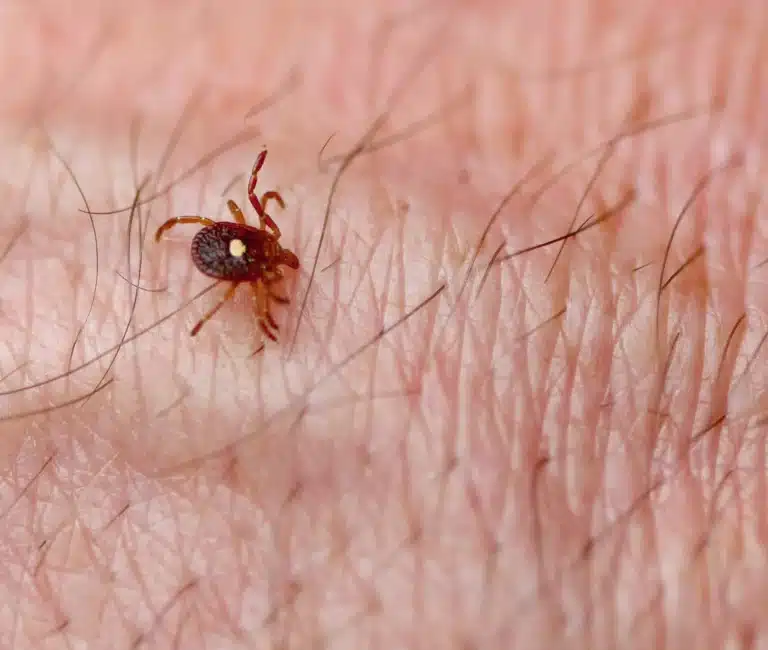
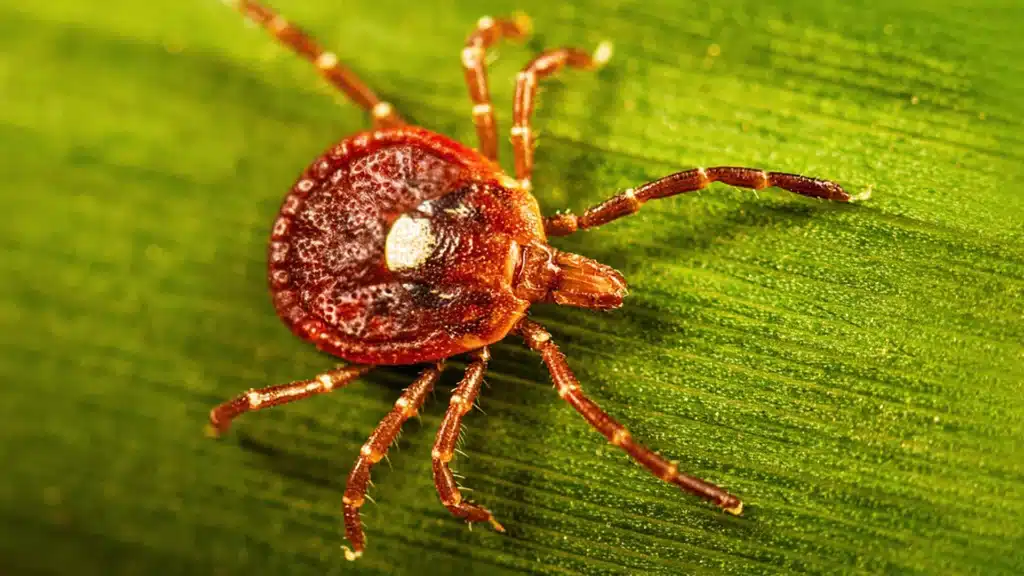
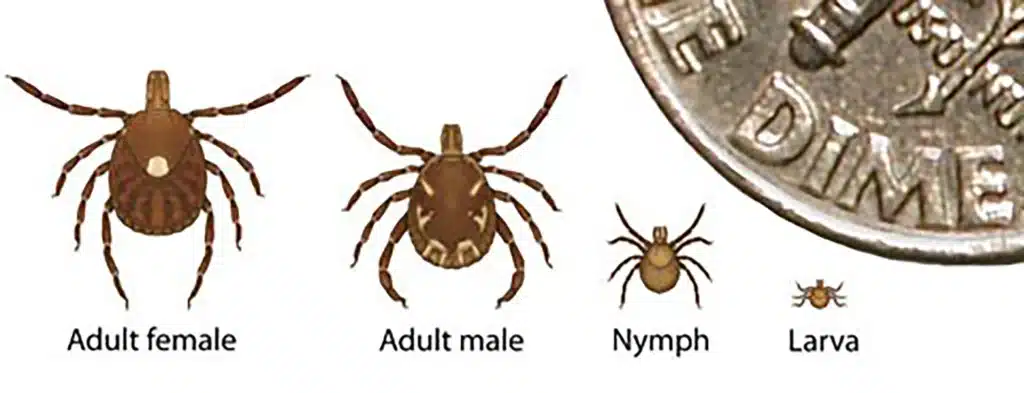
Appearance: rounded, reddish-brown body. Adult females carry a single white or cream dot in the center of their backs — the feature the tick is named for. Males have scattered white markings around the edge of the body instead.
Behavior: these ticks are aggressive. Unlike most ticks that wait passively, lone star ticks will detect a host and move toward it. All three life stages bite humans readily.
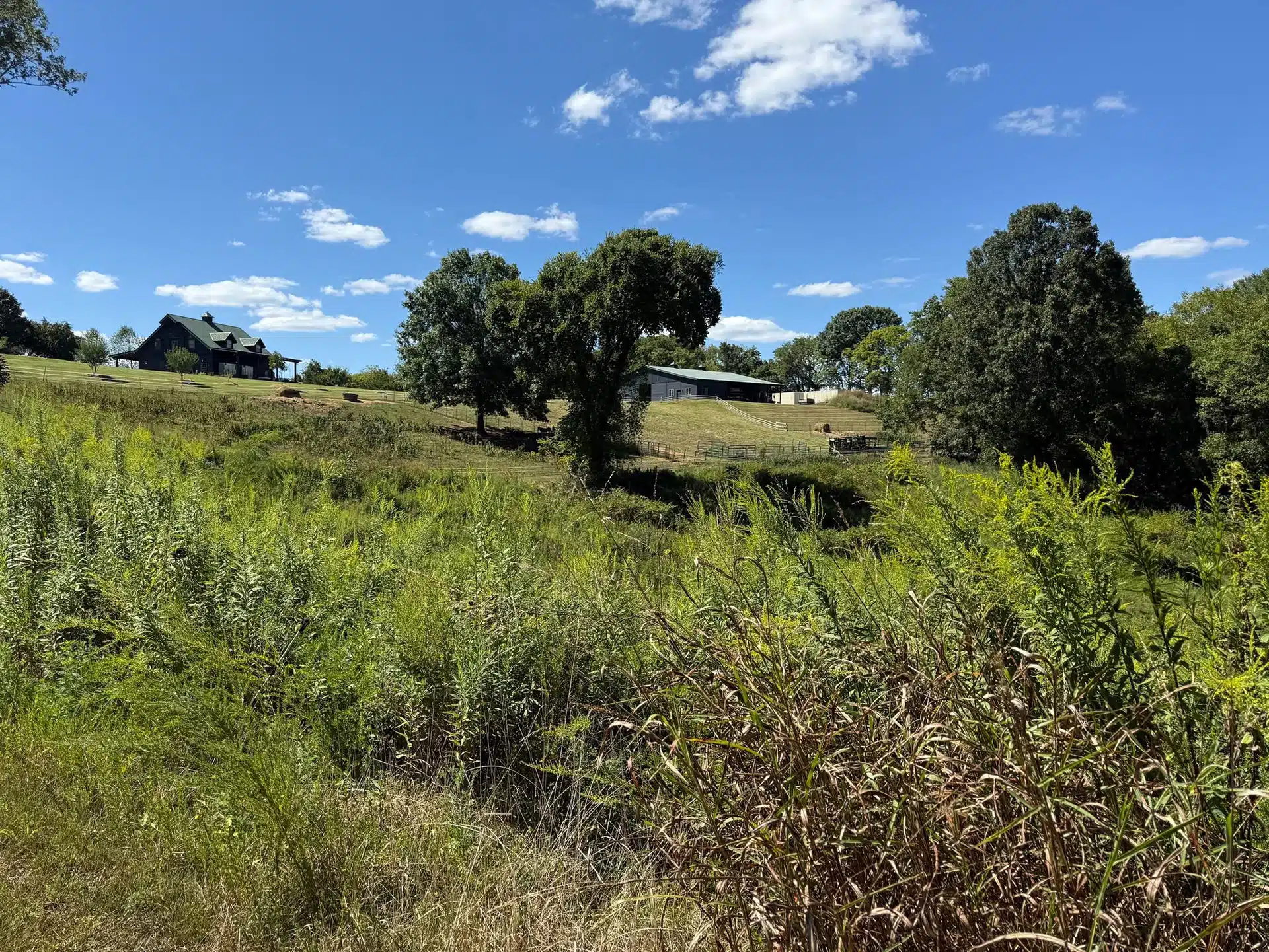
Habitat: shaded woodland edges, dense undergrowth, and anywhere deer travel. Deer are the primary host for adults.
Season: active from spring through late summer, with nymphs peaking in late spring and early summer.
What it can transmit: ehrlichiosis, tularemia, Heartland virus, and Southern tick-associated rash illness. It is also the tick behind alpha-gal syndrome — the red meat allergy.
Lone star ticks are the tick most Middle Tennessee homeowners are encountering.
The American Dog Tick
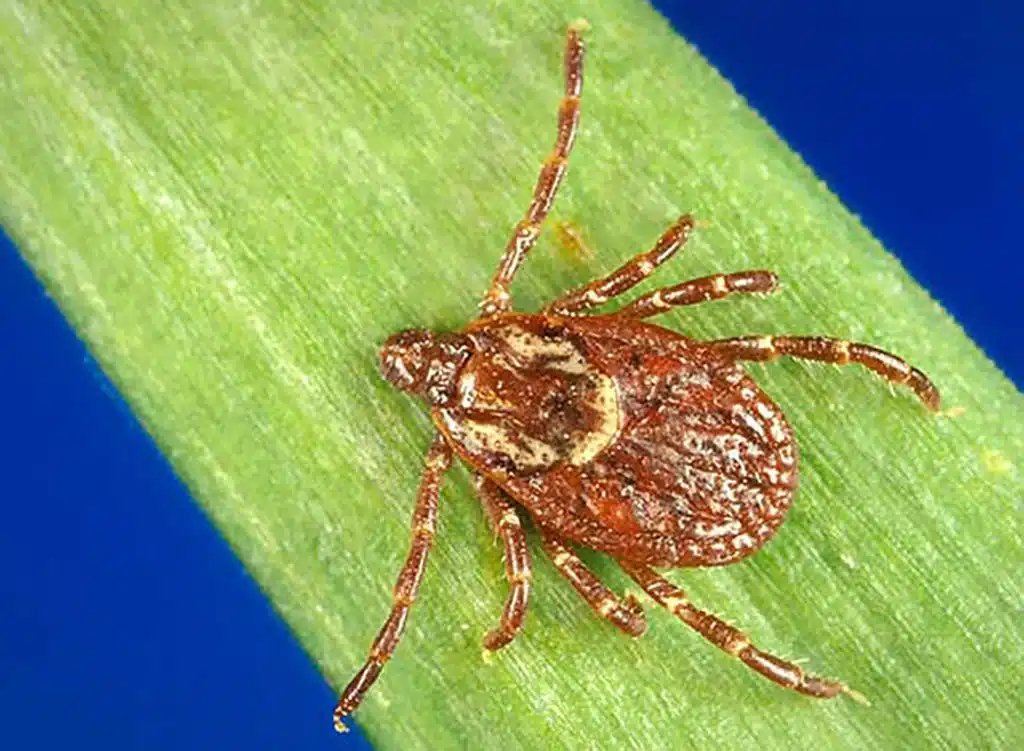
Appearance: noticeably larger than a lone star, brown with ornate cream or grayish mottled markings across the shield behind the head. Engorged females can grow to the size of a small grape. This is usually when people notice them.
Behavior: prefers grassy, open areas and the edges of trails and roads rather than deep woods. Adults are the stage that bites people.

Season: peak activity in spring and early summer.
What it can transmit: Rocky Mountain spotted fever and tularemia. Spotted fever is what Tennessee sees most.
Despite the name, these ticks bite people as readily as they do dogs.
The Blacklegged Tick (Deer Tick)
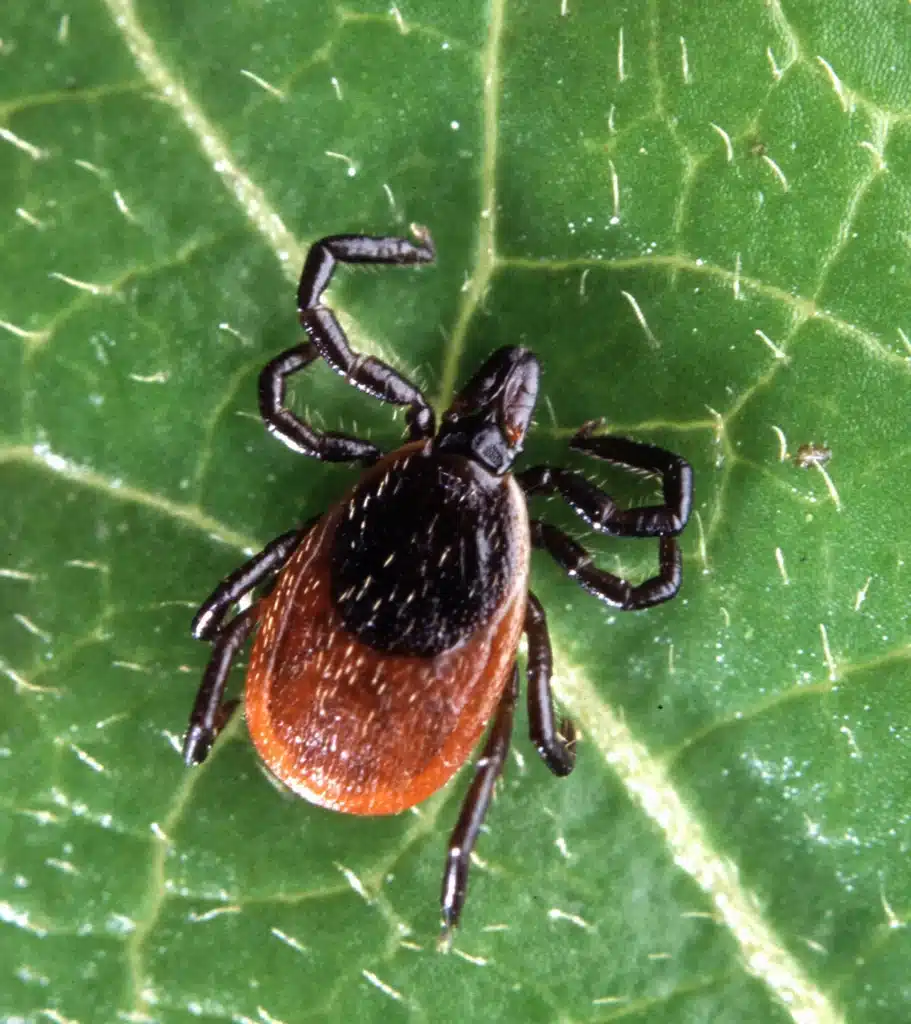
Appearance: small and dark, with distinctly dark legs and — on the adult female — a reddish-orange body behind a solid black shield. No mottling, no white dot. Adults are roughly half the size of an American dog tick.
Behavior: prefers deciduous forest with heavy leaf litter. Nymphs are the size of a poppy seed and are responsible for most human bites.
Season: adults are active in fall, winter, and early spring, including on mild winter days. Nymphs peak in late spring and early summer.
What it can transmit: Lyme disease, anaplasmosis, and babesiosis.
The Brown Dog Tick
Appearance: uniform reddish-brown, no markings, narrower body shape than the others.
Behavior: this is the only tick in the region that can complete its entire life cycle indoors, in a house or a kennel. It strongly prefers dogs but will bite people.
Season: any time of year in a heated structure.
Why it matters: a brown dog tick infestation is a structural pest problem, not a yard problem. Ticks turn up on baseboards, in cracks around windows, behind furniture, and in the dog’s bedding. Treating the lawn does nothing. If you are finding ticks inside repeatedly in January, this is very likely what you have.
Life Stages — Why Nymphs Matter the Most
Every tick passes through larva, nymph, and adult. The nymph is the stage that causes the most human disease, and the reason is size: a nymph is roughly the size of a poppy seed and is very easy to miss during a tick check. An adult is more likely to be spotted and removed before it has been attached long enough to transmit anything.
So, the tick most likely to make someone sick is not the big engorged one they find and panic about. It is the one they never saw.
The life cycle is also why our tick programs run twelve months a year. Larvae, nymphs, and adults are not all out at the same time, and a program that stops in September leaves entire stages of the cycle untreated. Covering the full calendar means each stage gets addressed during the months they are active, and is how a tick population gets smaller year over year rather than rebuilding every spring.
Quick Comparison
| Tick | Key Marking | Peak Season | Can Transmit |
|---|---|---|---|
| Lone star | Single white dot (female) | Spring–late summer | Ehrlichiosis, tularemia, Heartland virus, STARI, alpha-gal |
| American dog | Mottled cream shield, large | Spring–early summer | Rocky Mountain spotted fever, tularemia |
| Blacklegged / deer | Dark legs, orange body | Fall–early spring; nymphs late spring | Lyme, anaplasmosis, babesiosis |
| Brown dog | Plain reddish-brown | Year-round, indoors | Rarely transmits disease to people in the U.S. |
What to Do Once You Have Identified It
Identification tells you what symptoms to watch for over the following weeks. It does not tell you whether you were infected. While most tick bites transmit nothing, it is important to watch closely for symptoms over the next week or so. Save the tick in a sealed bag or photograph it clearly before disposal, note the date, and if illness develops, tell the physician exactly which tick and exactly when.
For removal techniques, see our previous post in this series.
A Note Before You Go
You have probably heard a lot about Tennessee ticks this summer, but don’t let all that talk give you anxiety. Most tick bites transmit nothing. However, as seen with J.K., a bite can prove serious and it is always better to be safe than sorry. We want to share our experiences and knowledge about ticks so anyone reading this knows the risks and how to prepare correctly in the case of an illness being transmitted. And, as always, we recommend professional treatment to reduce tick exposure around your home.
Send us a photo for identification and schedule a free property inspection to start protecting yourself and your family today. Call us at 615.590.1260.