

German Cockroach | Pest ID Guide
Quick Facts About German Cockroaches
The German cockroach is the most common cockroach inside Tennessee homes, apartments, and restaurants, and the hardest to get rid of. Unlike larger roaches that wander in from outside, German cockroaches live and breed entirely indoors, and a few can become thousands in a matter of months.- Size: About 1/2 to 5/8 inch
- Color: Light brown to tan
- Key marking: Two dark stripes running lengthwise on the shield behind the head
- Wings: Fully winged but rarely fly
- Where found: Kitchens and bathrooms, near warmth, food, and moisture
- Reproduction: A female carries an egg capsule holding about 30 to 40 eggs until it’s ready to hatch, and several generations can develop in a year
What Do German Cockroaches Look Like?
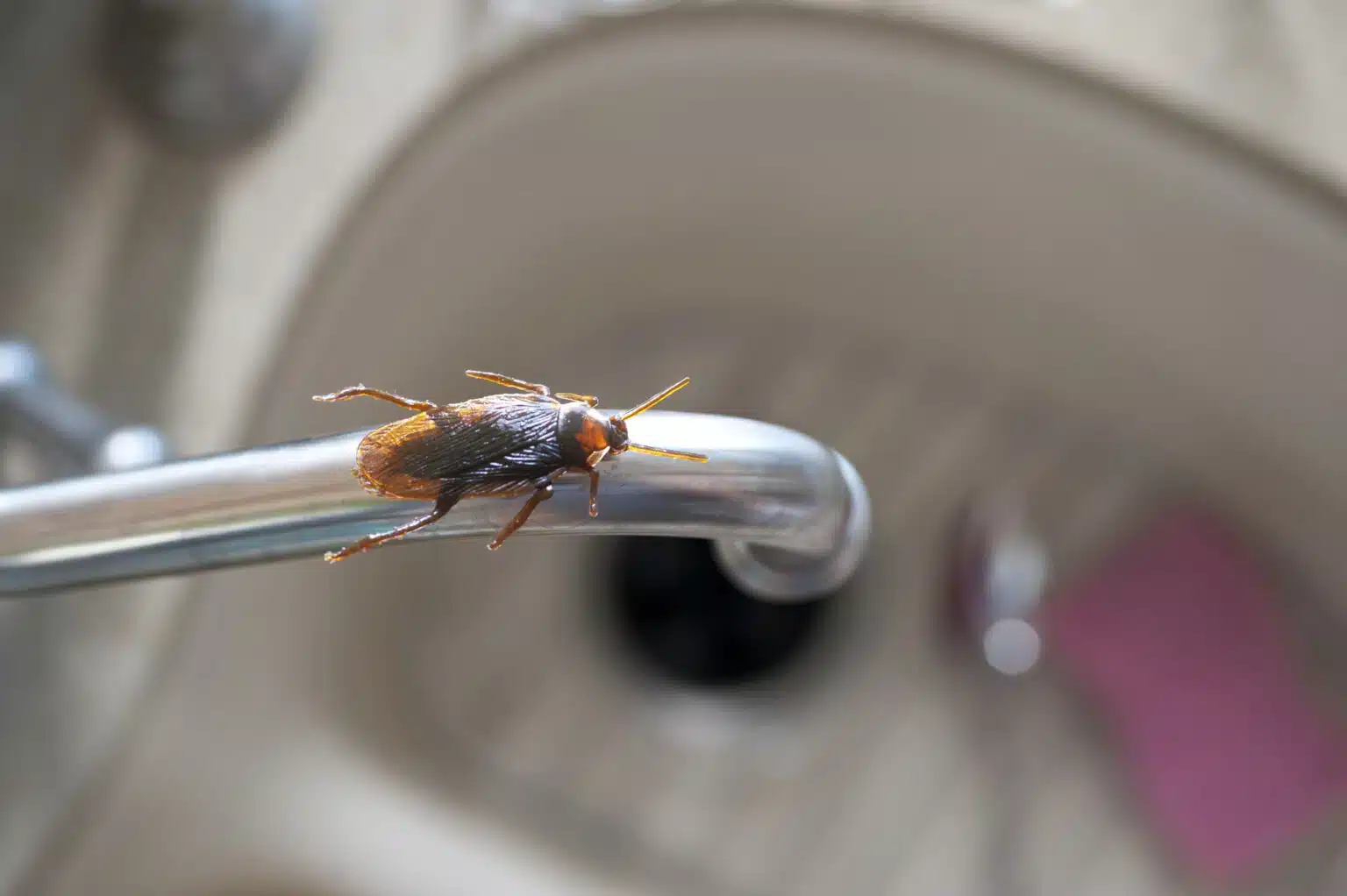
Look for the two dark, parallel stripes on the shield just behind the head. No other common Tennessee roach has them.Nymphs (Young Roaches)
Young German cockroaches are smaller, wingless, and darker, often nearly black with a single light stripe down the middle of the back. Seeing nymphs means roaches are breeding in your home.

German vs. Brown-Banded Cockroaches
Both are small, but German cockroaches have two stripes running front to back behind the head, while brown-banded cockroaches have light bands running side to side across the body. German roaches stay near kitchens and bathrooms; brown-banded roaches spread throughout the home, often up high. See our brown-banded cockroach guide.
Signs of German Cockroaches
- Droppings: Tiny black specks like ground pepper or coffee grounds in drawers, cabinet hinges, and corners
- Egg capsules: Small, tan, purse-shaped capsules, sometimes still attached to a female
- Shed skins: Light-brown skins in cabinets and behind appliances
- Musty odor: A stale, oily smell in cabinets and pantries with heavy activity
- Roaches in daylight: A sign the population has outgrown its hiding places

Where German Cockroaches Hide
- Behind and under refrigerators, stoves, and dishwashers
- Inside cabinets, especially hinges, corners, and under the sink
- Inside microwaves, coffee makers, toasters, and other warm appliances
- Around water heaters and plumbing
- In cracks along baseboards, countertops, and backsplashes
- Inside cardboard boxes and paper bags
How German Cockroaches Get Into Homes
German cockroaches don’t come in from the yard. They hitchhike in grocery bags, cardboard boxes, used appliances and furniture, and luggage, and in apartments and townhomes they travel between units through shared walls and plumbing. Even a very clean home can pick them up.
Health & Property Risks
German cockroaches can carry bacteria such as Salmonella onto food, dishes, and counters. Their droppings and shed skins are among the most common indoor allergy and asthma triggers, and exposure is a particular concern for children. In restaurants and food businesses, an infestation can lead to failed health inspections.
Why Sprays and Foggers Don’t Work
Many German cockroach populations resist common store-bought insecticides. Sprays and bug bombs also drive roaches deeper into walls and cabinets and can spread them to new areas, while the egg capsules survive and keep hatching. The result is often a short break followed by a bigger problem.
How Professionals Get Rid of German Cockroaches
- Inspection: Finding where the roaches are hiding and breeding
- Gel baits: Placed in cracks and harborage where roaches feed, then carried back and shared
- Insect growth regulators: Products that stop young roaches from maturing and reproducing
- Product rotation: Switching bait types so roaches don’t become bait-averse
- Follow-up visits: Repeat treatments until no activity remains, since new nymphs keep hatching for weeks
While you’re being treated, reduce clutter and cardboard, clean up grease and crumbs, fix leaks, and avoid spraying over bait placements. See our German cockroach removal service, or commercial cockroach control for restaurants and businesses.
Frequently Asked Questions
How do I know if I have German cockroaches?
Look for small, light-brown roaches with two dark stripes behind the head, usually in the kitchen or bathroom, along with pepper-like droppings in cabinets and drawers.
How fast do German cockroaches multiply?
Very fast. Each egg capsule holds about 30 to 40 eggs, and several generations can develop in a year, so a few roaches can become a large infestation within months.
Why won’t bug spray get rid of German cockroaches?
Many populations resist common insecticides, sprays scatter roaches deeper into walls, and egg capsules keep hatching. Gel baits and growth regulators work far better.
How did I get German cockroaches if my house is clean?
They hitchhike in grocery bags, boxes, used appliances, and furniture, and move between apartments through shared walls. Cleanliness helps control them but doesn’t prevent them from arriving.
How long does it take to get rid of German cockroaches?
Usually several weeks, with follow-up visits, because eggs continue hatching after the first treatment.
Schedule a Free Inspection
Seeing small roaches in your kitchen? U.S. Pest Protection will inspect at no cost and set up a treatment plan that follows through until they’re gone. See our German cockroach removal service.A real TN person answers. No call center.
Free inspections across Middle Tennessee from your local, family-owned team.
