
Why Am I Seeing Big Wolf Spiders in My Home This Fall?

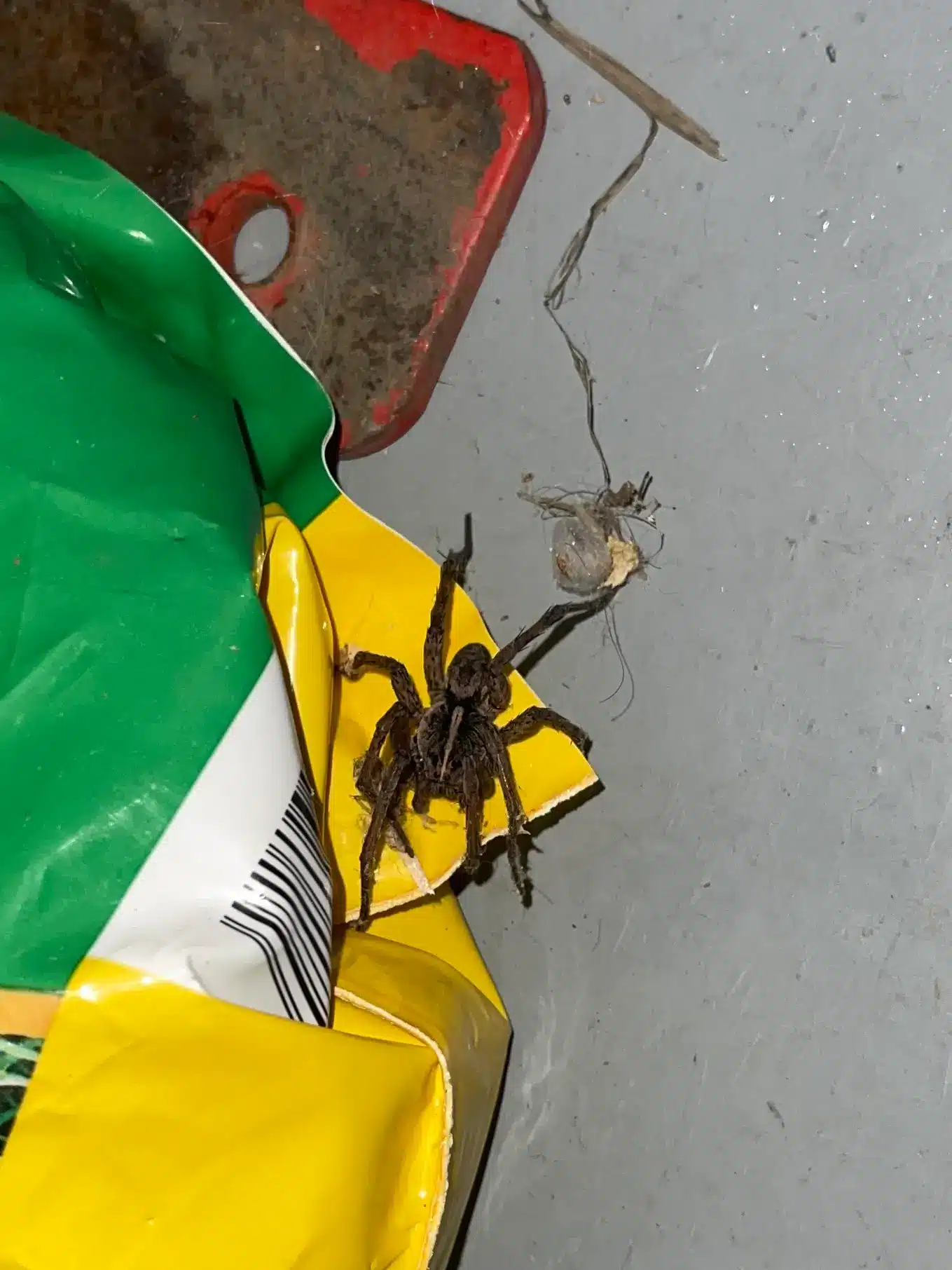
You head downstairs to grab a box of fall decorations, flip the light switch, and find a giant hairy spider sitting in the corner of the storage room. Don’t panic. It’s most likely a wolf spider.
Wolf spiders come indoors in the fall because cooler nights push them to look for shelter, and adult males wander in search of mates. In Middle Tennessee, they often turn up in garages, basements, and ground-floor rooms in September and October. They look intimidating, but wolf spiders aren’t dangerous to people.
How Do I Tell If It’s a Wolf Spider?
Wolf spiders can be large, with bodies up to about 1.5 inches and leg spans up to 3 to 4 inches. They’re hairy, brown and gray with stripes down their back, and they’re fast. That speed makes them active hunters: instead of building webs and waiting for prey to get stuck, wolf spiders chase down their food on the ground — which is how they got their name. Some can cover up to 2 feet per second.
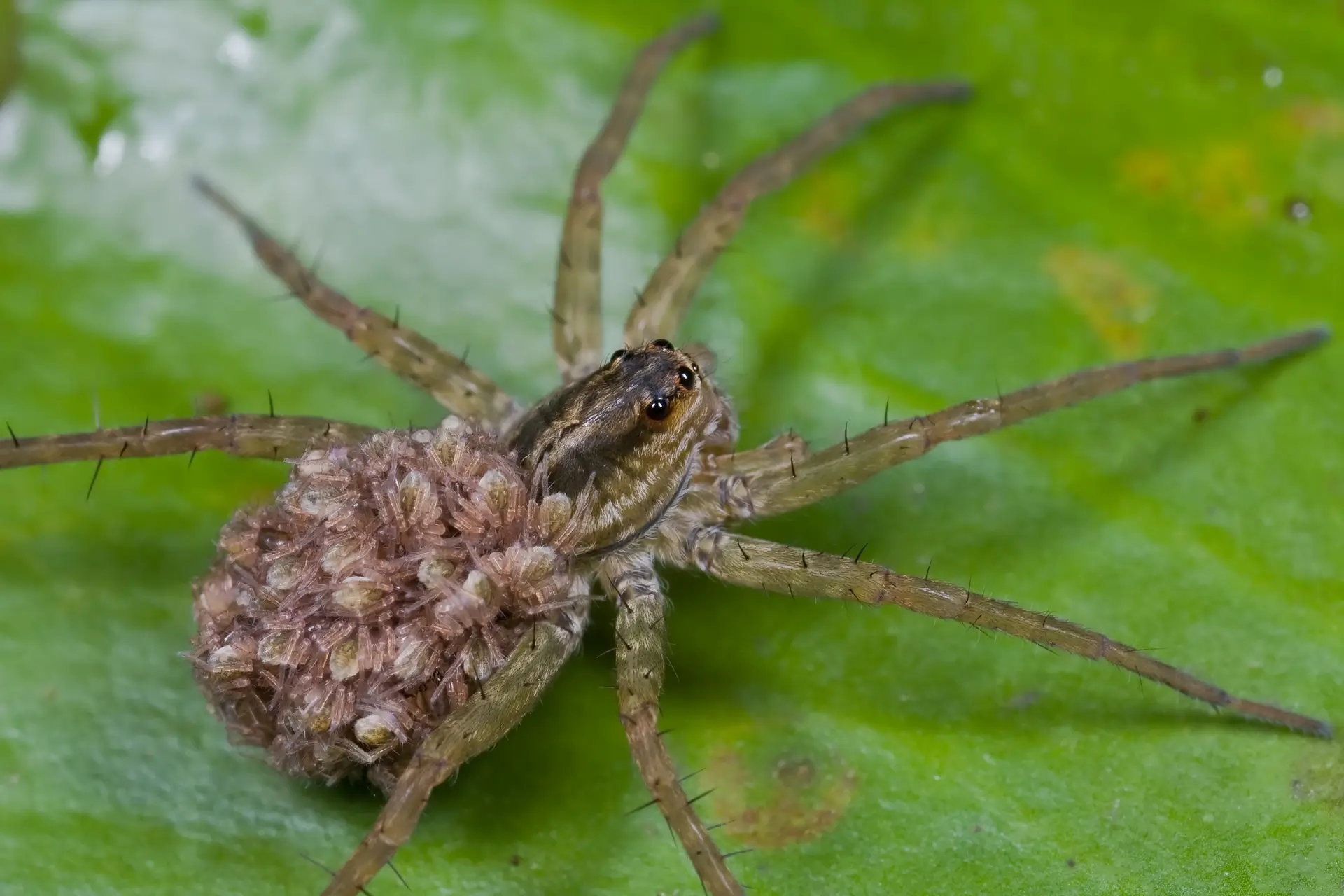
Their eyes reflect a flashlight beam at night, so you can spot them in the yard by their eyeshine. Females carry their egg sac, and later their spiderlings, on their backs. This is one reason you shouldn’t try to crush a wolf spider when you see one. With their speed you’ll likely miss, and if you do land a hit, you could scatter baby spiders everywhere. A cup and a piece of paper work much better (see the FAQ section below).
Are Wolf Spiders Dangerous?
No. Their size and speed unsettle a lot of people, but wolf spiders would rather run than fight. They only bite if they feel threatened or trapped, and a bite is usually comparable to a bee sting: clean the area, apply ice, and you’ll be fine. See a doctor if you notice signs of an allergic reaction or infection.
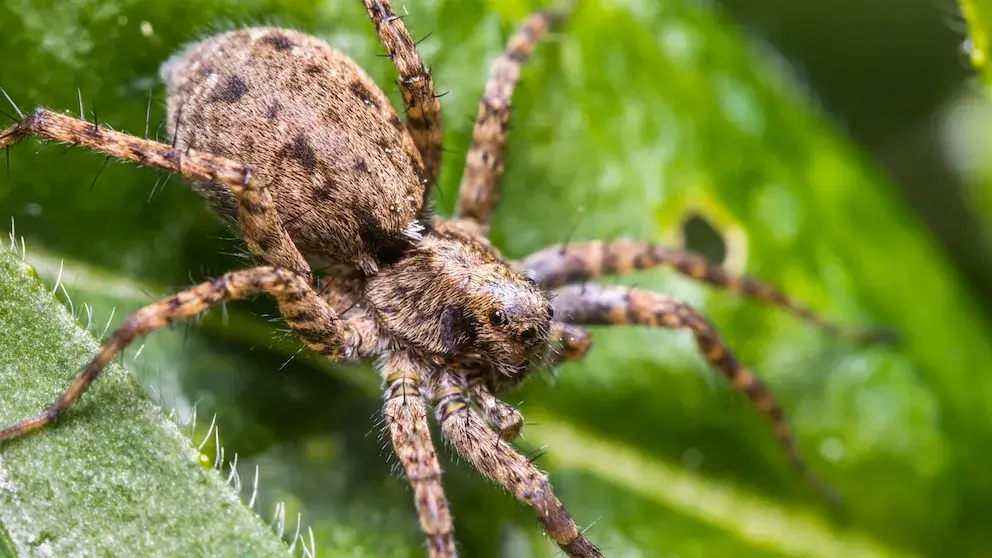
Wolf spiders are effective natural pest control. They eat insects and even other spiders, so finding one in your home isn’t necessarily a bad thing. That said, most people would rather they stay outside, and the tips below can help with that.
How Do Wolf Spiders Get Inside?
Despite their size, wolf spiders can squeeze through surprisingly small gaps. Spaces under doors, garage doors, torn screens, foundation cracks, and basement windows all give them easy access — and the same openings let in the insects they hunt. Installing door sweeps, sealing gaps, reducing outdoor lighting near entry points, and clearing leaf litter and mulch from the foundation are all good steps for keeping spider activity down.
Wolf Spider vs. Brown Recluse: How to Tell the Difference
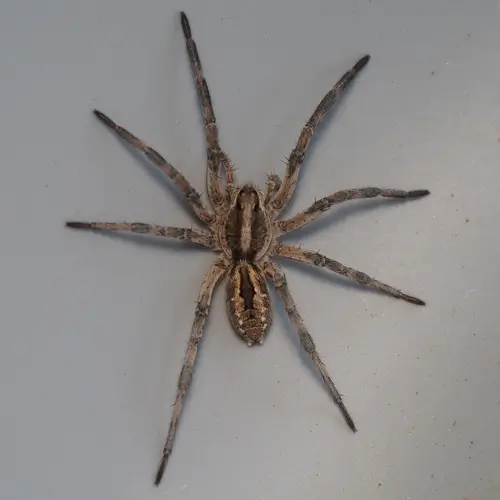
These two spiders are commonly mistaken for one another, but once you know what to look for, they’re not hard to tell apart. The difference matters: wolf spiders aren’t dangerous, but brown recluse bites can occasionally cause serious skin wounds, and brown recluses are common in Middle Tennessee.
| Feature | Brown Recluse | Wolf Spider |
|---|---|---|
| Size | Small; body about 1/4–1/2 inch, leg span about the size of a quarter | Larger and bulkier; body 1/2–1.5 inches, leg span up to 3–4 inches |
| Color | Uniform light tan to medium brown | Mottled brown, gray, and black, often with stripes |
| Key marking | Dark violin-shaped mark on the back, with the “neck” pointing toward the abdomen | No violin; usually lengthwise stripes on the back |
| Eyes | 6 eyes in 3 pairs (most spiders have 8) | 8 eyes in three rows, with two large, forward-facing eyes that stand out |
| Legs | Long, thin, uniformly colored, no spines or bands | Thick, hairy, often banded or spiny |
| Body texture | Fine hairs; looks smooth | Visibly hairy |
| Behavior | Shy and reclusive; hides in dark, undisturbed spots | Active ground hunter; runs fast, chases prey |
| Web | Small, loose, irregular web used as a retreat, not for catching prey | No web for hunting; may live in burrows |
| Where found | Closets, attics, basements, boxes, shoes, behind furniture | Gardens, leaf litter, grass; wanders indoors along floors and walls |
| Activity | Nocturnal | Mostly nocturnal; eyeshine reflects under a flashlight |
| Egg care | Lays egg sacs in hidden spots | Female carries egg sac on her spinnerets, then carries spiderlings on her back |
| Venom / bite risk | Medically significant; bites can occasionally cause necrotic skin wounds that need medical care | Not medically significant; bite is painful like a bee sting but generally harmless |
| Range | Mainly South-Central and Midwest US, including Middle Tennessee | Found throughout North America |
Quick ID Tips
The fastest checks are the eyes (6 in pairs vs. 8 with two large forward-facing ones) and the legs (smooth and plain vs. hairy and banded). The violin mark is helpful, but many brown spiders have dark patches that look similar, so don’t rely on it alone.
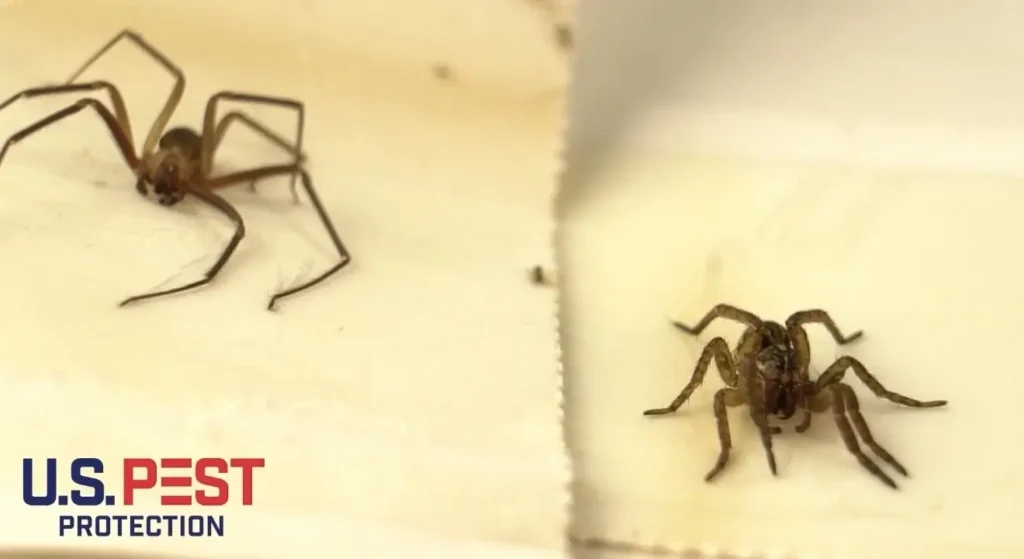
If you’re bitten by something you think might be a brown recluse, clean the area, apply a cold compress, and see a doctor if the bite becomes painful, discolored, or starts to blister.
When Should I Call a Professional?
If you’re seeing wolf spiders regularly indoors and can’t get the numbers down, there’s often an insect population they’re feeding on — and that may take professional treatment to address. And if you’re not sure whether you’re looking at a wolf spider or a brown recluse, don’t guess. U.S. Pest Protection offers free inspections and will identify exactly what you’re dealing with. Call us at 615.590.1260 or visit uspest.com.
