
What’s That Scratching Noise? Signs of Mice and Rats in Middle Tennessee

A scratching noise behind the headboard at night. Scampering sounds near the floorboards. Your dog going crazy, sniffing at walls and pawing at the floor. It’s probably not a ghost — but you may have some unwanted visitors worth calling a professional for.
Rodents are a common problem in Tennessee homes, especially as temperatures drop in the fall and winter. Your home offers everything they’re looking for: warmth, shelter, food, and plenty of places to hide. A mouse can fit through a gap about 1/4 inch wide, and rats can squeeze through 1/2 inch, so even small openings around your home’s exterior are potential entry points. Here’s how to tell if you have a rodent problem and what to do about it.
1. Scratching Noises
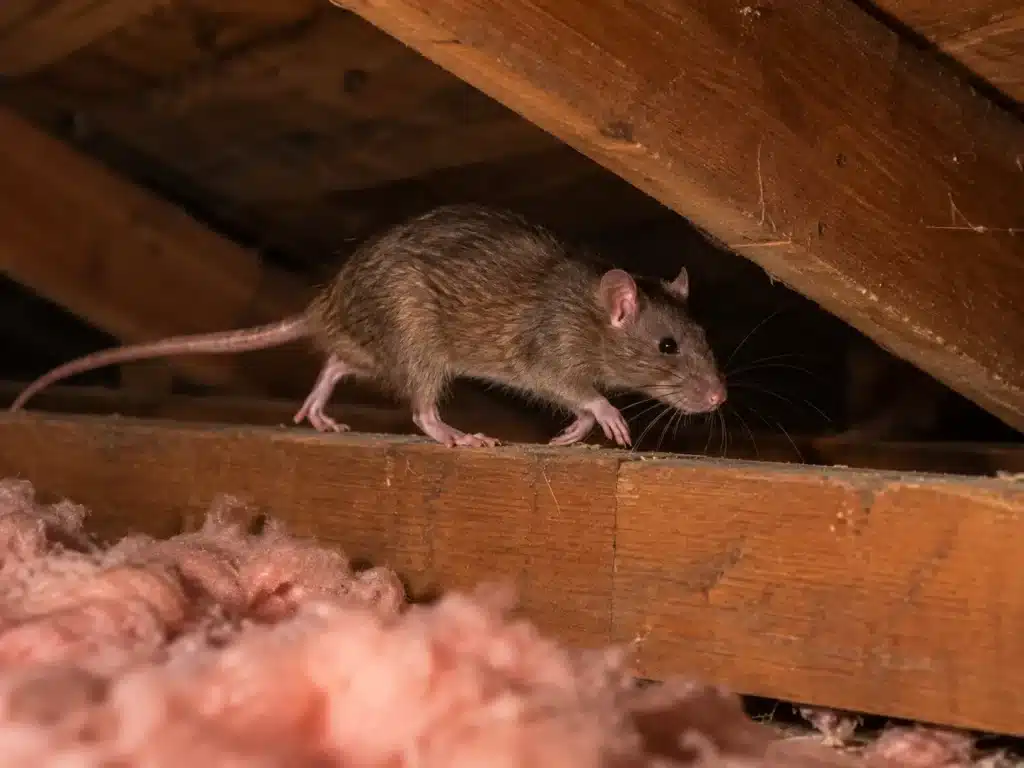
Rodents are most active at night, which is why you usually only hear them while in bed or during the quiet hours of dusk and dawn. They do most of their foraging, exploring, and feeding after dark. During the day, they rest in dark, quiet spots — attics, wall cavities, under appliances. If you’re noticing activity during daytime hours, that’s often a sign of a larger infestation that’s pushed rodents out of hiding in search of more space or resources.
Listen and look for
- Scratching: Mice have tiny, sharp claws. When they run across wood, insulation, or inside drywall, they create a light tapping or scratching sound. Rats produce heavier, thumping and dragging sounds.
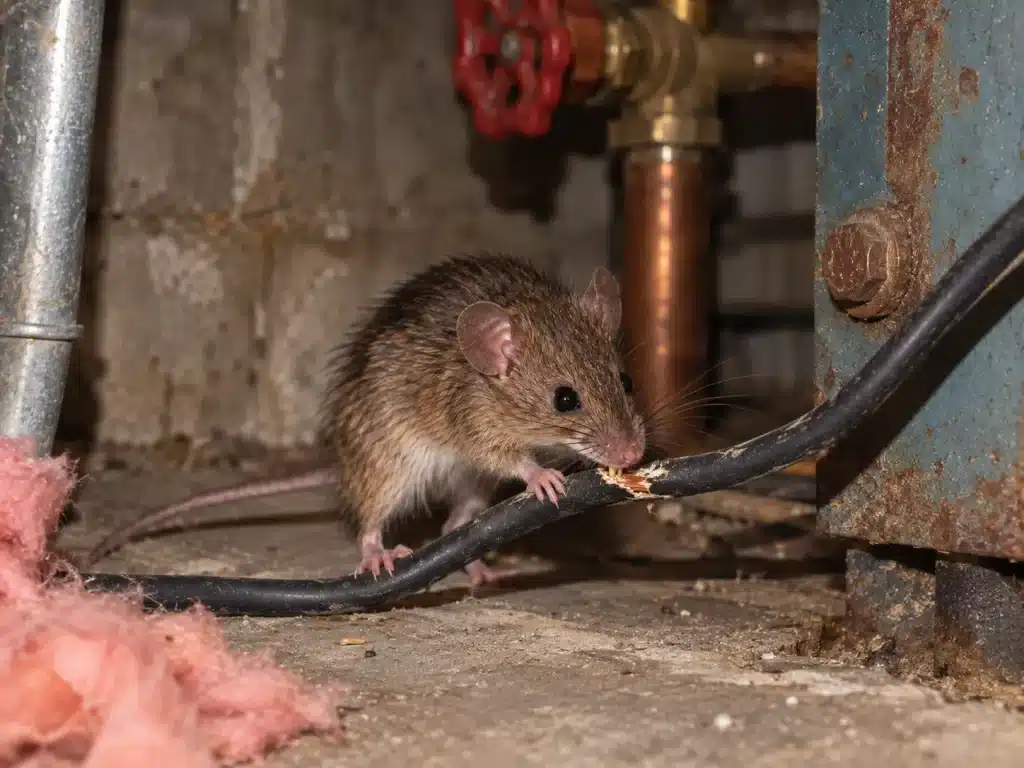
- Gnawing or crunching: You may be able to hear mice chewing on drywall, insulation, wood, or wiring — they gnaw constantly to wear down teeth that never stop growing.
- Pets behaving strangely: Your pets will likely notice rodents before you do. If a cat or dog is staring at a wall, pawing at floorboards, or trying to get under appliances, that’s a significant indicator.
What you can do
Inspect around utility entry points inside and outside your home. Seal openings with rodent-resistant materials like copper mesh or steel wool, combined with an appropriate sealant over the top.
2. Gnaw Marks
Rodents have teeth that never stop growing, so they chew constantly to keep them from getting too long. They’ll work on almost anything: wood, drywall, insulation, pipes, food containers, and wires. Finding gnaw marks on floorboards, wall corners, bags of pet food, or in areas like basements, attics, and crawl spaces is a reliable sign you have rodents living rent-free in your home.
3. Cracks and Entry Points
Rodents can fit through extremely small cracks and crevices. If you can see a gap, there’s a good chance they’ve already found it. Once inside, mice and rats can travel through walls to reach different areas of your home without ever being spotted.
Pay close attention to where your foundation meets siding, brick, or other exterior materials. Also check around pipes, floorboards, and door and window seals inside and outside. If you find potential entry points, seal them or have them professionally repaired.
4. Droppings
Scratching noises may tip you off, but droppings usually confirm an infestation. Rodents leave them just about everywhere they go. A single mouse can leave dozens of droppings in one night, so even a small problem can leave a noticeable mess. Mouse droppings are about 1/8 to 1/4 inch long, rod-shaped with pointed ends, and look like dark grains of rice (see our house mouse identification guide for a closer look). Rat droppings are larger — around 1/2 to 3/4 inch, closer to the size of a raisin.
Look for
- Droppings in hidden spots. Check kitchen drawers, pantries, under sinks, behind the stove and refrigerator, and along baseboards. Rodents stick close to food and stay out of sight.
- Fresh vs. old droppings. Fresh droppings are dark, shiny, and soft. Older ones turn dry, gray, and crumble easily. Finding fresh droppings consistently means an active problem.
- Droppings in more than one area. Finding them in the kitchen, garage, and attic suggests the problem has spread beyond one or two mice.
- A musky or ammonia-like smell. Rodent urine has a strong odor in enclosed spaces like cabinets, closets, and crawl spaces.
What you can do
Never sweep or vacuum rodent droppings — that can stir germs into the air. Wear gloves, spray the droppings with disinfectant or a bleach-and-water solution, let them soak, then wipe up with paper towels and seal everything in a bag. It’s worth learning how to handle rodent waste properly before you start cleaning.
5. Rub Marks
Once rodents find a path from their nest to a food source, they stick with it — running the same route every night, usually hugging walls and baseboards. Over time, the oil and dirt in their fur rubs off onto surfaces, leaving dark, greasy smudges along their travel path. These rub marks are essentially a trail leading straight to where rodents are coming and going.
Rat marks are usually easier to spot because rats are bigger and greasier, but mice leave them too in heavily traveled areas. Newer marks are soft and smear when touched; older ones dry out and flake. This can tell you whether rodents are still active.
Look for
- Dark smudges along baseboards, wall corners, and the edges of steps
- Stains around holes where pipes and wires come through walls, gaps under doors, and around vents
- Curved “swing marks” on attic rafters and beams, left by roof rats climbing around obstacles
- Footprints and tail drag marks in dusty areas of garages, attics, and basements — if you think you’ve found a path, sprinkle a thin layer of flour along it overnight and check for tracks in the morning
What you can do
Note where you find rub marks — they usually point straight to entry points and nesting areas. If you’re planning to call a professional, hold off on scrubbing them before the inspection. They’re a roadmap for our technicians.

6. What Our Techs Look For
Spotting the signs is only half the battle. Setting a few traps might catch a mouse or two, but if rodents can still get inside, new ones will keep taking their place. That’s why every U.S. Pest rodent control service starts with a free, top-to-bottom inspection of your home’s interior, attic, crawl space or basement, garage, and exterior. The goal isn’t just to confirm you have rodents — it’s to find exactly how they’re getting in and where they’re hiding.
Our techs check for
- Entry points. A mouse can fit through a gap the size of a dime. We check around pipes and utility lines, vents, garage doors, rooflines, and foundations for any opening rodents could be using.
- Activity trails. Droppings, rub marks, and tracks help our techs trace the path rodents take between their nest, their food source, and the way they came in.
- Nests and nesting material. Rodents build nests from shredded paper, fabric, and insulation in quiet spots like attics, garages, and storage boxes. In bigger infestations, we often find tunnels running through attic and crawl space insulation.
- Burrows. Holes along your foundation, under decks, or around sheds typically indicate Norway rats, which burrow at ground level and work their way inside from there.
- Damage. Chewed wiring, insulation, stored belongings, and food packaging help show how long rodents have been active and which areas need the most attention.
- Conditions that attract rodents. Firewood stacked against the house, tree branches touching the roof, cardboard storage, open pet food or birdseed, and worn weatherstripping all make your home more inviting.
After the inspection, we’ll give you a written plan for your home. It typically includes sealing entry points with rodent-proof materials, setting interior traps, placing tamper-resistant bait stations around the exterior, cleaning up droppings and nesting material, and follow-up visits to confirm the problem is resolved. Every entry point we seal is backed by a warranty — if rodents find their way back in through one, we’ll come back and fix it at no extra charge. Call us at 615.590.1260 or schedule a free inspection.