
Camel Crickets in Your Crawl Space: What They’re Telling You About Moisture

If you’ve opened the crawl space door or walked into the basement this fall and had something leap straight at you, you’ve met a camel cricket. They’re tan, humpbacked, and all legs, and they tend to show up in groups. Around Middle Tennessee, people call them cave crickets, spider crickets, or “sprickets.”
Here’s the good news first: camel crickets don’t bite, sting, or spread disease. The more useful news is what they’re telling you. A crawl space full of camel crickets is almost always a damp crawl space, and damp crawl spaces are where bigger problems start.
How to recognize a camel cricket
Camel crickets are easy to tell apart from the black field crickets you see in the yard:
- Shape: a strongly arched back, which is where the “camel” name comes from, with the head tucked down between the front legs.
- Legs and antennae: very long back legs and thread-thin antennae that are often longer than the body. That spidery look earns them the “spider cricket” nickname.
- Size and color: roughly 1/2 to 1 1/2 inches long, light to dark brown, often with darker bands.
- No wings, no chirping: they can’t fly, and unlike field and house crickets, they’re silent.

When they’re startled, camel crickets jump, often right toward you. It feels like an attack, but it’s a reflex meant to startle predators. They’re simply trying to get away.
Many of the camel crickets in homes today aren’t native at all. In a 2014 North Carolina State University citizen-science study, more than 90 percent of the households that sent in photos or specimens had the greenhouse camel cricket, a species from Asia, rather than one of the native kinds. Native or not, they behave the same way and respond to the same fixes.
For a closer look at identification, see our camel cricket ID guide and our guide to crickets in Tennessee homes.
Why they pile up in crawl spaces
Camel crickets need three things: darkness, cool temperatures, and high humidity. A Tennessee crawl space with bare soil, open vents, and little air movement offers all three. Outdoors, they live under stones, logs, and firewood stacks, so a crawl space is just a bigger, better version of the spot they were already looking for.
Weather pushes them in, too. Extension entomologists note that camel crickets become a problem during weather extremes, either long stretches of rain or long stretches of hot, dry weather. After Nashville’s bone-dry September, the damp ground under your house was one of the few moist places left. As nights get colder in November, they settle in. Camel crickets spend the winter as young nymphs or adults, and in protected spots they can keep breeding, so a few in October can turn into a lot by spring.
What camel crickets are telling you
A few camel crickets in the garage aren’t cause for alarm. Dozens in the crawl space are worth paying attention to, because the moisture that attracts them also attracts other things. Inspectors call these conducive conditions:
- Termites. Subterranean termites need damp soil and wood. A wet crawl space puts both right next to each other.
- Wood decay. Damp framing grows fungi that soften wood over time and make it easier for termites and carpenter ants to get in.
- Other moisture pests. Silverfish, cockroaches, centipedes, pill bugs, and spiders that feed on crickets tend to show up in the same places.
- Your living space. Air from a crawl space rises into the home above it, along with musty odors and humidity.
Camel crickets can also chew stored fabric, paper, and cardboard when their numbers are high, and they leave dark fecal smears on joists and walls. If you store anything in a crawl space or basement, that’s one more reason to deal with them.
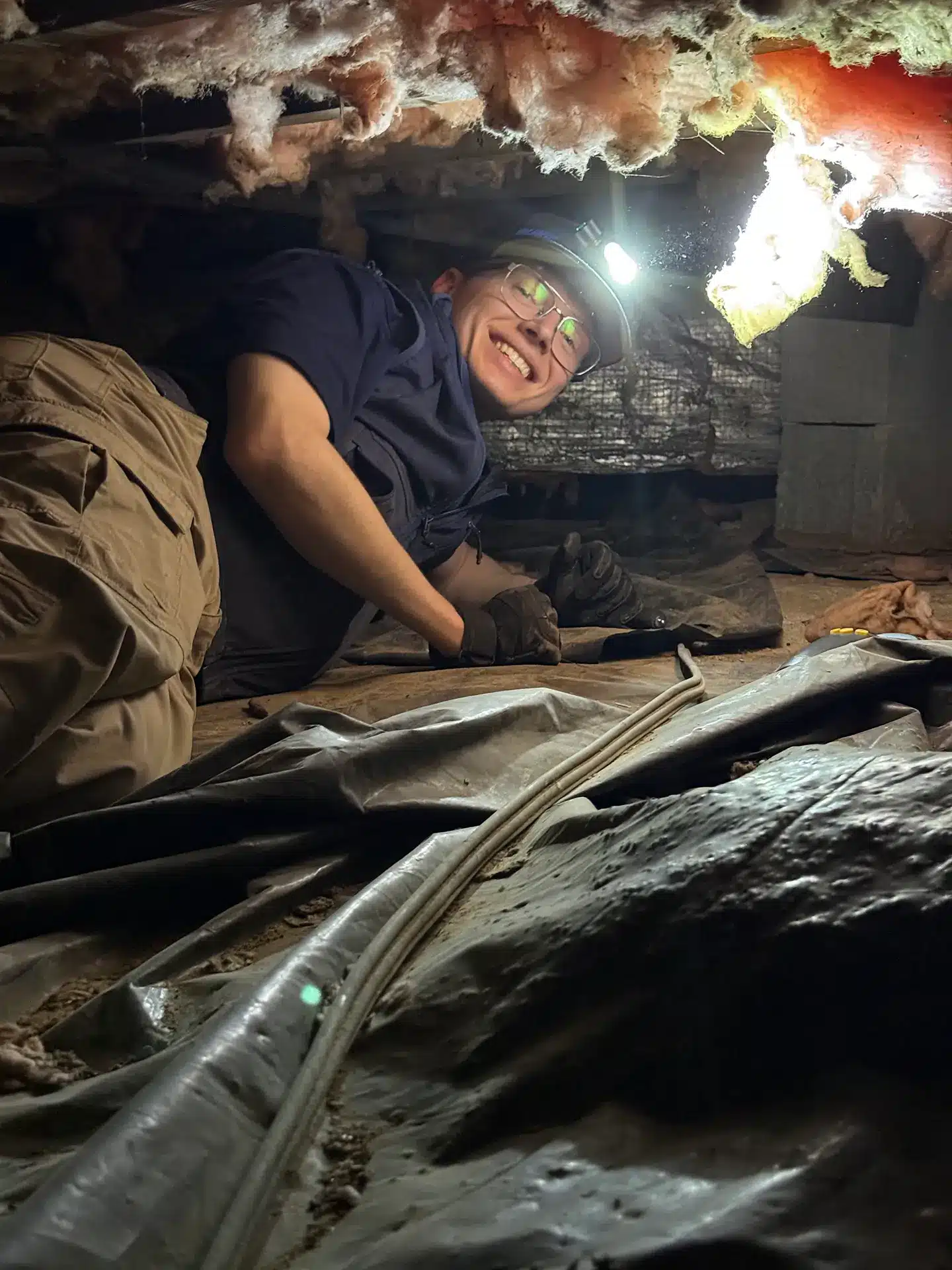
What you can do this weekend
Spraying alone won’t fix a camel cricket problem. As North Carolina State Extension puts it, pesticides can reduce the nuisance, but they aren’t a long-term solution. The lasting fix is making the space less inviting:
- Dry it out. Fix plumbing leaks, make sure gutters and downspouts carry water away from the foundation, and run a dehumidifier in a basement.
- Close the doors. Make sure crawl space vents are screened and the access door closes tightly. Add weatherstripping and door sweeps to basement and garage doors.
- Set sticky traps. Glue traps along walls and in corners catch a surprising number and show you where they’re concentrated.
- Vacuum them up. For the ones that wander into the house, a vacuum is fast and effective. Empty it outside afterward.
- Clear their hideouts. Move firewood, stones, and debris away from the foundation, and store items in sealed plastic bins on shelves or pallets instead of cardboard on the floor.
When to call us
If you’ve done the basics and you’re still finding camel crickets, or if you’re seeing standing water, a musty smell, condensation on ducts and pipes, or fungus on the joists, it’s time for a professional look. Moisture problems rarely fix themselves, and the longer they go, the more they cost.
How U.S. Pest helps
Crickets are covered in our general pest control plans, so your Pest Pro treats the outside of your home where they’re getting in, every visit. That knocks the numbers down. To stop them for good, we go after the moisture.
Our crawl space encapsulation and moisture control service starts with a free inspection. We measure moisture in the framing, look for leaks and drainage problems, and check for termites and other pests. Then we recommend only what your crawl space actually needs. That might be a vapor barrier, a dehumidifier, drainage work, an antifungal wood treatment, or full encapsulation. We’ll never sell you something you don’t need, and everything we do is backed by our Whatever It Takes Guarantee.
We’ve been protecting Middle Tennessee homes since 1985. We’re Tennesseans serving Tennesseans, and when you call, a real person in our local office answers.
Camel crickets jumping at you from under the house? Call 615-590-1260 or schedule a free inspection.
Keep reading: The hidden truths of your crawl space · More Middle Tennessee pest news
FAQs
Are camel crickets dangerous?
No. Camel crickets don’t bite, sting, or spread disease. In large numbers, they can chew stored fabric, paper, and cardboard and leave droppings on walls and joists.
Why do camel crickets jump at me?
Jumping is how they escape when they’re startled. They leap in whatever direction they can, which often means toward the person who surprised them. It isn’t an attack.
Do camel crickets mean I have a moisture problem?
Usually, yes. Camel crickets gather where it’s dark, cool, and humid. Lots of them in a crawl space or basement is a strong sign the space is too damp, which can also attract termites and feed wood decay.
Will spraying get rid of camel crickets?
Treatment can reduce the numbers, but it won’t keep them away if the moisture is still there. Drying out the space and sealing entry points is the long-term fix.
Can crawl space encapsulation get rid of camel crickets?
Sealing and drying a crawl space removes the humid conditions camel crickets need, so it’s one of the most effective long-term fixes. We’ll measure your crawl space moisture during a free inspection and recommend the right solution.
Sources: NC State Extension (camel crickets); Clemson Cooperative Extension (camel crickets); University of Maryland Extension (crickets); NC State University (2014 camel cricket study).


