How to Stay Bed Bug Free During Holiday Travel

The holidays are one of the busiest travel seasons of the year. Whether you’re heading to see family for Thanksgiving, flying out for Christmas, or squeezing in a quick getaway before the new year, the last thing you want to bring home is an extra souvenir: bed bugs. These tiny hitchhikers are experts at hiding, and they don’t care if you’re staying at a five-star resort or your grandma’s guest room. Here’s what you need to know to keep them out of your suitcase and out of your home.
What Do Bed Bugs Look Like?
Adults
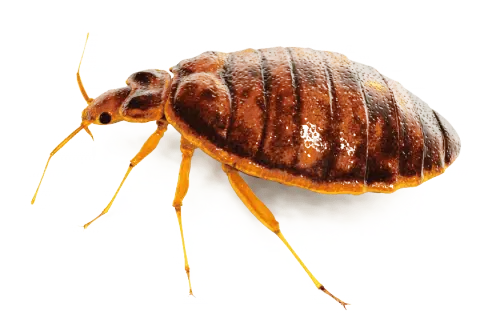
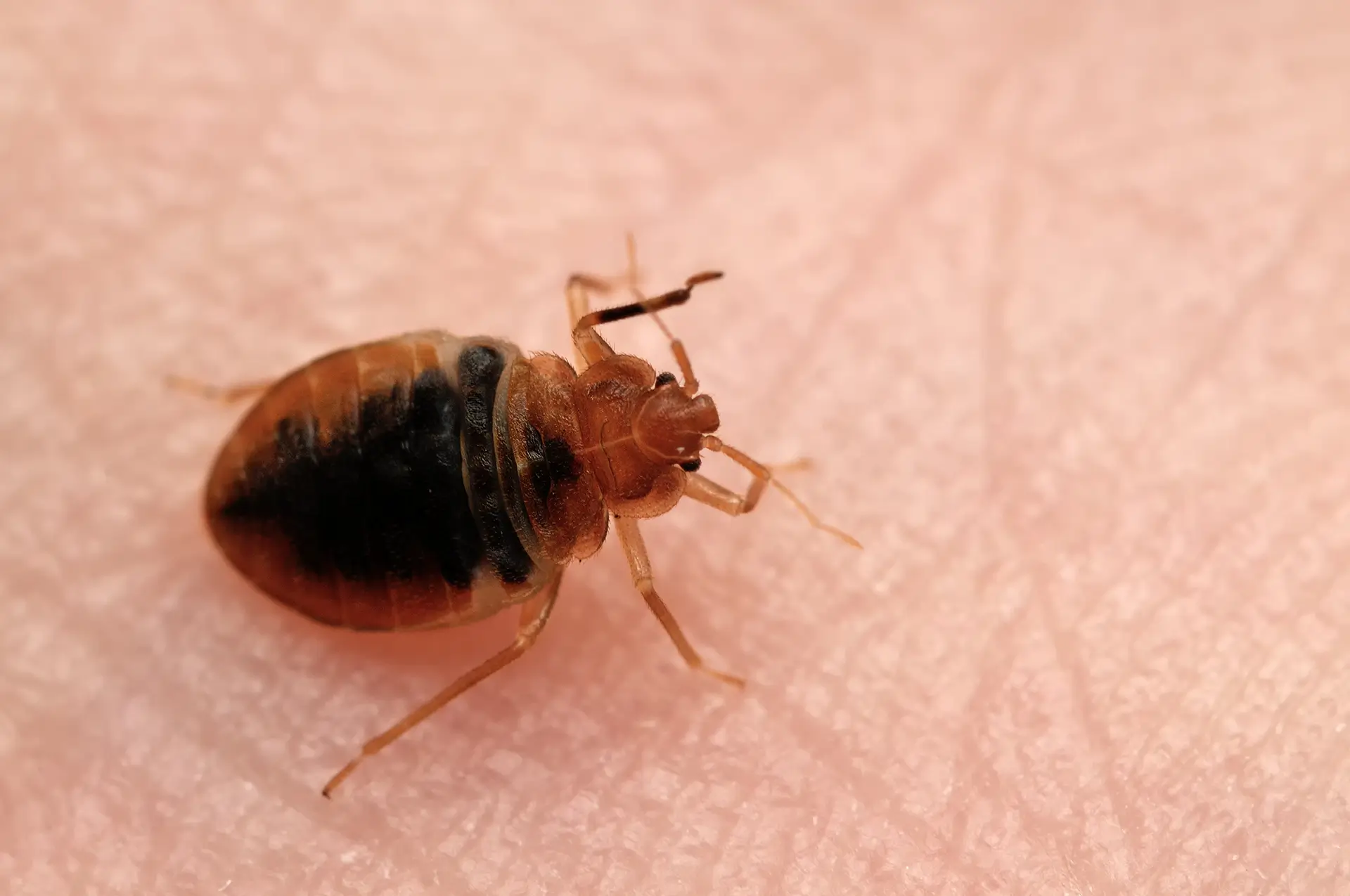
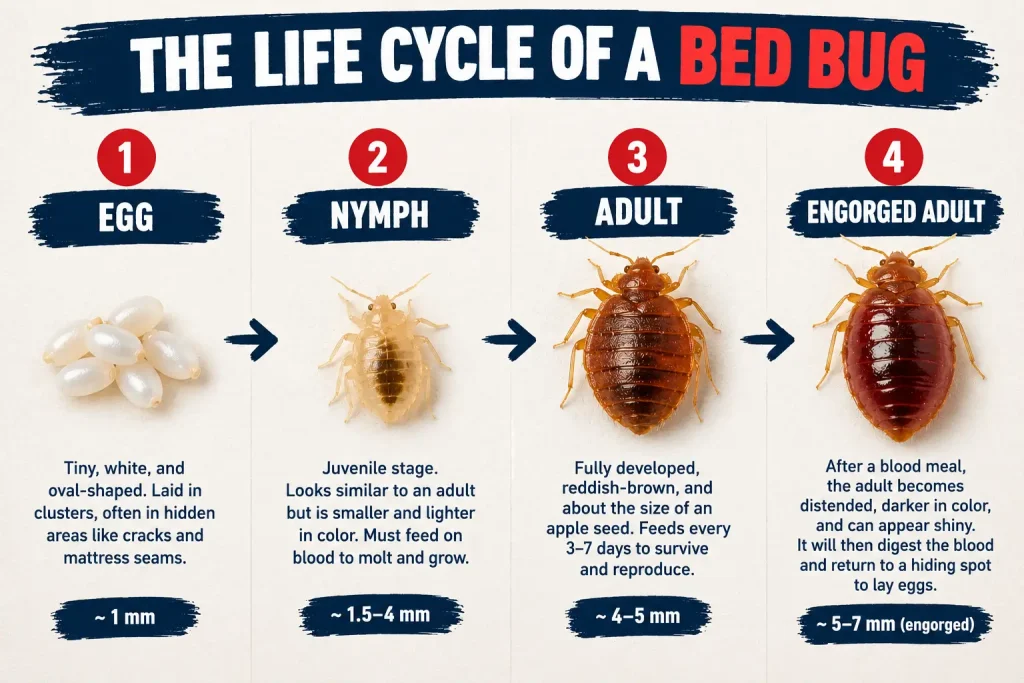
Adult bed bugs are small, flat, oval-shaped insects about the size of an apple seed. They’re reddish-brown in color, but after a meal, their bodies swell and turn a darker shade of red. Like ticks, bed bugs can’t fly or jump — they crawl.
Nymphs
Young bed bugs are called nymphs. They’re smaller and lighter in color, ranging from nearly transparent to yellowish-tan. The youngest are about the size of a poppy seed, which makes them extremely hard to spot.
Eggs
Bed bug eggs are tiny, pearly white, and about the size of a pinhead. They’re often laid in clusters tucked into seams, cracks, and crevices.
Where Do Bed Bugs Come From?
A common myth is that bed bugs only show up in dirty places. In reality, a spotless hotel room can have bed bugs just as easily as a neglected one. Bed bugs feed on blood, so they go wherever people sleep and rest — hotels, motels, vacation rentals, apartments, dorms, cruise ships, and private homes.
They get around by hitchhiking on luggage, purses, backpacks, clothing, and secondhand furniture. With more people on the move during the holidays, there are more chances for them to catch a ride, which is why this time of year calls for a little extra vigilance.
What Signs Do Bed Bugs Leave Behind?
Bed bugs are experts at hiding, so you’re more likely to spot the evidence they leave behind than the bugs themselves. Here’s what to look for:
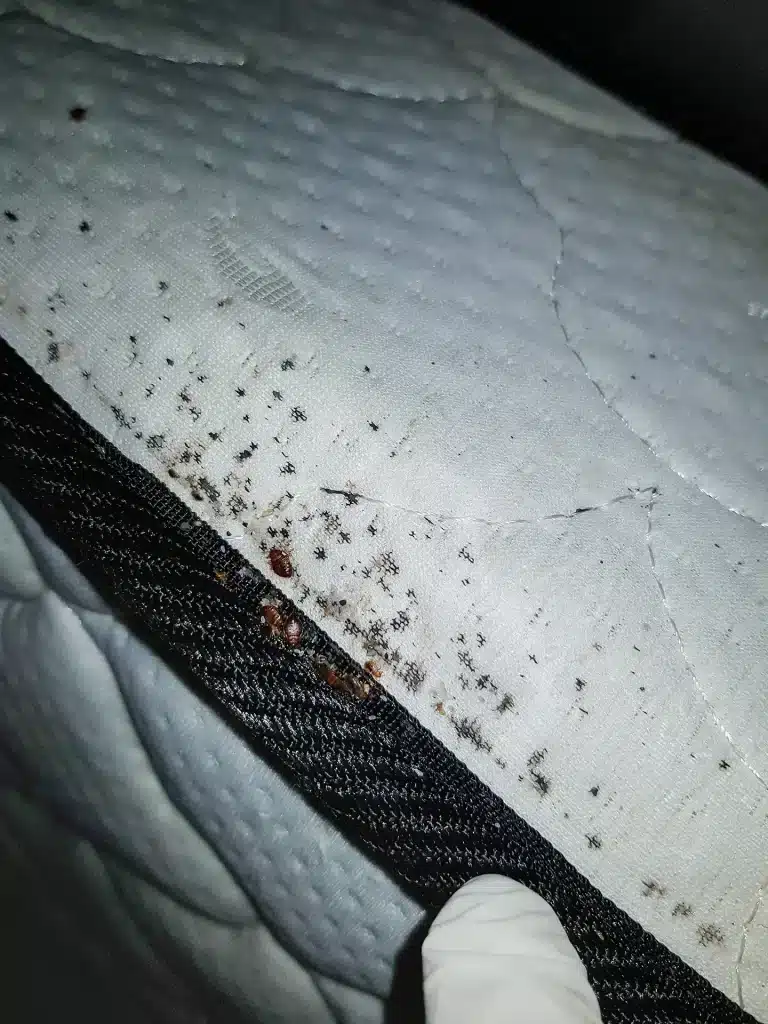
- Rusty or reddish stains. Small spots on sheets, pillowcases, or mattresses caused by bed bugs being crushed.
- Dark spots. Tiny dark dots about the size of a pen tip — bed bug waste that may bleed into fabric like a marker.
- Shed skins and eggs. Pale shells left behind as nymphs molt, plus tiny white eggs or eggshells tucked into seams and crevices.
- Live bugs. Bed bugs of any size, typically found in mattress seams, along the bed frame, or behind the headboard.
- Bites. Small, itchy red welts, sometimes in a line or cluster. Some people don’t react to bed bug bites at all, and the marks can look similar to other insect bites — so look for the other signs too before drawing conclusions.
How to Check for Bed Bugs When You Travel: A Step-by-Step Guide
As soon as you check in — hotel room, vacation rental, wherever you’re staying — take five to ten minutes to do a quick inspection before you settle in. All you need is your phone flashlight.
Step 1: Keep your luggage off the bed and floor.
Before you do anything else, set your bags in the bathroom or on a hard surface away from the bed. That keeps your belongings clear of any bugs while you inspect.
Step 2: Pull back the sheets at the head of the bed.
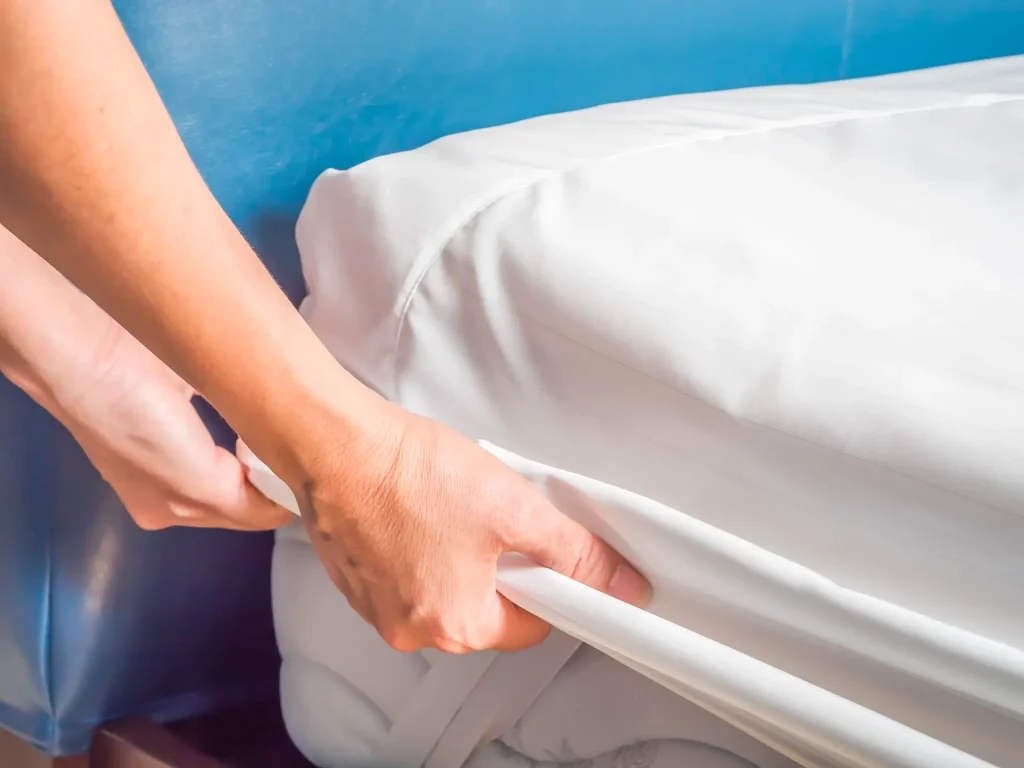
Most bed bugs hide close to where people sleep, especially near the head of the bed. Pull back the sheets and check mattress seams, corners, piping, and tags for live bugs, shed skins, eggs, and dark spotting.
Step 3: Check the box spring and bed frame.
If you can, lift the corners of the mattress and shine your flashlight along the box spring, bed frame, and any cracks or joints in the wood.
Step 4: Look around the headboard.
Headboards are a common hiding spot. Many hotel headboards are mounted directly to the wall, so don’t try to take them down — just shine your flashlight along the edges and into any gaps between the headboard and the wall.
Step 5: Inspect the furniture near the bed.
Check nightstands, drawers, upholstered chairs, couches, and the luggage rack if there is one. Pay close attention to seams, cushions, and cracks.
Step 6: Use the luggage rack.
Once the room checks out, set your suitcase on the luggage rack, pulled away from the wall and the bed. Keep it zipped when you’re not using it, and skip unpacking into the dresser drawers.
Step 7: If you find signs, say something.
Let the front desk know right away and ask for a different room. If you do move, choose a room that isn’t next to, directly above, or directly below the one where you found signs — bed bugs can travel between rooms.
Step 8: Check again before you head home.
When you’re packing up, take one more look at your luggage and belongings before you leave. A quick check now can save you a big headache later.
What to Do When You Get Home
Your trip isn’t over until the suitcase is unpacked. Unpack in a garage, laundry room, or another space away from bedrooms. Put all your clothes — even the ones you didn’t wear — straight into the washer and dry them on high heat. Vacuum out your suitcase, give it a thorough look before you put it away, and store luggage away from your bed. The garage or basement works; under the bed does not.
Think You Brought Bed Bugs Home? Call U.S. Pest Protection.
Even careful travelers can bring bed bugs home, and once they’re inside, they’re next to impossible to get rid of on your own. If you’re noticing bites, stains, or other signs after your holiday travels, don’t panic — and don’t start sleeping in a different room or on the couch, as that can spread the problem to more areas of your home. Skip the store-bought bug bombs too; they aren’t effective against bed bugs.
U.S. Pest Protection offers free inspections, and our bed bug control team will find the problem, put together a plan, and get you on the way to a pest-free home. Call us at 615.590.1260 or schedule a free inspection.