

Stinging Insects in Tennessee: Identification Guide
Stinging Insects in Tennessee: Quick Facts
Bees, wasps, yellow jackets, and hornets all sting, but they behave very differently. Honey bees and bumble bees are important pollinators that rarely sting away from the nest. Yellow jackets and some wasps defend their nests aggressively and cause most of the serious stinging incidents in Tennessee.- Most aggressive: Yellow jackets, especially in late summer and fall
- Most common around homes: Paper wasps, yellow jackets, and carpenter bees
- Peak season: Late summer and early fall, when colonies are largest
- Biggest risk: Allergic reactions and multiple stings from a disturbed nest
Bee, Wasp, or Hornet? How to Tell Them Apart
- Bees: Hairy or fuzzy, rounder bodies, and often carry pollen on their legs. Usually gentle away from the nest.
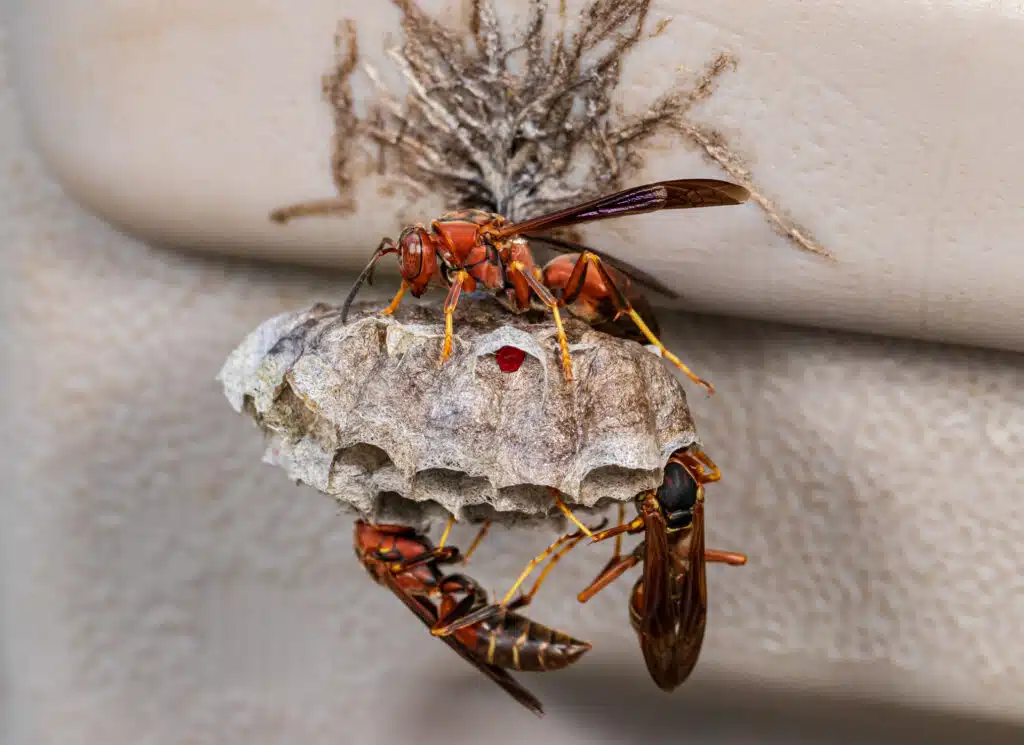
- Wasps: Smooth, shiny bodies with a narrow waist and long legs that dangle in flight. Can sting repeatedly.
- Yellow jackets: A type of wasp: smaller, compact, with bright yellow and black bands. Scavenge food and are aggressive near nests.
- Hornets: Larger wasps. The European hornet is the only true hornet in Tennessee; the bald-faced hornet is actually a yellow jacket relative.
See our full bee guide and wasp and hornet guide.

Common Stinging Insects in Tennessee
Bees
- Honey bees: Fuzzy, golden-brown bees that live in large colonies and sometimes nest inside walls.
- Bumble bees: Large, fuzzy, black-and-yellow bees that nest in the ground or under debris. bumble bee guide
- Carpenter bees: Look like bumble bees but have a shiny black abdomen; drill holes in wood. carpenter bee guide
Wasps and Hornets
- Yellow jackets: Nest underground or in wall voids and cause the most stings. yellow jacket guide
- Paper wasps: Build open, umbrella-shaped nests under eaves and railings. paper wasp guide
- Red wasps: Reddish-brown paper wasps common on porches and in sheds. red wasp guide
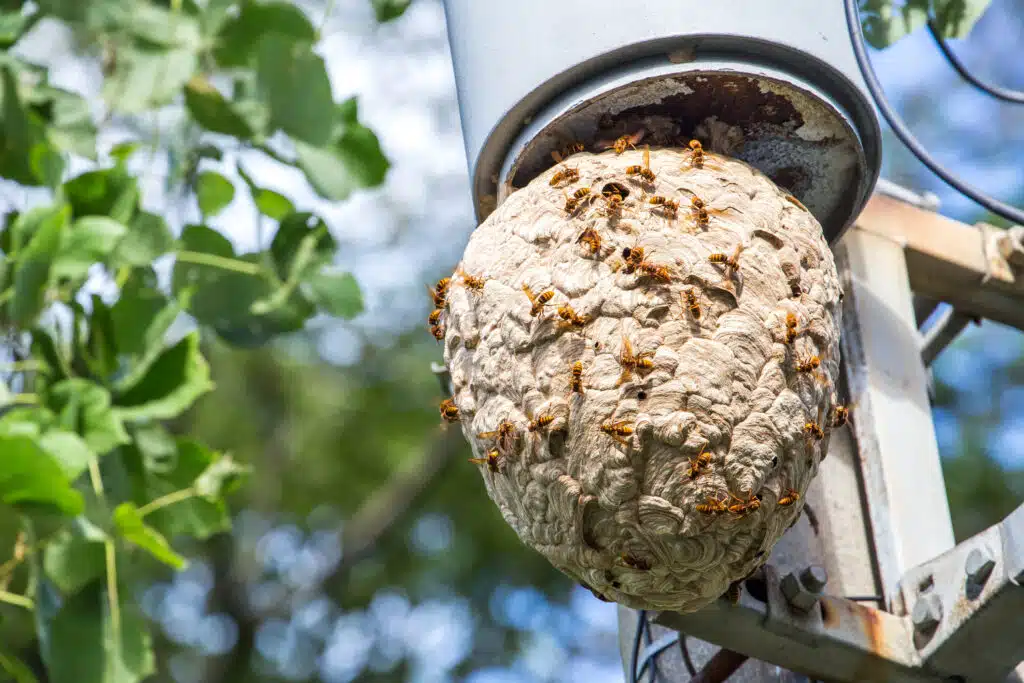
- Bald-faced hornets: Black and white; build large gray paper nests in trees and on eaves. bald-faced hornet guide
- European hornets: Large, brown and yellow, and active at night. European hornet guide
- Velvet ants: Fuzzy, wingless wasps with a very painful sting. velvet ant guide
Where Stinging Insects Nest
- Under eaves and overhangs: Paper wasps and red wasps
- In the ground: Yellow jackets and bumble bees, often in old rodent burrows
- Inside walls and attics: Yellow jackets, honey bees, and European hornets
- Trees and shrubs: Bald-faced hornets and some yellow jackets
- Wood: Carpenter bees, in eaves, decks, and railings
- Sheds, grills, and play sets: Paper wasps and mud daubers
Stings: First Aid and When It’s an Emergency
- What happens: Sharp pain, then redness, swelling, and itching around the sting. Swelling can spread several inches and last a few days.
- First aid: Move away from the nest. Scrape out a honey bee stinger with a fingernail or card, wash the area, apply a cold compress, and elevate it. An antihistamine can help with itching.
- Call 911: For trouble breathing, swelling of the face, lips, or throat, hives spreading over the body, dizziness, or fainting. Use an epinephrine auto-injector if one has been prescribed.
- Also get care: For many stings at once, a sting inside the mouth or throat, or a sting that shows signs of infection.
Staying Safe Around Nests
- Don’t swat at bees or wasps; move away calmly
- Don’t plug or seal a nest opening in a wall; the insects may chew their way into the house
- Check eaves, railings, grills, and play equipment for new nests in spring, when they’re small
- Keep drinks covered outdoors in late summer, when yellow jackets scavenge
- Watch for ground nests before mowing or trimming
- Wear shoes outdoors to avoid stepping on bees and velvet ants
When to Call a Professional
Call for any nest in the ground, in a wall, in a high or hard-to-reach spot, or near doors and play areas, and always if anyone in your home is allergic. For honey bees, which are valuable pollinators, the best outcome is often live removal. See our wasp removal and bee removal services.
Frequently Asked Questions
What stinging insects are common in Tennessee?
Yellow jackets, paper wasps, red wasps, bald-faced hornets, European hornets, honey bees, bumble bees, carpenter bees, and velvet ants.
How can I tell a bee from a wasp?
Bees are fuzzy and rounder. Wasps are smooth and shiny, with a narrow waist and long legs that dangle in flight.
Which stinging insect is most dangerous in Tennessee?
Yellow jackets cause the most stinging incidents because they nest in hidden spots and defend their nests aggressively, especially in late summer and fall.
When is a sting an emergency?
Call 911 for trouble breathing, swelling of the face or throat, spreading hives, dizziness, or fainting. Also seek care for many stings at once.
Should I seal a wasp nest in my wall?
No. Sealing the entrance can force the insects to chew into your living space. Have wall nests treated professionally.
