
Velvet Ants: Tennessee Pest ID Guide
Quick Facts About Velvet Ants
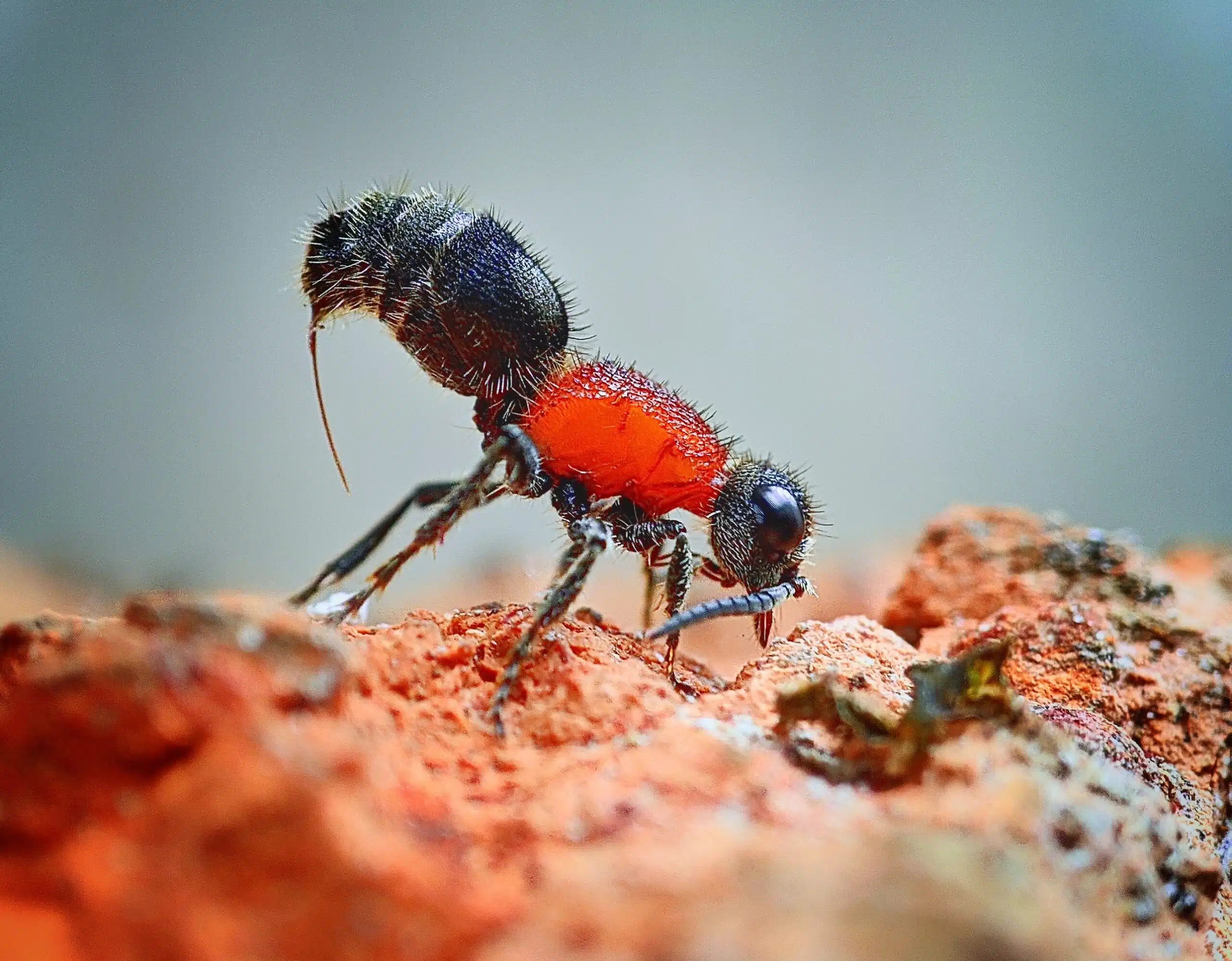
Velvet ants aren’t ants at all. They’re wasps, and the wingless, fuzzy females pack one of the most painful stings of any insect in North America. The common red-and-black species is nicknamed the cow killer, though it isn’t deadly.- Size: About 1/2 to 1 inch
- Color: Bright red or orange and black, covered in dense, velvety hair
- Wings: Females are wingless; males have wings but can’t sting
- Where found: Sandy or bare soil, lawns, fields, and trails in summer
- Life cycle: Females lay eggs in the nests of ground-nesting bees and wasps
- Behavior: Not aggressive; sting only when stepped on or handled
How to Identify Velvet Ants
A fuzzy, brightly colored “ant” running quickly across bare ground in summer is almost always a velvet ant. The bright colors warn predators to stay away.If handled, they make a squeaking sound, and their hard outer body makes them difficult to crush.

How Painful Is the Sting?
Very. The nickname “cow killer” comes from how painful the sting is, not from any real danger to cattle. The pain is intense but usually fades within about half an hour, followed by swelling and soreness. Velvet ant stings aren’t considered dangerous unless you’re allergic.
Velvet Ant Stings
- What happens: Sharp pain, then redness, swelling, and itching around the sting. Swelling can spread several inches and last a few days.
- First aid: Move away from the nest. Scrape out a honey bee stinger with a fingernail or card, wash the area, apply a cold compress, and elevate it. An antihistamine can help with itching.
- Call 911: For trouble breathing, swelling of the face, lips, or throat, hives spreading over the body, dizziness, or fainting. Use an epinephrine auto-injector if one has been prescribed.
- Also get care: For many stings at once, a sting inside the mouth or throat, or a sting that shows signs of infection.
How to Avoid Velvet Ant Stings
- Wear shoes in the yard, especially on bare or sandy soil in summer
- Don’t pick them up; they’re not aggressive, but they will sting
- Teach children to recognize and leave them alone
- Reduce ground-nesting bees and wasps, which velvet ants depend on
Do Velvet Ants Need Treatment?
Usually not. Velvet ants are solitary and don’t form colonies or nests you can treat. If you’re seeing many of them, it usually means ground-nesting bees or wasps are nearby, which may be worth addressing. See our wasp removal service.
Frequently Asked Questions
Are velvet ants actually ants?
No. They’re wingless female wasps covered in dense, velvety hair.
Why are velvet ants called cow killers?
The nickname refers to their extremely painful sting. They aren’t actually dangerous to cattle or people, unless someone is allergic.
Do velvet ants sting?
Females can sting, and it’s very painful. Males have wings but can’t sting.
Where do velvet ants live?
In sandy or bare soil, lawns, and fields, especially in summer.
Are velvet ants aggressive?
No. They sting only when stepped on or handled.
