
Do Termites Take Winter Off in Tennessee?

When the first hard frost hits Middle Tennessee, most of the bugs we deal with all summer disappear. Mosquitoes are gone, ants go quiet, and it’s easy to assume termites are taking a break, too.
They aren’t. Termites in winter slow down in the cold, but they don’t hibernate, and the house you’re keeping warm all winter can keep them working right through January.

The short answer: no
Middle Tennessee’s termites are subterranean termites. Their colonies live in the soil, and the workers that do the damage are soft-bodied and dry out easily, so they depend on the moisture underground. When the ground cools, the colony moves deeper into the soil, where temperatures stay steadier, and foraging slows down.
But a slab foundation or crawl space under a heated home never gets as cold as an open field. If termites have already found their way into your framing, they can stay active all winter. In winter, your house becomes the warmest log in the woods.
For a deeper look at how colonies live and grow, see The Middle Tennessee Silent Destroyer, our complete guide to termites.
When Tennessee termites normally swarm
Most people find out they have termites when they see swarmers, the winged termites that leave a mature colony to start new ones. According to University of Tennessee Extension, Tennessee’s three most common species each have their own season:
| Termite | Typical swarm season in Tennessee |
|---|---|
| Eastern subterranean termite | March through May |
| Southeastern subterranean termite | April through June, or in the fall |
| Light southeastern subterranean termite | August through October |
UT Extension also notes that mating flights can happen at other times of the year, especially in heated buildings. That’s why a winter swarm inside your home is worth taking seriously.

What a winter termite swarm looks like
Indoor winter swarms tend to show up near warm spots: around a furnace, water heater, fireplace, or a sunny window. Swarmers are drawn to light, so you’ll often find them gathered on windowsills or find their discarded wings in small piles nearby.
Swarmers that fly indoors almost never start a new colony, and they can be vacuumed up. The bugs themselves aren’t the problem. They’re a sign that a mature colony is close by, often already inside the structure. Termites flying out of your walls in January means they’ve been there a while.
Not sure what you’re looking at? Flying ants are common indoors, too. Termites have straight antennae, a thick waist, and two pairs of wings that are the same length. Ants have bent antennae, a pinched waist, and front wings longer than the back pair.
Winter signs worth checking
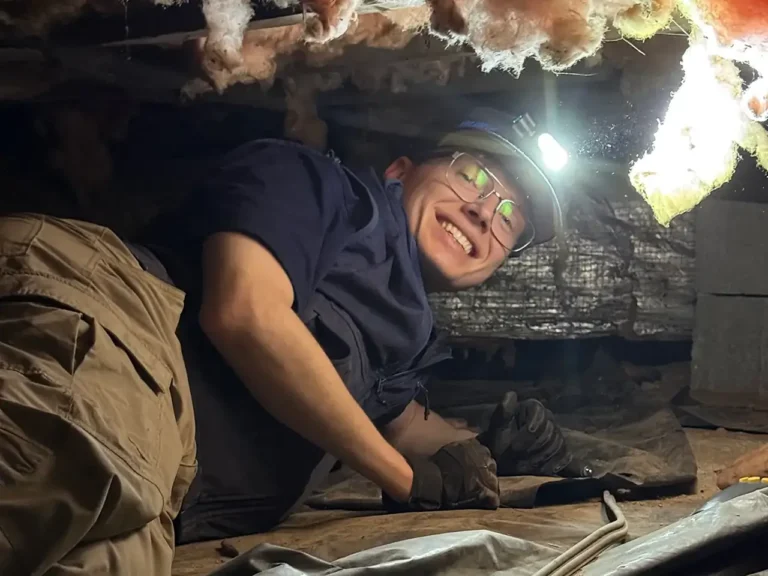
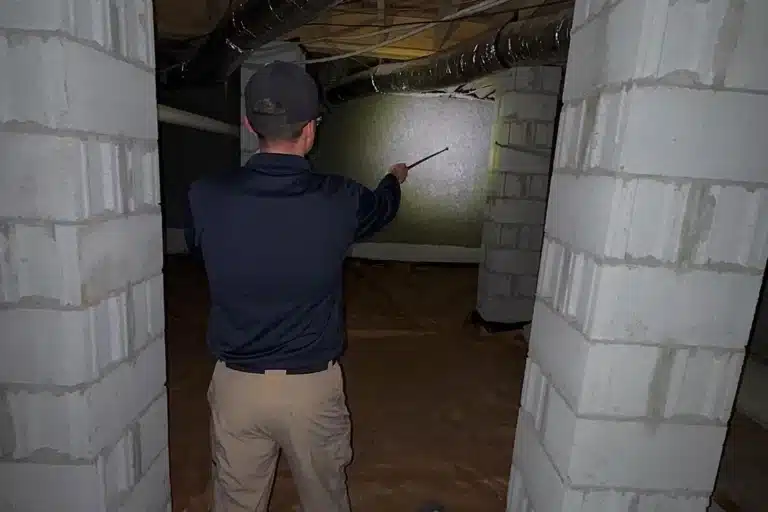
You don’t need swarmers to spot termite activity. On a mild winter afternoon, take a flashlight and look for:
- Mud tubes. Pencil-width tunnels of soil running up foundation walls, crawl space piers, or along the edge of a slab.
- Soft or hollow wood. Wood near the foundation that sounds hollow when tapped or gives when pressed with a screwdriver.
- Wings. Small piles of identical, cloudy wings on windowsills or in spider webs.
- Moisture. Leaky faucets, clogged gutters, or wet spots against the foundation. Termites are drawn to damp soil and wood.
- Wood touching soil. Firewood stacked against the house, mulch piled up to the siding, or deck posts set in dirt.
Winter is actually a good time to look. With the leaves down and the flower beds cut back, more of your foundation is visible than at any other time of year.
Can termites be treated in winter?
Yes. University of Tennessee Extension advises against applying termite treatments to frozen or water-soaked soil, because the treatment won’t spread through the soil properly. Middle Tennessee ground rarely stays frozen for long, so winter treatment is usually a matter of picking the right day.
If you’re thinking about termite protection, there’s a good case for not waiting until spring. Swarm season usually starts in March. Getting an inspection in the winter means you’re protected before the swarmers fly.
Buying or selling a home this winter or spring? Many buyers and lenders ask for a termite inspection before closing. See our termite letters and inspections and our homebuyer termite inspection checklist.
How U.S. Pest protects your home all year
Our termite control starts with a liquid barrier bonded to the soil around your home. It works whether termites are foraging hard in July or slowly in January. We inspect your home every year, and any time you suspect activity, and your annual renewal includes repair of new termite damage.
We don’t use bait stations. Termites are built to find and eat wood, not bait, so we start with the solution first. If you sell your home, your termite agreement transfers to the buyer at no charge, and the repair warranty goes with it.
A damp crawl space makes every termite treatment work harder. If yours stays wet, our crawl space moisture control can help your termite protection last longer.
We’ve been protecting Middle Tennessee homes from termites since 1985. When you call, you’ll talk to a real person in our local office, and every service is backed by our Whatever It Takes Guarantee.
Get ahead of swarm season. Call 615-590-1260 or schedule a free termite inspection.
Keep reading: The true cost of termite damage · Subterranean termite ID guide · More Middle Tennessee pest news
FAQs
Are termites active in the winter in Tennessee?
Yes. Termites slow down and move deeper into the soil when it’s cold, but they don’t hibernate. In a heated home, termites already inside the structure can stay active all winter.
Can termites swarm in the winter?
They can. Tennessee’s main swarm season is spring, but University of Tennessee Extension notes that mating flights can happen at other times of year, especially in heated buildings. A winter swarm indoors usually means a colony is nearby.
What should I do if I see termite swarmers inside in winter?
Vacuum them up, save a few in a sealed bag or jar if you can, and call us for an inspection. The swarmers themselves won’t start a colony indoors, but they’re a sign of an established colony close by.
Can you treat for termites in the winter?
Yes. Termite treatments shouldn’t go into frozen or water-soaked soil, but Middle Tennessee ground rarely stays frozen for long, so winter treatment usually just means choosing the right day.
Does U.S. Pest use termite bait stations?
No. We use a liquid treatment bonded to the soil, with an annual inspection and a renewal that includes repair of new termite damage.
Sources: University of Tennessee Extension (Subterranean Termite Control, PB1344).