

Why Tick Control Still Matters as Summer Winds Down

As summer comes to a close, it’s important to not slack off on tick control and prevention. With summer activities ending and school starting back up, August often gets lumped in with the rest of the fall months. However, August is absolutely still hot and humid enough to provide the perfect environment for tick activity.
May, June, and July are peak months for nymph ticks, meaning when August hits, those ticks are now full-grown adults. They will continue to hide in shaded areas, tall grass, and leaf piles, waiting for hosts to pass by so they can feed.
As you spend time outside for cookouts, pool parties, sports, concerts, and other late summer activities, make sure you are being proactive about tick control. Keep pets and children away from typical tick hiding spots, make sure to perform tick checks once inside, and keep your yard free of leaf piles and overgrown brush and grass that can hold heat and moisture.
Having a professional tick treatment completed is also important, especially heading into fall. These treatments not only reduce current tick activity, but also reduce the overwintering population, meaning fewer ticks hatching next spring and early summer. Consistency is key when it comes to protecting your home from ticks and other pests.
Why Should I Be Worried About Ticks?
Ticks carry all kinds of diseases that can be transmitted to people and pets when bitten. They are hard to see, especially as nymphs, and are difficult to remove once they latch onto their hosts. The following are the most common tick species in Middle Tennessee:
Black-Legged Ticks
Females are orange in color with brown legs and a brown spot on their upper abdomen. They can spread diseases such as Lyme Disease, Anaplasmosis, Babesiosis, Ehrlichiosis, Borrelia Miyamotoi Disease, and Powassan Virus.
Lone Star Tick
Females are reddish-brown in color with a small white spot in the center of their abdomen. They can spread illnesses such as Ehrlichiosis, Heartland Virus, Southern Tick-Associated Rash Illness (STARI), Bourbon Virus, and Tularemia.
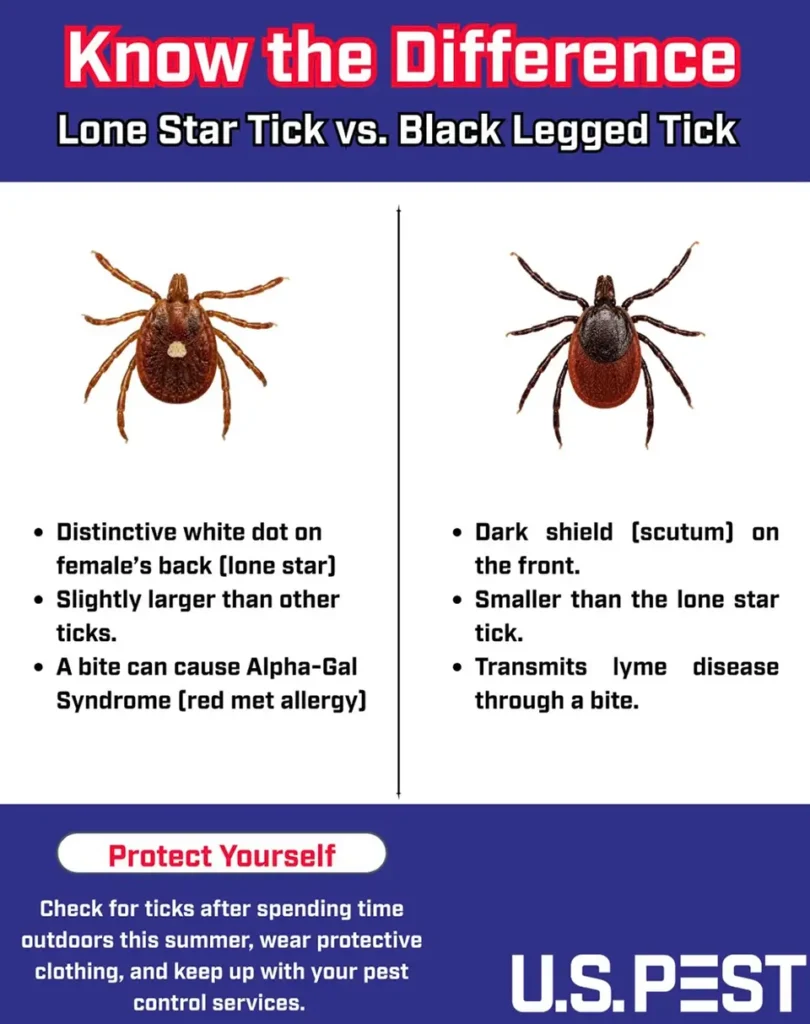
Bites from the Lone Star Tick can also sometimes lead to Alpha-Gal Syndrome, where a sugar molecule is transmitted while the tick feeds that triggers a reaction from the body’s immune system and causes allergic reactions to certain meats like beef, pork, and lamb. It can also cause reactions to dairy products or gelatins.
American Dog Tick
Females look like a cross between the other two tick species — reddish-brown in color with a white “collar-like” marking on their upper abdomen and neck. They can spread illnesses like Rocky Mountain Spotted Fever and Tularemia.
With high populations of these dangerous tick species across Middle Tennessee during summertime, it’s important to be diligent in self-protection and regular tick checks at home, as well as staying consistent with professional tick treatments.
What Does a U.S. Pest Tick Treatment Entail?
At U.S. Pest Protection, we offer complete tick treatments that target each species’ unique habits and hiding spots and give you complete protection that generic solutions miss.
- Species-specific tick treatment protocols (Lone Star tick, American dog tick, black-legged tick)
- Comprehensive yard and home inspection
- Treatment of all potential tick hiding spots
- Simultaneous protection against fleas and mosquitoes
- Ongoing monitoring and prevention
- Industry-leading Whatever It Takes Guarantee: if unsatisfied, you receive a full refund of your last service, a free re-treat from us, and if you’re still not happy, we’ll pay for a competitor to come help you
As a family-owned business, we understand the importance of keeping your home protected and we want to be your first call in making that happen. Let us help you get ahead and stay ahead of pest control and give you peace of mind all year long! Call 615.590.1260 or schedule your free inspection today.