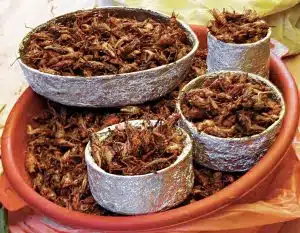
Just imagine chowing down on a delicious cockroach or some savory worms. Sounds tasty right? Probably not. But there are places in Asia, Africa and Latin America where people make insects a regular part of their diet. In fact, archaeologists say that the practice of eating bugs dates back to the earliest humans. And here’s the kicker: you eat them too.
The Health Benefits of Eating Bugs
It’s true! Chocolate can contain as much as 60 insect parts per 100 grams, and beer is allowed to have as many as 250 aphids per 100 grams. That can’t be healthy can it? Well, even though it does sound disgusting, eating bugs isn’t going to hurt you. These creepy crawlers are actually full of beneficial vitamins and minerals, and insects like mealworms are great sources of fiber.
Bugs could even help reduce obesity – not only because everyone will lose their appetite but because they offer about the same amount of protein as meats, minus the unhealthy fats. So next time you are thinking about going out to buy some protein rich foods from the grocery store, you might just choose to eat a beetle instead.
Serving Up Gourmet Insects
A
few high-end restaurants have decided to add the delectable pests to their menus. Forinstance, Aphrodite restaurant in France serves patrons mealworms and crickets with foie gras. And the names of the bugs even sound fancy when you say them in French.
Perhaps you would like some Solenopsis coupled with fried sweetbread or Tenebrio molitor on top of a kale leaf? Bet you are ready to dig right in. That is until you realize you just ordered ants and beetles.
Come to think of it, maybe we should just stick with beef.
A Better Way to Get Rid of Bugs
Now if you want to eat bugs, we won’t stop you. But there is a better way to get rid of those nasty pests around your home. You can call up U.S. Pest. We’ll remove bugs from your home, so you won’t have to deal with them any longer. And with the bugs gone, you can get back to eating food you actually like.
Want to learn more about how you can do away with bugs? Take a look at this article on what attracts ants, so you can avoid an infestation.
Share this post:fFacebookinLinkedInEmailPPinterestWe’re in the middle of summer and that means sun, fun and…checking for moles. While this may be the time of year you’re used to scoping your skin for suspicious looking spots, you also need to peep your property for the furry, beady-eyed variety as well. Share this post:fFacebookinLinkedInEmailPPinterest
Share this post:fFacebookinLinkedInEmailPPinterestNashville, TN (5/13/19) – U.S. Pest Protection is holding an exclusive Preds Pest Press Social on Wednesday, May 15th, in Nashville. The event will be held in the upper bowl lounge area of the Nashville Predators main office, located inside of Bridgestone Arena. Preds Pest Press Social is an event to highlight common…
Share this post:fFacebookinLinkedInEmailPPinterestEverybody knows you can’t squish a stink bug. Widely known for the foul odor they produce, these insects earned their title from their unique defense mechanism. But have you ever actually smelled a stink bug before? And do you know why they smell so foul? Share this post:fFacebookinLinkedInEmailPPinterest
Share this post:fFacebookinLinkedInEmailPPinterestBrown Recluse Inspection Treatments | Many homeowners living in the central region of the United States are concerned about the presence of brown recluse spiders in their homes. First of all, these spiders have a bad reputation for having a poisonous bite. In the middle Tennessee area the brown recluse spider (Loxosceles reclusa)…
Share this post:fFacebookinLinkedInEmailPPinteresthttps://youtu.be/aXXK9pYKiGs Baby, It’s Cold Outside! Which means mice start looking for a place to spend the winter. One of those places may be your home! Typical signs of a mouse infestation include foul smells, scratching or gnawing sounds, chewing marks, small footprints/tracks, and more. Be on the lookout if you come across any…
Share this post:fFacebookinLinkedInEmailPPinterestDoctors expect a deadly mosquito borne virus to arrive in Middle Tennessee in the next couple of months. Officially called Chikungunya, the virus is being labeled as the new West Nile Virus. Share this post:fFacebookinLinkedInEmailPPinterest