Orb Weaver Spiders: Are They Dangerous? A Tennessee Guide

Orb weavers are the spiders behind the big, round, wagon-wheel webs you see across porches, gardens, and walking paths every late summer and fall. In Tennessee, the most familiar one is the black-and-yellow garden spider. The short answer to the question most people ask: orb weavers aren’t dangerous to people. They’re shy, they rarely bite, and they catch a lot of insects.
What Is an Orb Weaver?
Orb weavers are a large family of spiders known for their circular webs: sticky spiral threads stretched across non-sticky spokes. Their webs can reach two feet or more across. Many orb weavers rebuild their web every night. They eat the old silk and spin a fresh one, so a web that wasn’t there yesterday can appear on your porch overnight.
Common Orb Weavers in Tennessee
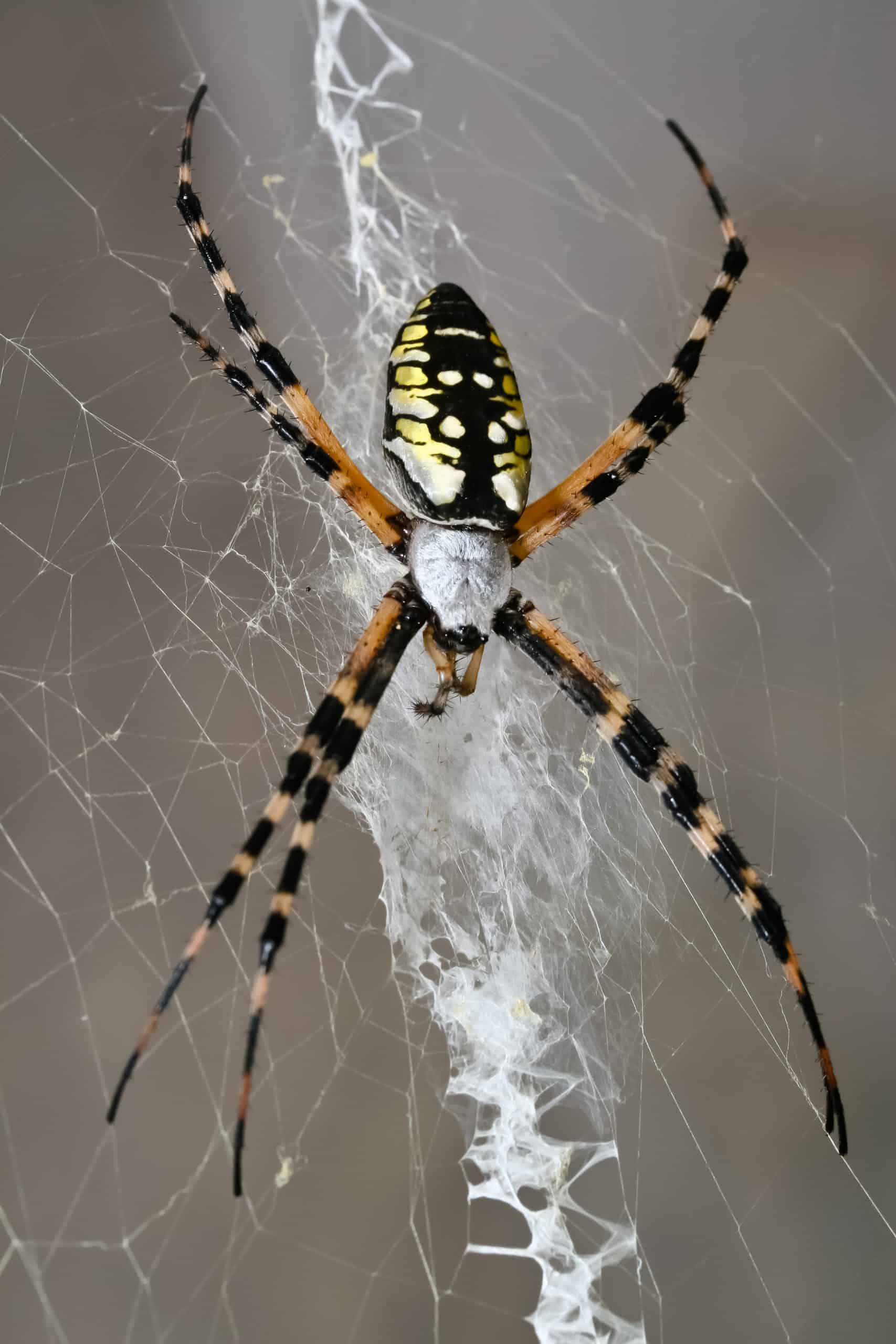
Black-and-yellow garden spider (Argiope aurantia). Also called the writing spider, zipper spider, or corn spider. Females grow to a little over an inch long, with a bold black-and-yellow abdomen, while males are much smaller. Look for a thick white zigzag of silk in the center of the web. They like open, sunny spots such as gardens, flower beds, and field edges.

Spotted orb weaver (Neoscona crucifera). Also called the Hentz orb weaver or barn spider. Mature females are about ½ to ¾ inch long and brown to reddish, with banded legs. These are the spiders that string webs across porches, doorways, and paths, often near outdoor lights, which draw the moths they eat. They hide during the day and hunt at night.
Joro spider. An invasive orb weaver from East Asia with bright yellow and black markings and golden silk. It’s spreading across Tennessee, with most sightings in East Tennessee, and it’s been confirmed in several Middle Tennessee counties, including Maury and Smith. Joro spiders are shy, and research shows they often don’t bite. If you spot one, you can report it to the University of Georgia’s Joro Watch program, which holds a spotting week each October.
Others you may see: banded garden spiders, marbled orb weavers, spinybacked orb weavers, and arrowhead orb weavers.
Why Do Orb Weavers Make Patterned Webs?
That bright white zigzag in the middle of some orb webs is called a stabilimentum. Scientists still disagree about what it’s for. It was once thought to strengthen the web. Today, the leading ideas are that it attracts insects, or that it warns birds so they don’t fly through and destroy the web.
Are Orb Weavers Dangerous? Do They Bite?
No. Orb weavers aren’t aggressive toward people. A garden spider would probably have to be handled carelessly before it would bite, and spotted orb weavers aren’t seriously venomous and rarely bite. Most people’s run-ins with orb weavers are walking face-first into a web, not a bite.
Why Do You See So Many in the Fall?
Orb weavers spend the summer growing. By late summer and fall, the females are full-sized and building their biggest webs, and many start leaving their webs up during the day. That’s why they suddenly seem to be everywhere in September and October.
After mating, a female garden spider lays several hundred to more than a thousand eggs in a brown, round silk sac about an inch across. The spiderlings hatch but stay inside the sac until spring. The adults don’t survive the winter, so each spring starts a new generation.
Should You Remove Orb Weavers?
Usually not. Extension experts consider orb weavers beneficial and say no control is needed. Their webs catch flies, mosquitoes, moths, and other insects around your yard and garden.
If a web keeps showing up right where you walk, turn your porch light off after dark. Fewer insects will gather there, which makes the spot less attractive to the spiders.
When Spiders Become a Problem
A few orb weavers outside are a good sign. A lot of spiders in and around your home usually means there are a lot of insects for them to eat. U.S. Pest’s spider control is part of our general pest control, starting at $60 per visit, and every visit includes removing cobwebs within reach. Not sure what you’re seeing? Our spider identification guide can help, or call 615-590-1260 to schedule a free inspection.
Sources: NC State Extension and Mississippi State University Extension.
Orb Weaver FAQs
Are orb weaver spiders poisonous?
They have venom for catching insects, but they aren’t considered dangerous to people. They’re shy and rarely bite.
Do orb weavers come inside?
Rarely. They build their webs outdoors, usually in open areas like gardens, porches, and paths.
How long do orb weavers live?
About a year. Adults die off as winter sets in, and the next generation emerges from egg sacs in spring.
Is the Joro spider dangerous?
No. Joro spiders are shy, and studies have found they often don’t bite.