The Truth About Carpenter Bees. Is Your Home at Risk?

Have you ever wondered the difference between a carpenter bee and a bumblebee? Most people think of bees as helpful pollinators buzzing around flower to flower. While that’s true for many of them, carpenter bees are another story.
Let us make this as simple as possible. If you ever notice large bees hovering around your deck, porch, or other outside areas, there’s a good chance you have carpenter bees. While they may seem innocent and harmless at first, the damage they can cause to your home is nothing we can’t prevent.
Now, let’s go over everything you need to know about carpenter bees. We’ll discuss everything from how to identify them to why calling U.S. Pest is the smartest move you can make. Are you ready?
What are Carpenter Bees?
Carpenter bees are large, solitary bees that get their name from drilling into wood to create nests. Unlike termites, they don’t eat the wood. They actually burrow into it to lay their eggs, which can cause some serious structural damage over time.
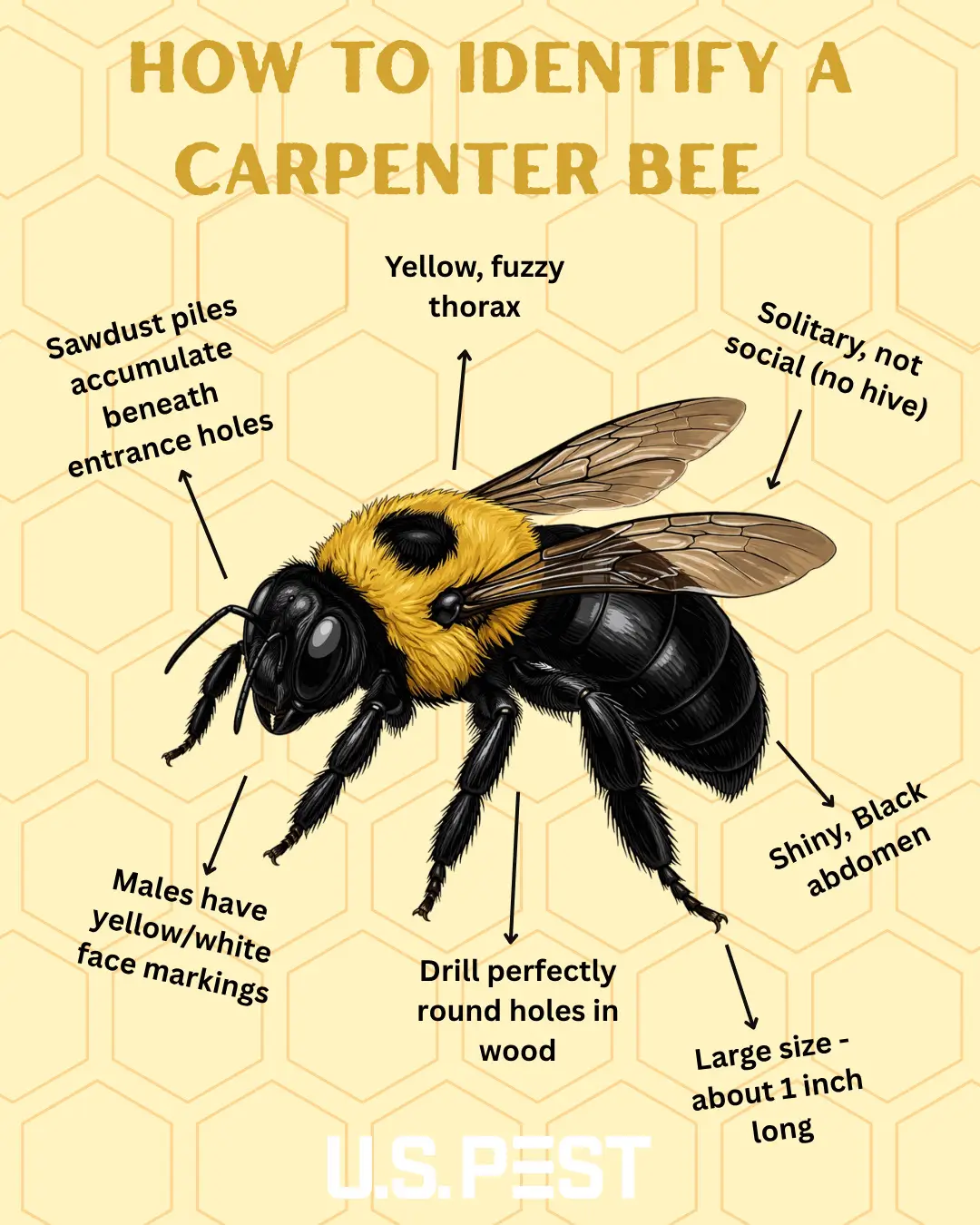
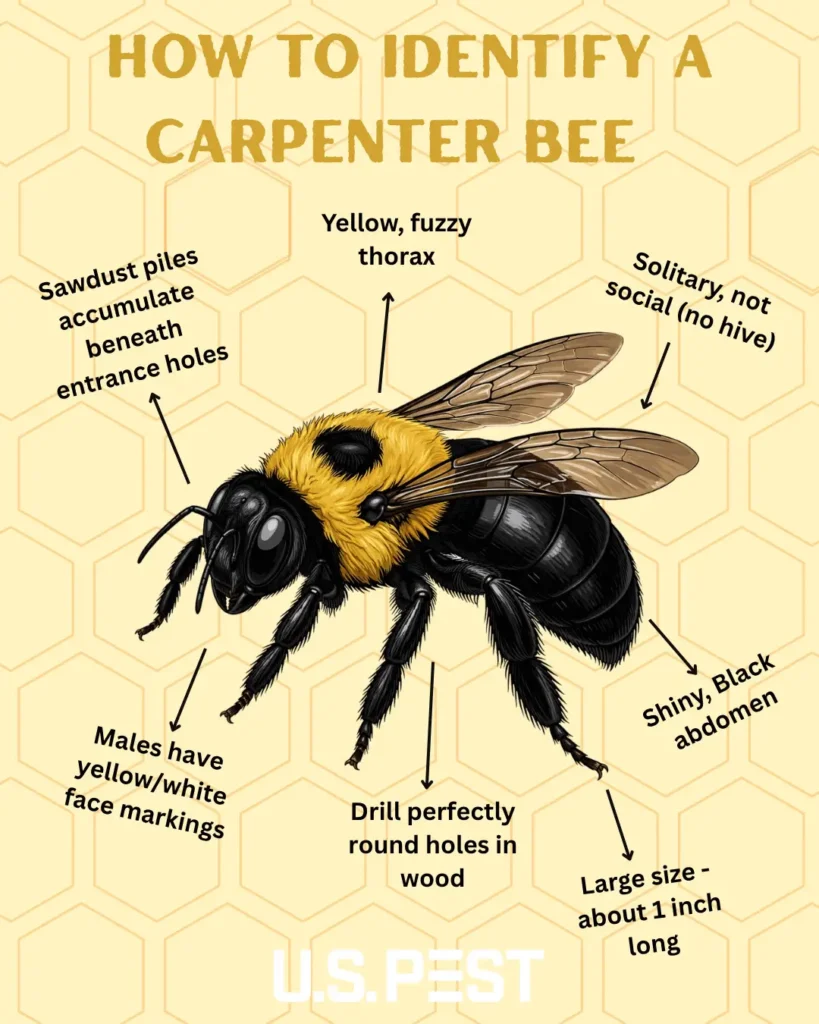
A lot of homeowners often mistake them for bumblebees. But we’re here to help you spot one key difference. Carpenter bees have a smooth, shiny black abdomen while bumblebees have a fuzzy yellow and black striped abdomen. This small detail makes all the difference when you need to properly identify the kind of creature that keeps buzzing around your home.
Why Carpenter Bees are Attracted to Your Home
Carpenter bees absolutely love wood that’s left untreated. And that includes wooden decks, fences, porch railings, and the siding of your home. They prefer softer wood like pine, cedar, and redwood, or any wood that hasn’t been painted or sealed. Once they find a good spot, female carpenter bees will begin drilling perfectly round holes to create tunnels where they’re able to lay their eggs.
Signs You Have Carpenter Bees and Need to Seek Immediate Help
Think you see holes in your wood? Here are the most common signs to watch out for:
Perfectly Round Holes in Your Wood
Carpenter bees create entry holes about the size of a dime. These holes are often found under wood surfaces.
Sawdust Piles (Frass)
You might start noticing small piles of something called sawdust beneath the holes. This indicates the effect of their drilling.
Hovering Bees
Male carpenter bees are known for hovering near nesting sites. They might appear aggressive, but they actually don’t have stingers. The females are the only ones who are able to sting, but only if they feel threatened.
Staining Around the Holes
As the holes begin to sit for a while, you will start seeing a yellowish stain near the entry points. This is often caused by bee waste.
Are Carpenter Bees Dangerous?
We know what you’re thinking. Carpenter bees definitely give off that “scary” look. But here’s the good news, they’re actually minding their own business and aren’t trying to harm you.
However, every form of good news comes with some bad news. They can still cause some serious damage. And while it might not be to you personally. They’re causing damage to something very important to you, like your home.
Now, here’s something you should be even more concerned about. Woodpeckers are attracted to carpenter bee larvae so a small problem can turn into a bigger one in the blink of an eye.
If you take anything away from this blog, please don’t try DIY treatments. Let’s talk about it.
Why U.S. Pest Doesn’t Recommend DIY Treatments for Carpenter Bees
We understand how incredibly tempting it is to try and get rid of carpenter bees all on your own. You might come across sprays, traps, or home remedies online or at your local store. But these solutions will only temporarily stop the problem.
Our technicians know how to identify them, can tell you where they lay their eggs, and are able to tell you the differences between males and females.
DIY treatments also don’t eliminate the larvae inside the tunnels, they often miss hidden or hard-to-reach areas, and using the treatment wrong could make an infestation ten times worse.
Without fully treating the tunnels and preventing future activity, you’re likely going to keep seeing the same problem over and over again. That’s why it’s so important to hire a trusted pest control service to permanently take care of the problem.
How U.S. Pest Protection Gets Rid of Carpenter Bees
At U.S. Pest, we always start at the root of the problem. And we don’t stop until we find out where the problem keeps coming from.
Our process is designed to eliminate current activity and prevent future infestations from taking place. It includes the following steps:
A Thorough Inspection
We carefully inspect your entire property to identify active nesting sites and areas that are at risk.
Targeted Treatment
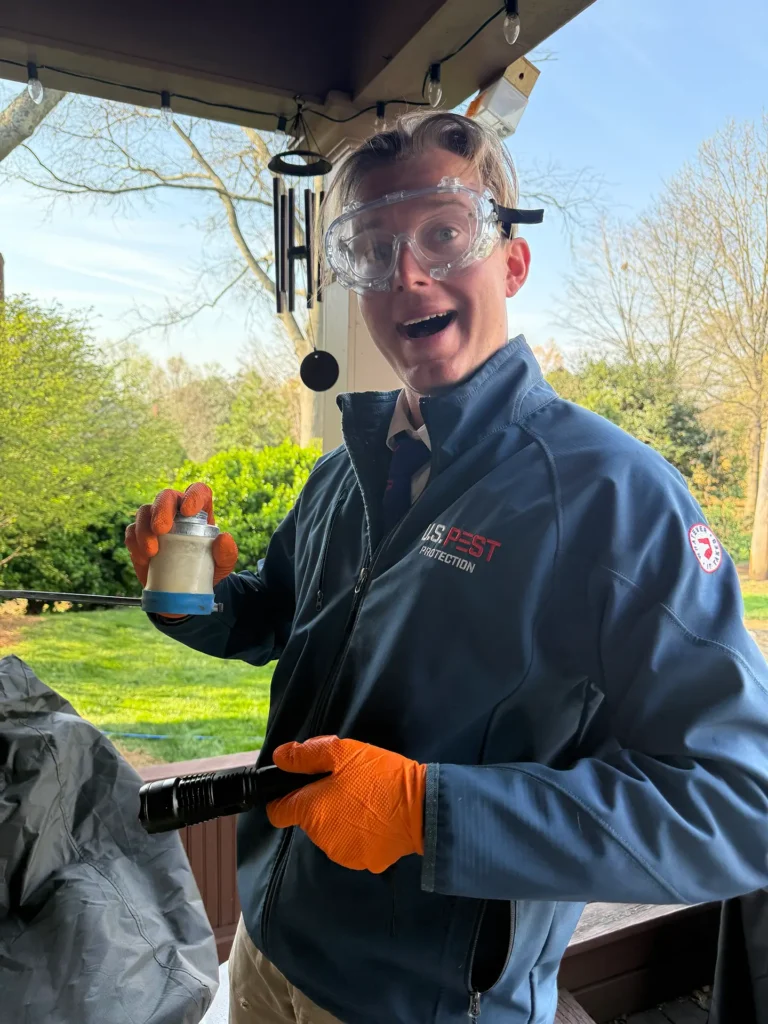
Our technicians apply professional-grade treatments directly into the tunnels to eliminate both adult bees and larvae. We won’t let them continue growing their population at your home!
Preventative Solutions
We treat the areas around your home that are often more quiet. This discourages future nesting and helps protect your home long-term.
Expert Guidance
We provide personalized recommendations to help you maintain a pest-free home year-round.
Our team has the training and experience to handle carpenter bee infestations safely and effectively, so you don’t have to worry about them ever coming back.
How to Prevent Carpenter Bees
While professional treatment is the most effective solution, there are steps you can take to make your home less appealing to them. And that includes staining your deck or other wooded areas around your home every so often, keeping outdoor areas clean, and regularly inspecting your home for early signs of activity.
As you can see, prevention goes a long way. But if you see one carpenter bee buzzing around your home, it’s time to call the pros for help.
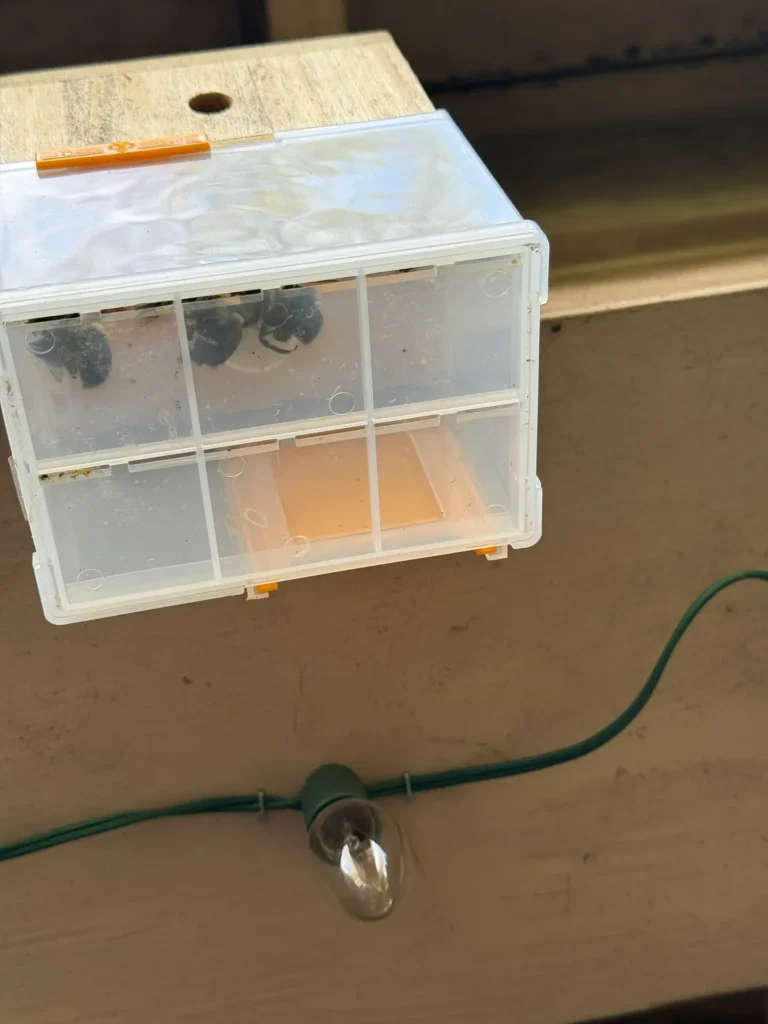
Don’t Let Carpenter Bees Take Over Your Home This Year
Carpenter bees may seem like a minor issue at first. However, their ability to cause long-term damage makes them a pest that you don’t want to ignore. Like termites, the sooner you address the problem, the easier and more affordable it is to fix.
Call U.S. Pest at 615.590.1260 or schedule your FREE inspection. Our technicians will take a closer look at your home by identifying any and all pest issues. We’ll also create a customized plan to keep you and your property protected all season long. It’s our mission to do whatever it takes to make sure you have more peace of mind.
If carpenter bees are already drilling into your trim or deck, our carpenter bee treatment treats and fills every hole and adds a liquid deterrent to the wood.