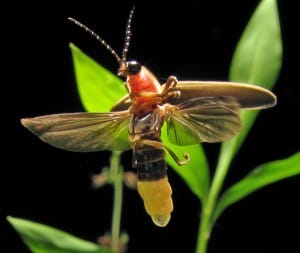
Looking to make some extra cash? Here’s a fun way you may have never thought about. Remember those glowing little bugs you used to catch as a child? Well, now The Firefly Project Of Tennessee is offering 50 cents for every gram of fireflies you catch and turn in. That’s about $2 per 100 insects. If you are looking to get rich, this may not be the solution for you. But you can have some fun while earning a few dollars to spend on ice cream or the movies this summer.
Why Do the Researchers Need Fireflies?
Researchers are studying fireflies to better understand the bio-chemical reaction involved in making the bug’s tail glow. They will use the gene from the lightning bug as a genetic marker, combining a gene with the one they want. This will enable them to see how much light they are able to produce from the reaction. Other animals, such as deep sea fish have lights like fireflies, but they are much harder to catch.
Getting the Right Kind
Furthermore, researchers need the right type of firefly. Several species exists in Tennessee, but two are the most prominent. One ofthose two is the one the researchers are after. Luckily, this is the one that is easiest to catch. It has a red head, black back and yellow tail.
The Best Way to Catch Lightning Bugs:
You may recall how to catch fireflies from when you were a kid, but incase you forgot, here’s the best way to go about collecting them:
Locate the insects – First, start by finding the bugs. This is not a hard task, since all you really need to do is wait for them to light up.
Use the Proper Tools – Once you’ve spotted one, you can then catch it using a net and jar.
Freeze the insects– After you have snatched up several of the insects, freeze them that night to preserve the enzyme needed. Make sure you keep the bugs frozen, or they will not be accepted.
Where to Drop the Insects Off:
Now that you have your collection of fireflies, you are ready to turn them in. You can drop them off at the appropriate location depending on where you live. The drop off locations are as follows:
Gallatin: The Gallatin Area Chamber of Commerce, 118 W. Main St., from 4-4:30 p.m.
Goodlettsville: Fire Hall No. 1, 105 Long Hollow Pike, from 2:15-2:45 p.m.
Lebanon: Fire Hall No. 1, 209 E. Gay St., from 8:45-9:15 a.m
Make sure you turn them in by July 15, 2014.
Need Help Dealing with Insects?
While U.S. Pest doesn’t generally help people catch fireflies, we do offer a vast array of pest control services that will help boost your summer fun. Interested? Check out this article on how we can get rid of mosquitoes around your home, or give us a call today to learn more!
Share this post:fFacebookinLinkedInEmailPPinterestWinter has come and passed, which means spring is here! We all know that April showers bring May flowers, but what else do they bring? Pests. Having bugs in your living space can make you uneasy. Kick unwanted houseguests out by contacting the pest control professionals—U.S. Pest. Share this post:fFacebookinLinkedInEmailPPinterest
Share this post:fFacebookinLinkedInEmailPPinterest5 terrifying facts about rats – From Mickey Mouse to Tom and Jerry, mice have an incredible amount of positive PR on their side. But if you’ve ever had a mouse in your home or dealt with a rat infestation at a restaurant, then you know exactly how terrifying rats can be. Now…
Share this post:fFacebookinLinkedInEmailPPinterestInteresting facts about moisture control and pests in Tennessee is something all homeowners should brush up on periodically. See below of truths and interesting facts about U.S. Pest Protection, Termites, Ants, Cockroaches, Mosquitoes, Ticks, Moisture, & more! FACTS ABOUT U.S. PEST Intimacy First of all, U.S. Pest is #1 in Tennessee…
Share this post:fFacebookinLinkedInEmailPPinterestU.S. Pest celebrates 34 years of business this month. The company officially opened its doors for business on May 15, 1985. The privately owned company is a family-owned & operated business. It’s corporate office is located out of Hendersonville, TN. First of all, U.S. Pest Protection is Tennessee’s #1 pest control company. U.S….
Share this post:fFacebookinLinkedInEmailPPinterest “Bee losses in Tennessee are averaging around 80 percent this year,” says Mike Studer, Tennessee’s state apiarist. “It’s as bad as it has ever been, especially when you consider the 10-year average loss before that was 35-percent. It’s a problem that in past years has garnered attention, but now the situation has…
Share this post:fFacebookinLinkedInEmailPPinterestWhat kind of ants do I have? – Ant identification is important if you have an ant infestation. First of all, how do we know what kind of ants they could be? There are a number of ant species in the United States, but we will only focus on the most common ones…