
How to Check for Bed Bugs: A Middle Tennessee Guide

To check for bed bugs, grab a flashlight and start where people sleep: the seams and corners of the mattress, the box spring, the bed frame, and the headboard. You’re looking for the bugs themselves, tiny pale eggs, shed skins, and small dark or rusty spots. Here’s exactly what to look for, where to look, and how to check a hotel room before you unpack.
What Bed Bugs Look Like
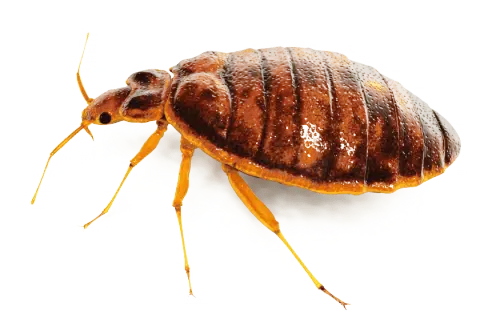
Adult bed bugs are flat, oval, and reddish-brown, about the size of an apple seed. Young bed bugs are smaller and paler, and the eggs are tiny and white, about the size of a pinhead. Our bed bug identification guide has close-up photos.
Signs of Bed Bugs
- Small blood spots: rusty or red stains on sheets and pillowcases
- Dark spots: tiny black or brown specks on mattress seams and bed frames
- Shed skins: pale, empty skins in seams, cracks, and along the headboard
- Eggs: tiny white eggs tucked into crevices
- Bites: itchy red welts, often in a line or cluster, on skin exposed during sleep
- Odor: a musty, sweetish smell when an infestation is heavy
One important caution: bites alone can’t confirm bed bugs. Carpet beetle larvae, fleas, and mosquitoes can cause similar reactions, so look for the other signs too.
How to Check Your Home for Bed Bugs, Step by Step
- Get a bright flashlight and something thin and stiff, like an old credit card, to slide into seams.
- Strip the bed and check the sheets and pillowcases for spots.
- Inspect the mattress along every seam, tag, and corner, then the box spring, especially its underside and corners.
- Check the bed frame and headboard, including joints, screw holes, and the back of the headboard.
- Move outward from the bed: nightstands (inside drawers and joints), upholstered chairs and couches, and the cushions’ seams.
- Finish with the room’s edges: baseboards, outlet covers, picture frames, and curtain folds near the bed.
If you find anything suspicious, don’t move furniture or bedding into other rooms. That can spread bed bugs through the house.
How to Check a Hotel Room
- Keep your luggage off the bed and floor until you’ve checked. A luggage rack or the bathroom counter works well.
- Pull back the sheets at the head of the bed and check the mattress seams and corners with your phone’s flashlight.
- Look behind and around the headboard if you can, and check the nightstand.
- If you see signs, ask for a different room, ideally one that isn’t next to or directly above or below the first.
- When you get home, wash and dry your clothes on high heat and inspect your luggage before storing it.
More travel tips are in our guide to bed bugs and travel.
How Bed Bugs Get Into Your Home
Bed bugs are expert hitchhikers. They travel from infested places on furniture, bedding, luggage, boxes, and clothing. Hotels and vacation rentals are common sources, but so are used couches and mattresses, shared laundry rooms, and visiting guests. In apartments and townhomes, they can also move between units.
Why Bed Bugs Get Around Middle Tennessee
Nashville is one of the busiest travel destinations in the country. Davidson County welcomed 17.4 million visitors in 2025, filling hotels, short-term rentals like Airbnb and VRBO, concert venues, and convention centers. Every one of those trips is a chance for a bed bug to hitch a ride in a suitcase or backpack.
Bed bugs don’t stay downtown, either. Visitors, hotel and rental staff, and locals coming home from their own trips carry them out to neighborhoods all over Middle Tennessee, which is why we treat bed bugs in quiet suburbs and small towns, not just the city.
A True Story From Portland, Tennessee
One of our favorite cautionary tales happened right here in Middle Tennessee. Our team completed a full bed bug treatment at a home in Portland. As part of cleaning up, the family hauled their old couch out to the road.
A few weeks later, we got a call from a different home in Portland with a new bed bug problem. When our Pest Pro walked in, there it was: the very same couch, picked up from the roadside and now sitting in the new customer’s living room, bed bugs and all.
The lesson: never bring furniture home from the curb, no matter how good it looks. And if you have to throw out furniture with bed bugs, the EPA recommends destroying it or spray-painting “Bed Bugs” on it, so no one else is tempted to take it home.
How Fast Bed Bugs Spread, and Why Waiting Doesn’t Work
- They multiply steadily. A female bed bug lays about one to two eggs a day, and up to 500 over her lifetime.
- They feed every 5 to 10 days, usually at night while you sleep, then hide again.
- They can outlast you. A bed bug can survive about three months without feeding at room temperature, and even longer in cooler conditions. Leaving a room empty or sleeping somewhere else won’t starve them out.
That’s why early detection matters. A handful of bed bugs is far easier to eliminate than an established infestation.
Bed Bug Look-Alikes
Several pests are often mistaken for bed bugs, especially carpet beetles, fleas, and bat bugs. Bat bugs look nearly identical but are tied to bats roosting in attics or walls. If you’re not sure what you found, save it in a sealed bag or take a clear photo for your Pest Pro.
Tools That Help You Catch Bed Bugs Early
- Interceptors: small cups that go under each bed leg and trap bed bugs trying to climb up. They’re one of the best ways to catch a small, early infestation, and to confirm treatment worked.
- Mattress and box spring encasements: zippered covers that trap any bed bugs inside so they eventually starve, and leave them nowhere to hide on the bed. The light color makes bugs easier to spot. Choose ones made specifically for bed bugs, and replace any that tear.
What Not to Do
- Don’t use foggers or bug bombs. They don’t reach the cracks where bed bugs hide and can scatter them deeper into walls and other rooms.
- Don’t start sleeping in another room. Bed bugs will follow you and spread through the house.
- Don’t spray store-bought products every day. Repeated spot treatments can help pesticide-resistant bed bugs take over.
- Don’t throw out your mattress yet. Bed bugs are usually in the bed frame, nearby furniture, and walls too, and dragging a mattress through the house can spread them.
What You Can Do Right Now
- Dry bedding and clothes on high heat for 30 minutes. That kills bed bugs at every life stage, including eggs. Washing alone usually won’t.
- Vacuum around the bed with a crevice tool, then seal the vacuum bag and throw it away outside.
- Cut the clutter around beds and couches, since every pile is another hiding spot.
- Put encasements on the mattress and box spring and interceptors under the bed legs.
If you’re scheduling professional treatment, our bed bug preparation checklist walks you through getting the room ready.
How to Keep Bed Bugs Out
- Skip curbside furniture, and inspect any secondhand beds or couches before they come inside.
- Be careful with shared laundry. Move clothes straight from the dryer into a bag and fold them at home.
- In apartments, door sweeps can help discourage bed bugs from moving in from hallways.
- After every trip, unpack straight into the dryer and check your luggage.
Found Bed Bugs? What to Do Next
Bed bugs aren’t a sign of a dirty home. They hitchhike in luggage, used furniture, and clothing, and they can end up anywhere. They also aren’t known to spread disease, though their bites can itch and become infected, and an infestation causes real stress and lost sleep.
Store-bought sprays and foggers rarely solve the problem, because bed bugs hide deep in cracks and their eggs survive many treatments. U.S. Pest’s bed bug treatment uses a proven chemical treatment with required mattress encasements and a follow-up inspection 7 to 10 days later, backed by our Whatever It Takes Guarantee. Treatment starts at around $1,000, and you’ll know the exact price after a free inspection.
Checking for Bed Bugs FAQs
How do I check for bed bugs?
Use a flashlight to inspect mattress seams and corners, the box spring, the bed frame, and the headboard, then nearby furniture, baseboards, and outlet covers. Look for the bugs, tiny white eggs, shed skins, and small dark or rusty spots.
What do bed bugs look like?
Adults are flat, oval, reddish-brown, and about the size of an apple seed. Eggs are tiny and white, about the size of a pinhead.
Can I tell I have bed bugs from bites alone?
No. Carpet beetle larvae, fleas, and mosquitoes can cause similar bites, so look for other signs like spots, shed skins, or the bugs themselves.
Where do bed bugs hide?
Mostly in and around the bed: mattress seams, box springs, bed frames, and headboards. They also hide in nightstands, upholstered furniture, and behind baseboards and outlet covers.
How do I check a hotel room for bed bugs?
Keep your luggage off the bed and floor, pull back the sheets at the head of the bed, and use your phone’s flashlight to check the mattress seams, headboard, and nightstand.
How long can bed bugs live without feeding?
About three months at room temperature, and longer in cooler conditions, so leaving a room empty won’t starve them out.
Does washing clothes kill bed bugs?
Drying on high heat for 30 minutes is what reliably kills bed bugs and their eggs. Washing alone usually won’t.
Do bug bombs work on bed bugs?
No. Foggers don’t reach the cracks where bed bugs hide and can scatter them to other rooms.
How fast do bed bugs multiply?
A female lays about one to two eggs a day and up to 500 in her lifetime, so a small problem can grow quickly.
Is it safe to take furniture from the curb?
It’s risky. Upholstered furniture left at the curb can carry bed bugs, and we’ve seen a discarded couch spread bed bugs from one Middle Tennessee home to another. It’s safest to leave it.
How should I throw away furniture with bed bugs?
Wrap it, and destroy it or clearly mark it “Bed Bugs” so no one else takes it home. Check with your Pest Pro first, since many items can be treated instead of thrown away.
Do bed bugs mean my house is dirty?
No. Bed bugs spread by hitchhiking in luggage, furniture, and clothing, and they can show up in very clean homes.
Sources: U.S. Environmental Protection Agency, National Pesticide Information Center, and Rutgers Cooperative Extension.
Think You Have Bed Bugs?
Call 615-590-1260 or schedule a free inspection. A Pest Pro will confirm what you’re dealing with and how far it has spread.


